

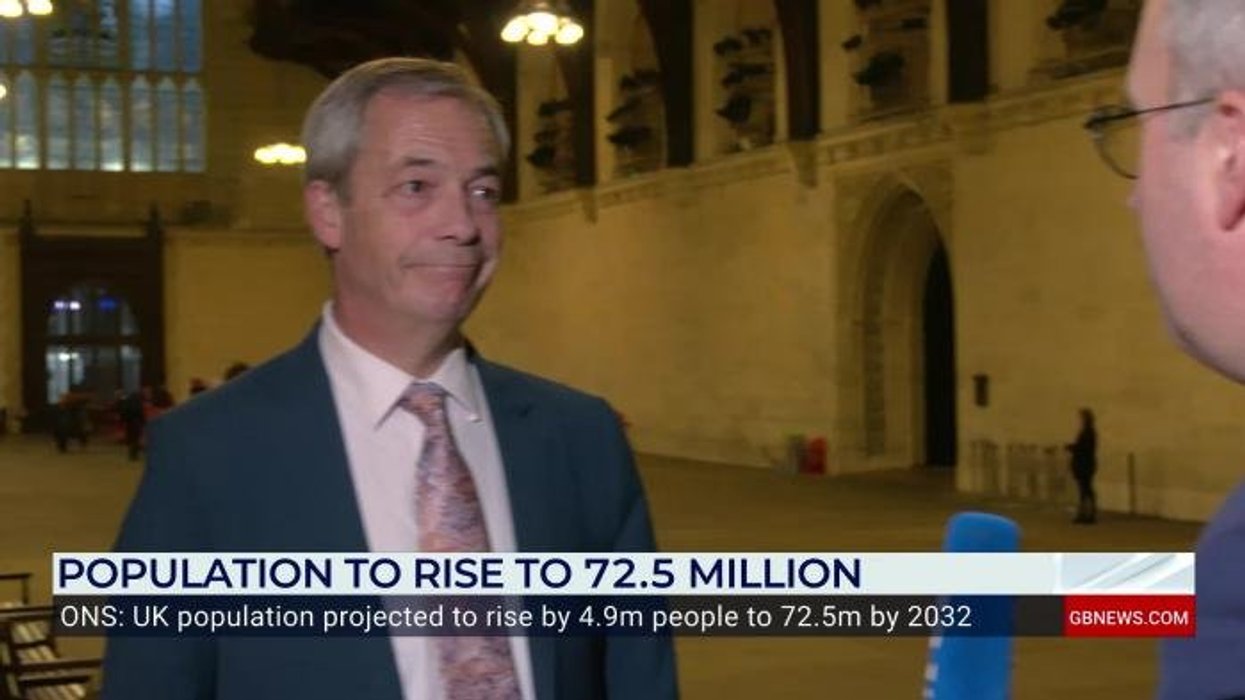








Fresh projections from the Office for National Statistics suggest Britain's population growth may entirely rely on migrants as a decline of native Britons looms within the next 30 years.
The revised figures represent a significant downgrade from earlier estimates, driven primarily by a dramatic 69 per cent reduction in legal net migration, alongside falling birth rates.
Net migration fell to an estimated 204,000 in the year ending June 2025, compared with 649,000 over the prior twelve-month period.
The ONS now anticipates 1.7 million additional residents between 2024 and 2034, bringing the total to 71 million - less than last year's forecast, which predicted growth of 3 million over the same timeframe, and a population of 72.2 million by 2034.
Following the projected 2054 peak, numbers are expected to fall to 72.1 million by 2064, and 71.4 million a decade later, whereas earlier projections had suggested continued growth until 2096.
James Robards, ONS head of household and population projections, said: "Our latest projections indicate slower population growth than previously projected.
"This is mainly due to lower migration assumptions reflective of the recent steep fall in net migration and lower fertility assumptions."
England's population is forecast to peak at 62.1 million in 2056, and Northern Ireland at 1.9 million as early as 2031, while Scotland follows at 5.6 million by 2033, and Wales peaking at 3.2 million in 2035.
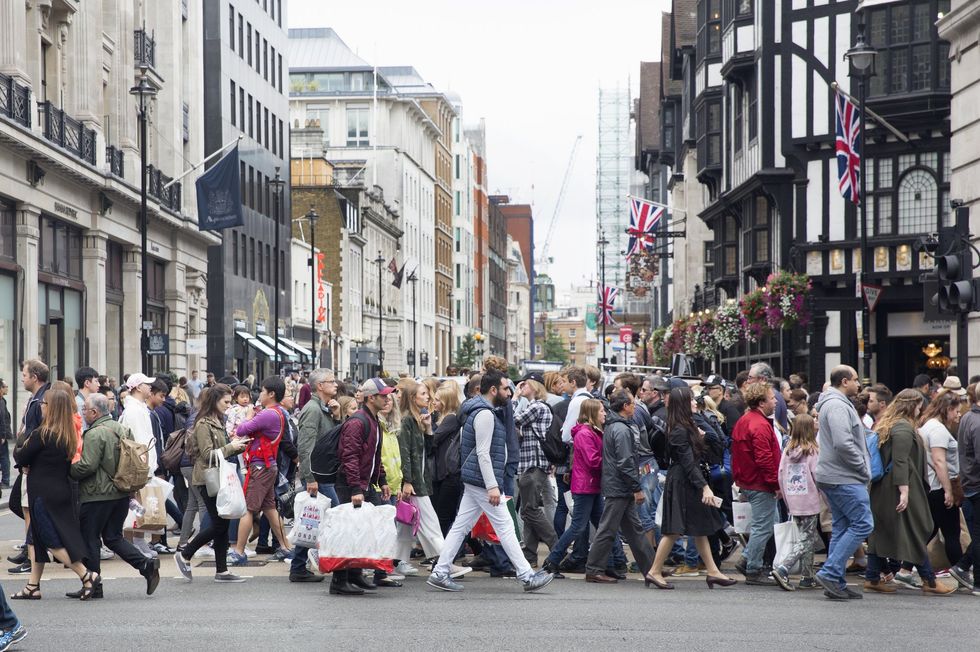
The ONS now anticipates 1.7 million additional residents between 2024 and 2034, bringing the total to 71 million
|GETTY
From this year onwards, deaths will exceed births annually, marking a fundamental shift in the nation's demographic balance.
As a result, migration will serve as the sole driver of population growth over the coming decades.
The age profile of Britain is also set to transform substantially, with those of pensionable age to increase from 12.4 million to 14.2 million by 2034, representing one-fifth of all residents.
When the population reaches its peak in 2054, pensioners will likely comprise 22 per cent of the total number.
LATEST DEVELOPMENTS:
At the same time, the proportion of children will also shrink considerably, with under-16s currently accounting for 18.2 per cent of the population at 12.6 million.
By 2034, this will fall to 11 million, or 15.5 per cent, declining further to 14.5 per cent by 2054.
Maike Currie, vice president of personal finance at PensionBee, said: "The UK's demographic dividend is turning into a deepening demographic drag.
"For the pension system, this means fewer future workers supporting more retirees."
She noted that with a third of migrants entering the UK aged between 16 and 34, the system faces reduced contributions alongside growing demands on the state pension.
Stuart McDonald, head of longevity and demographic insights at LCP, also warned that the NHS confronts not merely a larger population, but one with greater healthcare requirements.
He said: "Our work, cited in the NHS 10-year plan, showed that improved productivity and a serious focus on prevention will be needed to avoid significant increases in healthcare costs in the next decade."
He indicated an ageing population will likely see further rises to the state pension age, which raises fairness concerns given lower life expectancy among deprived communities.