










Britain is spending one-fifth of its entire aid budget on housing migrants and asylum seekers, a new report has revealed.
Research carried out by the Independent Commission for Aid Impact (ICAI) said this money, which is meant to be going overseas, poses a “serious risk to value for money”.
In 2024, £2.8billion was spent on housing migrants and asylum seekers – £1 billion more than the UK spent on humanitarian aid.
However, Sir Keir Starmer announced in February 2025 that aid spending would fall to 0.3 per cent on gross domestic product (GDP), down from 0.5 to bump up defence coffers.
TRENDING
Stories
Videos
Your Say
The report revealed that setting a figure for aid spend as a percentage of GDP and including asylum costs within this figure “undermined value for money”.
Referred to as “in-donor refugee costs” (IDRC), the report shows that spending on those fleeing their home countries reached 28 per cent of the entire UK aid budget in 2023.
As these costs fall under official development assistance spend (aid), increases in asylum spending mean less money for overseas aid programmes.
Unlike overseas development projects, which generally are planned Government policies, asylum support costs depend on how many people arrive in the UK, the ICAI says.
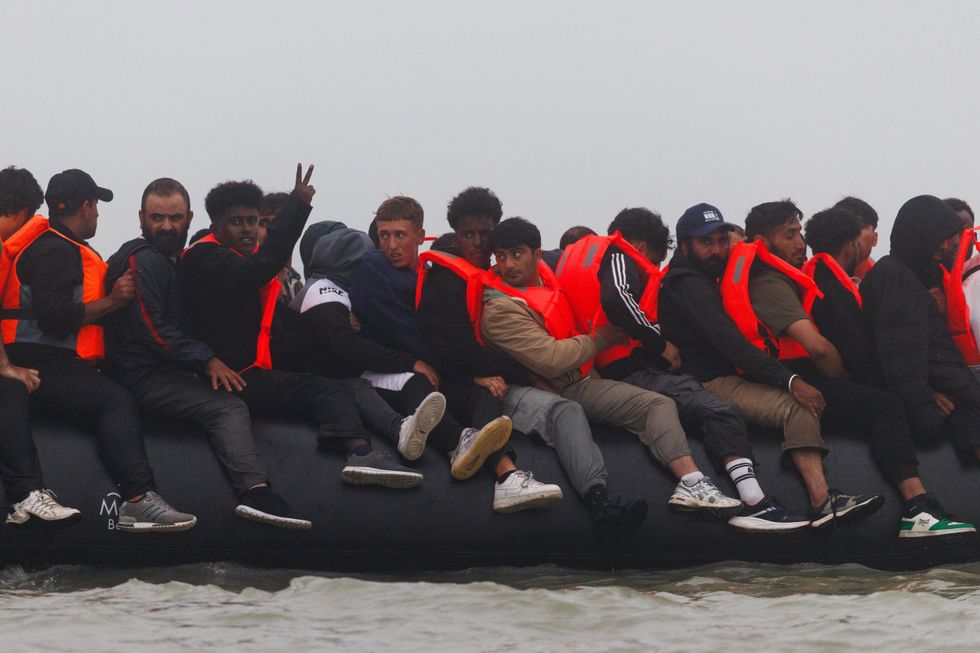
The report reveals that the UK’s spending on housing asylum seekers is “double or triple” that of other comparable nations
|GETTY
This means the UK aid budget can be significantly reshaped by migration pressures, rather than development priorities.
The report adds: "Any rise in IDRC automatically displaced funds from development spending overseas, regardless of value for money relative to the UK’s objectives.”
Robert Bates, Research Director at the Centre for Migration Control, said: "The tribunal system is being swamped by individuals making spurious appeals and looking to delay their removal from Britain, encouraged by left-wing lawyers and activists who do not believe in borders.
"It is a huge mistake for the Home Office to allow those who have entered our country illegally to make an asylum claim in the first place, let alone give them the right to try and overturn decisions in the courts.
LATEST DEVELOPMENTS
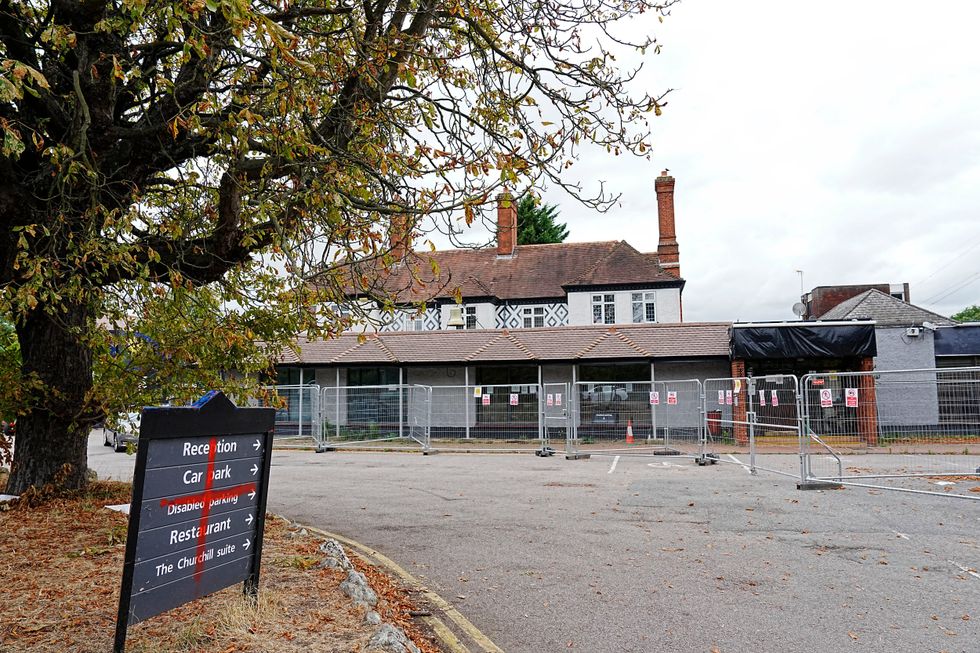
The Bell Hotel in Epping, Essex, in August last year after protests erupted when an appeals court lifted a temporary block on plans to use the hotel to house asylum seekers
|GETTY
"The inevitable result of this chaos is that the British taxpayer will be forced to continue forking out billions of pounds every year to prop up an asylum system that is outdated and falling apart at the seams."
Foreign aid spending has been muddied with allegations of fraud and inefficiency for a long time.
There have also been claims that foreign aid spending supports hostile groups overseas.
The report also reveals that the UK’s spending on housing asylum seekers is “double or triple” that of other comparable nations and is the highest cost per head.
Under international aid rules, some of the costs associated with supporting migrants during their first year in the UK can be counted as foreign aid.
This includes expenses such as accommodation, food, healthcare and schooling for children.
However, the report says these costs have risen sharply in recent years, largely driven by a steep increase in the per-person cost of providing support.
Higher numbers of arrivals have also played a role, including Afghans who came to the UK after the Taliban returned to power and Ukrainians fleeing Russia’s invasion.
These arrivals have contributed to a growing backlog of asylum claims awaiting decisions.
At the same time, a shortage of available housing has forced the Home Office to place migrants in privately rented hotels, which are significantly more expensive.
The report found that the Government has used foreign aid funds to pay for entire hotels used to house asylum seekers, even though some rooms remained empty.
According to the ICAI, roughly £50million of aid spend went towards unused hotel rooms in December 2023 alone - that translates to over half a billion over the course of year.
It is projected that spending on migrants is expected to continue absorbing roughly a fifth of the foreign aid budget.
As aid spending is about to fall to 0.3 per cent of GDP, it means only foreign development projects will only see 0.24 if UK spending on asylum seekers remains on its current trajectory.
Harold Freeman, an Independent Commission for Aid Impact commissioner, who led the review, said: “As the aid budget shrinks and ministers have to make hard choices, independent scrutiny will be essential to ensure what remains of UK aid is delivering meaningful results for people who need it most.
"Asylum costs serve a distinct purpose and are driven by domestic pressures, rather than the UK’s priorities overseas."
He added that separating the two areas of spend could help improve clarity and restore public confidence in how the aid budget is used.
More From GB News