











From today, Border Force, immigration officials and police have new powers to seize migrants’ mobile phones and SIM cards without making an arrest, as part of a crackdown on people-smuggling gangs.
The powers, which came into force on Monday under the Border Security, Asylum and Immigration Act passed in December, allow officers to seize and examine electronic devices where there are reasonable grounds to suspect they hold intelligence useful in prosecuting smugglers.
Phones belonging to migrants arriving by small boat will be seized immediately on arrival at the Manston processing centre in Kent.
Newly installed equipment at the site will allow officers to extract data from devices on the spot, accelerating investigations into people-smuggling networks.

From today, Border Force, immigration officials and police have new powers to seize migrants’ mobile phones
|GETTY
Officers have also been granted expanded search powers, including the ability to order migrants to remove outer clothing such as coats, jackets and gloves.
The legislation further authorises officials to inspect the inside of individuals’ mouths, amid concerns small electronic devices or SIM cards may be concealed.
The measures are designed to ensure no potential evidence is lost when migrants first enter the UK system.
Manston remains the primary processing hub for Channel arrivals, with the on-site data extraction technology representing a major investment in intelligence-gathering capabilities.

Officers have also been granted expanded search powers
|GETTY
Authorities believe the new powers will significantly speed up smuggling investigations by securing crucial digital evidence before it can be destroyed or wiped.
The legislation also introduces a raft of new criminal offences targeting those who facilitate illegal migration.
Anyone caught transporting, storing or supplying equipment such as boat engines to smuggling operations now faces up to 14 years in prison.
A separate offence covers those who download, research or record information intended to assist illegal crossings, carrying a maximum sentence of five years.
MIGRANT CRISIS - READ THE LATEST:
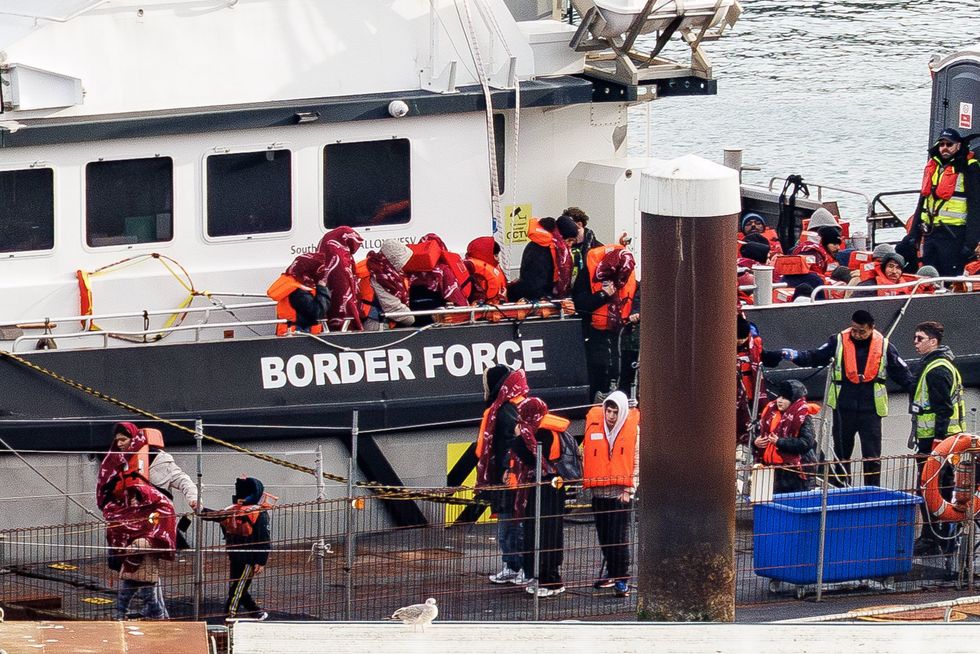
Authorities believe the new powers will significantly speed up people-smuggling investigations
|GETTY
This could include downloading maps highlighting launch points designed to evade detection or researching suppliers of boat-building materials.
Manufacturing, importing or supplying hidden compartments used to conceal migrants in vehicles has also been criminalised.
Those who produce or distribute false floors for vans or lorries used to transport people covertly face up to five years behind bars.
Border security minister Alex Norris said: "We promised to restore order and control to our borders, which means taking on the people-smuggling networks behind this deadly trade.

Manston remains the primary processing hub for Channel arrivals
|GETTY
"That is exactly why we are implementing robust new laws with powerful offences to intercept, disrupt and dismantle these vile gangs faster than ever before and cut off their supply chains."
The measures follow a year in which 41,472 migrants crossed the Channel in small boats - the second-highest annual total on record and a 13 per cent rise on 2024’s figure of 36,816.
Shadow Home Secretary Chris Philp dismissed the changes as “cosmetic tweaks”.
He argued there remains no real deterrent to illegal crossings and called for Britain to withdraw from the European Convention on Human Rights.
Our Standards: The GB News Editorial Charter