

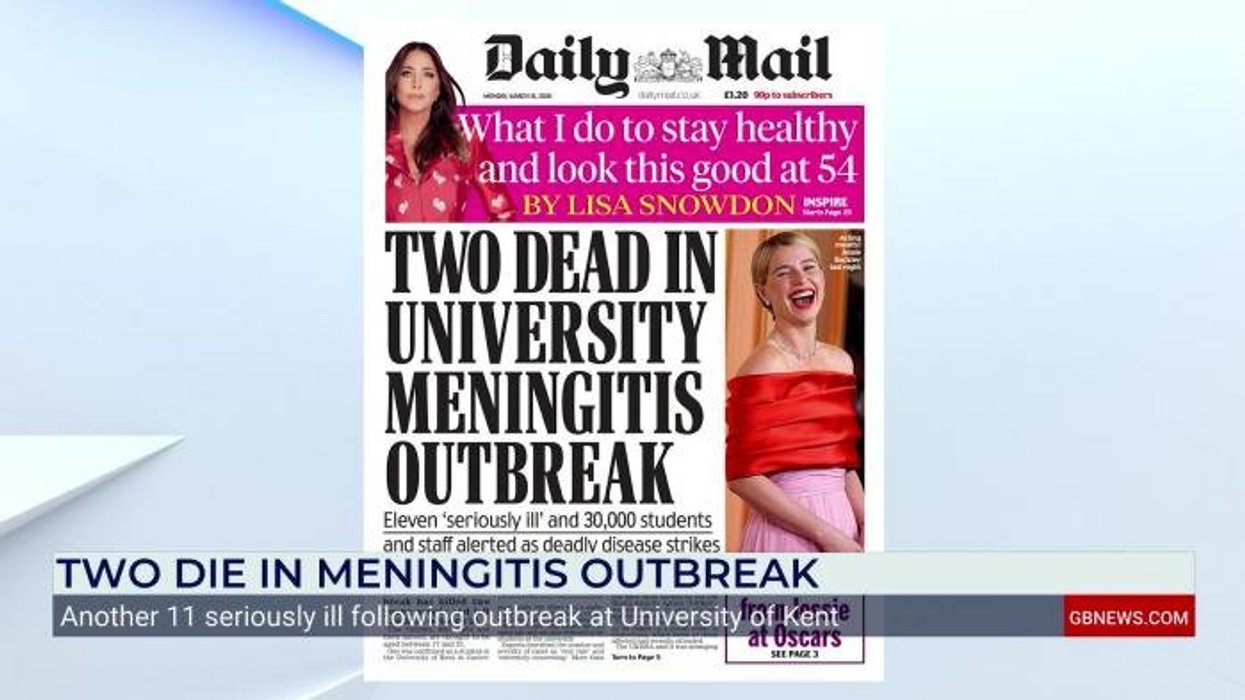









Campaigners are calling for wider use of the MenB vaccine after a deadly meningitis outbreak in Kent claimed the lives of a school pupil and a university student and left health officials racing to stop further cases.
The Meningitis Now charity campaign, “No Plan B for MenB,” says the disease remains one of the most dangerous forms of bacterial meningitis in the UK and is urging ministers to consider expanding vaccination to protect teenagers and young adults, who are among the groups most at risk.
The calls come after a Year 13 pupil from Queen Elizabeth’s Grammar School in Faversham died on Saturday, just days after a University of Kent student also lost their life following what officials have described as an outbreak of suspected invasive meningococcal disease in the Canterbury area.
However, the UK’s independent vaccine advisers have already examined whether the MenB jab should be given more widely and concluded there was not enough evidence to support routine use in teenagers.
TRENDING
Stories
Videos
Your Say
The Joint Committee on Vaccination and Immunisation (JCVI), which advises the Government on vaccine policy, previously ruled that offering the MenB vaccine to older children and young adults was not considered cost-effective at the time, partly because the disease is rare and it was unclear how long the vaccine would last, and how far it would reduce spread.
The committee has said decisions on meningitis vaccination depend on the strain involved, how common it is, and whether immunisation would provide enough protection across the population to justify a national programme.
Experts say the current outbreak is still being investigated, and any discussion about expanding vaccination would depend on laboratory tests confirming which strain of meningococcal bacteria is responsible.
Eleven others in the area are understood to be seriously ill in hospital and students at the University of Kent have been given antibiotics as a precautionary measure. The specific strain of meningitis has not yet been identified.

Hundreds of University of Kent students have been pictured this morning queuing for antibiotics after an outbreak in the historic town
|PA
More than 30,000 people in the Canterbury area are being contacted by the UK Health Security Agency (UKHSA) about the outbreak.
On Monday, Helen Whately, the MP for Faversham and Mid Kent, said: “The meningitis outbreak in our area is a huge shock. Feeling so deeply sad for the young lives lost - a year 13 pupil at QEGS [Queen Elizabeth’s grammar school] and a uni of Kent student. My heart goes out to their families.”
In a post on Facebook, she added: “It’s incredibly worrying too for the families of the young people in hospital, and others at risk. I am asking the NHS urgently for more information and guidance, especially given the rumours going round about where they may have picked it up.”
Health officials say antibiotics are being given to people who may have been in close contact with cases as a precautionary measure.
A spokeswoman for the UKHSA said: “We can confirm that UKHSA has worked with the University of Kent to provide advice letters to all 16,000 students, advising on recent cases, signs and symptoms, how to obtain antibiotics, and what to do if they feel unwell.”
LATEST DEVELOPMENTS:

Health officials say antibiotics are being given to people who may have been in close contact with cases as a precautionary measure
|PA
Meningococcal disease can progress rapidly with deadly consequences. Symptoms can include a fever, headache, rapid breathing, drowsiness, shivering, vomiting and cold hands and feet. It can also cause blood poisoning - septicaemia - which can lead to a characteristic rash that does not fade when pressed against a glass.
Professor Carl Heneghan, Director of Oxford University’s Centre of Evidence Based Medicine, said: “People need to be vigilant. Because early symptoms can resemble flu, exhaustion or a hangover, the illness may not be recognised until it has already become serious.”
Prof Heneghan, an urgent care GP, added: “If anyone has been in contact with someone who has meningitis, they should be in touch with health authorities or health authorities should get in touch with them.”
The University of Kent said it was working closely with public-health teams as investigations continue.
A spokesperson said: “We are deeply saddened to confirm that one student from the University of Kent has died following a case of invasive meningitis. Our thoughts are with the student’s family, friends and the wider university community at this extremely difficult time.
The safety of our students and staff remains our highest priority. We are working closely with public health teams and are in touch with staff and students to ensure they get the advice and support they need.”
Experts say outbreaks like this, although rare, can happen in university communities because young people live and socialise closely together.
Dr Zina Alfahl, from the University of Galway School of Medicine said: “Meningitis is inflammation of the membranes that surround the brain and spinal cord. It can be caused by viruses or bacteria, but the most dangerous outbreaks are usually caused by the bacterium Neisseria meningitidis.
When doctors say ‘invasive meningococcal disease’, they mean the bacteria have entered normally sterile parts of the body, like the bloodstream or the fluid around the brain. That can lead to meningitis or a severe blood infection called meningococcal sepsis.
"Overall the disease is rare in the UK, but when several linked cases appear in the same place - for example a university community - it becomes a serious public-health concern because the illness can progress very quickly.”
Teenagers and students are known to be at higher risk because the bacteria spreads through close contact such as coughing, kissing or sharing drinks.
Dr Simon Clarke, associate professor of cellular microbiology at the University of Reading, said: “The bacteria that cause meningococcal meningitis are often carried harmlessly in the nose and throat; around 10% of the general population carry them without ever becoming ill.
“In adolescents and young adults, carriage can be higher, with large UK studies showing rates between 7 per cent and 18 per cent.
“Transmission requires close, prolonged contact such as coughing, sneezing or kissing, and even among carriers only a very small proportion ever develop invasive disease.”

Teenagers and students are known to be at higher risk because the bacteria spreads through close contact such as coughing, kissing or sharing drinks
|PA
Vaccination remains the main protection against meningococcal disease, but different vaccines protect against different strains.
Professor Andrew Preston, professor of microbial pathogenicity at the University of Bath, said: “An outbreak of this size and speed is very unusual, and of great concern.”
Health officials say laboratory testing is under way to identify the exact strain responsible, which will help determine whether further vaccination or other measures are needed.
Dr Michael Head, senior research fellow in global health at the University of Southampton, said: "As we have seen, the disease can be severe and occasionally fatal.
Vaccination has been the key tool to reduce the numbers of meningitis cases and deaths.”
Public-health teams are continuing to trace contacts and monitor for new cases, with experts stressing that while the outbreak is serious, the overall risk to the wider public remains low.
More From GB News