







We are now three weeks into the US/Israel/Iran war, and the endgame is still not in sight. Not that we’re entirely clear what the endgame might be.
President Trump has flitted between regime change, then ending Iran’s nuclear ambitions, and later eliminating Tehran’s ballistic missile arsenal.
He changes his mind almost daily. Be that as it may, I think we’re now into an oil and gas war. This is nothing new in the region, as those of us who were ‘out’ in the first Gulf War in 1991 will be only too aware.
As we used to say at the time, would the world have rushed to Kuwait’s aid back then quite so enthusiastically if Kuwait’s main export had been carrots? I think not.
Although severely damaged and degraded by the US/Israeli aerial onslaught over recent weeks, Iran is not defeated – not yet anyway – and has lashed out almost indiscriminately at Israel and its neighbouring Gulf states in retaliation.
Originally sold as retaliation attacks on countries harbouring US bases and military personnel in the region, these quickly escalated to direct strikes on oil and gas facilities in Bahrain, the UAE, Qatar and Kuwait, among others, threatening their very economic welfare and prosperity.
This was an early sign of things to come. Israel added fuel to the simmering fires by a massive attack on Wednesday this week (18 March) on Iran’s South Pars Gas Field, part of the world’s largest gas field, and one shared coincidentally with Qatar.
Tehran’s riposte was swift; within hours, it struck Ras Laffan, Qatar’s major natural gas processing facility, causing extensive damage which could take years to repair.
To say that Trump was not initially best pleased with this development is a bit of an understatement. This, plus the restriction of oil and gas shipments through the Strait of Hormuz, was clearly not in his plans.
Declaring that “Israel will make no more attacks”, he then threatened that the USA would, with or without Israel’s assistance, “massively blow up the entirety of the South Pars Gas Field at an amount of strength and power that Iran has never seen or witnessed before”.
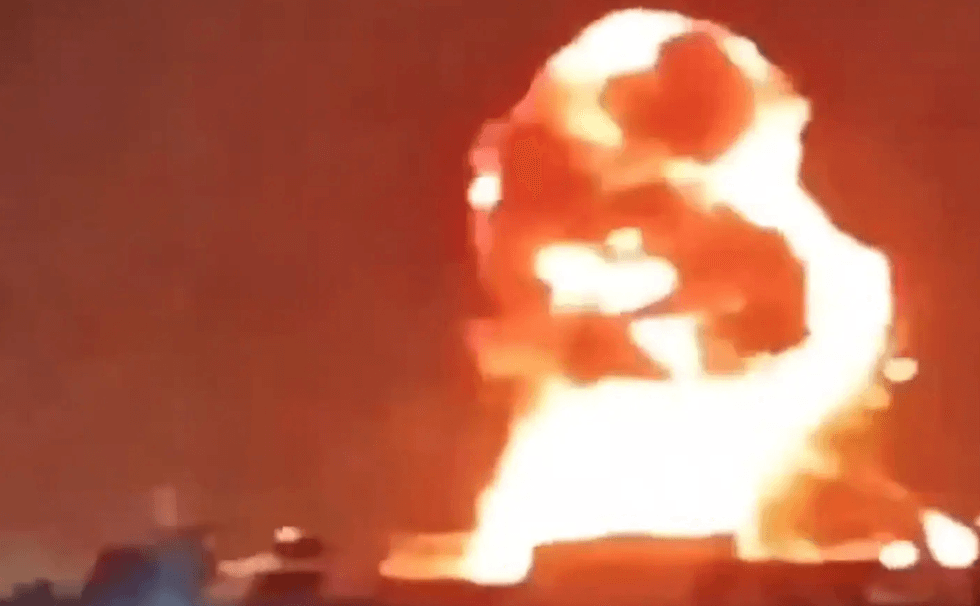
This single attack just changed the course of the Iran war. Escalation is now unavoidable
|X
Typical Trump bombastic bluster, perhaps, but he’s clearly rattled. All is not going according to his plan, whatever that may be. Meanwhile, oil and gas prices on world markets are volatile as the situation in the region plays out.
For its part, Iran’s Foreign Minister has hinted that there’s much more to come in terms of retaliation if push comes to shove, saying there will be “zero restraint” if Iranian infrastructure is hit again.
And yet there may be economic advantage to be had for the West. Elevated prices might benefit the USA, and even perhaps the UK. Conspiracy theorists have suggested that continuing $100 plus per barrel oil prices could prove good for US onshore production.
In the Permian Basin in West Texas and New Mexico, with oil prices at $70 per barrel, some shale fields have become uneconomic, and job losses have resulted. $100 oil might reverse that.
At the same time, might the troubles in the Middle East energy sector add further to calls for the UK to open up North Sea exploration and production again, notwithstanding how much Ed Miliband might wish otherwise?
Our Standards: The GB News Editorial Charter
More From GB News