






Officers within the police force responsible for the arrest of Henry Nowak moments before his death claim they felt “controlled and pressured" after being subjected to mandatory diversity training, a survey has revealed.
Hampshire and Isle of Wight Constabulary staff are trained to be aware of racism, unconscious bias, and privilege, alongside contested critical race theory.
A recent staff survey uncovered by The Times found one in seven of those at the force had felt “controlled and pressured” to adopt these notions, living in fear that “mistakes would have been held against me”.
A fifth also said they feared being “rejected for saying the wrong thing" – the same defence used to justify not pursuing criminal charges against those involved in grooming gang scandals.
Guidance available to view on the force's website cites "treating people differently" based on ethnicity, leading to sharp criticisms of two-tier policing in Britain.
Equality and diversity guidelines in the actions of police officers were challenged after a video emerged of officers handcuffing Mr Nowak, 18, for falsely alleged racial abuse while he lay dying from stab wounds.
The chief constable of the force since issued an apology for the actions of officers, but sternly denied allegations of two-tier policing.
Chief Constable Alexis Boon told GB News: "We understand and appreciate as police officers that we are accountable for our actions.
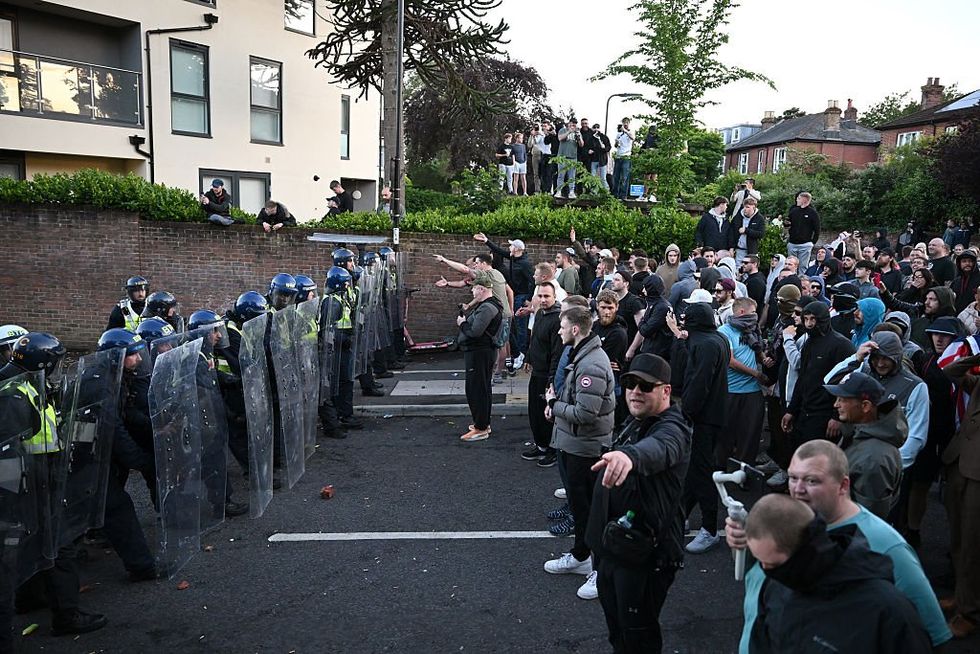
Southampton Police officers clashed with demonstrators outside the police station yesterday evening
| GETTY"What we ask, however, is that those actions are judged through fair and transparent processes. In this case, that process is already underway with the IOPC conducting their independent investigation.
A spokesman for the force confirmed three of the officers are still serving, with one officer having resigned.
As the IOPC has confirmed, they are all being treated as witnesses of the incident.
LATEST DEVELOPMENTS
Chief Constable Boon added: “I don’t accept the term of two-tier policing, I don’t recognise it.
“I see officers and staff out there day in, day out, working incredibly hard to deliver for all our communities. I just don’t recognise the concept."
Sir Keir Starmer also rejected claims of two-tier policing during Prime Minister's Questions today, and accused Nigel Farage of politicising the murder to create “grievance and division” after the Reform UK leader called for the public to respond with “pure cold rage”.
Asked whether he perceived a risk of inflaming the kind of division Henry Nowak’s father had warned against, Mr Farage said: “The division will get far worse. What you saw in Southampton last night is the beginning.
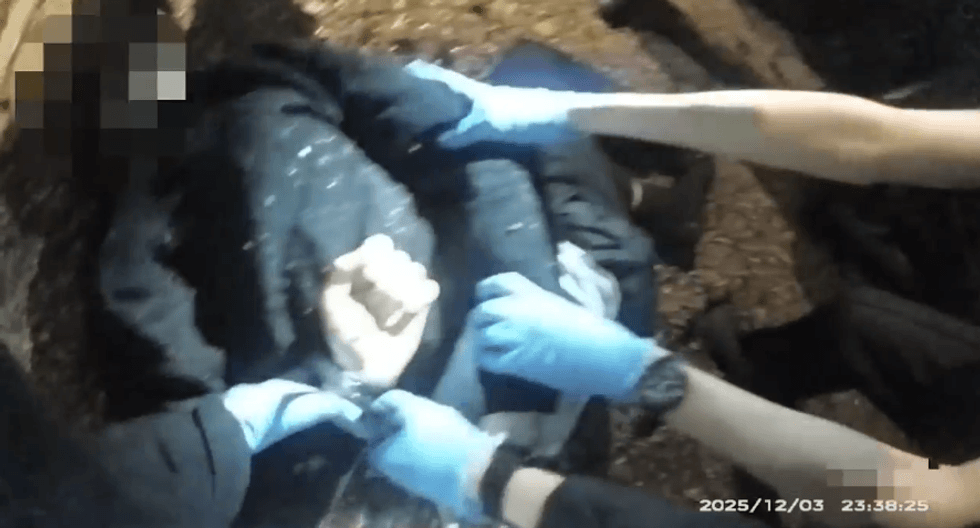
Police released harrowing footage of the moment Henry Nowak was arrested by Hampshire Police after being stabbed multiple times
| PA"If we get large numbers of young white males who think the police are prejudiced against them, goodness knows where we go. This has to end."
The Prime Minister described taking attention away from the grieving Nowak family as “unforgivable”.
The survey of Hampshire and Isle of Wight police officers was carried out following a "Inclusion Matters foundation course”, according to documents published by the College of Policing earlier this year.
The force commissioned the University of Reading to assess the training, which has been completed by 6,250 officers and staff.
The report forund the force had created a “more inclusive work environment by prioritising autonomy, competence, and relatedness”, and that “race disproportionality” in stop-and-search had nearly halved.
The report said: “High-quality policing requires active co-operation from members of the public, especially with regard to sharing information, reporting crimes, and serving as co-operative witnesses.
“Studies show that the quality of personal contact with the community is crucial to public confidence and perceptions of police legitimacy, particularly in black and minority ethnic communities.”