








Global warming is set to breach a key threshold of 1.5C in four years, a study finds.
Human activities pushed global warming to 1.37C last year, research showed, and the rate heat is building up in the Earth’s system suggests high levels of future warming.
The annual “indicators of global climate change” update by scientists across the world suggests that warming is set to surpass 1.5C in around four years time.
Under 2015’s global Paris Agreement, countries agreed to limit global warming to “well below” 2C above pre-industrial levels and to pursue efforts to curb temperature rises to 1.5C.
But the study, published in the journal Earth System Science Data, warns that the “carbon budget” – the amount of greenhouse gas emissions that the world can emit and still keep temperature rises to 1.5C – is likely to be exhausted in just three years.
The budget for 1.7C will be used up in 12 years. Emissions of climate-warming pollutants are at an all-time high, mainly from the burning of fossil fuels.
The UK has steadily been cutting its territorial emissions, with a fall of more than half from 1990 levels.
But, globally, they continue to rise. Although China is building a huge stockpile of renewables it still burns more than half the world’s coal – one of the most polluting power sources.
The study found signs that greenhouse gas emissions growth are slowing, pointing to factors such as the high price of oil and the shift to electric cars and renewables.
This could potentially hint at a peak and decline in emissions, researchers said, suggesting “policy, technology, and societal choices are starting to bend the curve”.
But the findings show that global warming continues at an unprecedented rate, with the Earth heating at 0.27C per decade, while 2025 was the third hottest year on record.
Professor Piers Forster, director of the Priestley Centre for Climate Futures at the University of Leeds and lead author, said: “A key indicator is the Earth’s energy imbalance, which measures how fast heat is accumulating in the climate system, and provides a crucial measure of the pace of climate change.
LATEST DEVELOPMENTS
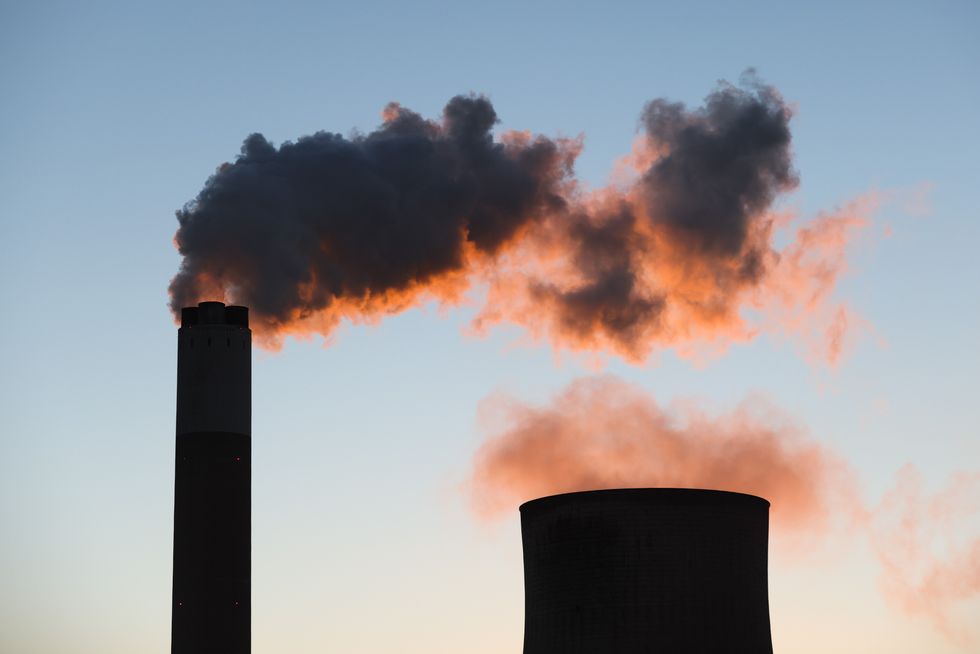 Climate scientists have previously criticised those who have built up hysteria around a potential environmental catastrophe | GETTY
“Without human influence, it should be close to zero, but it has been growing since the 1970s and is now at a record high, doubling in recent decades.”
This is driving warming on land and in the oceans, which have seen a huge increase in marine heatwaves which occurred on 65 days in 2025 alone, the melting of ice and rising sea levels.
In 2025, global sea level rise reached a new record of 23cm rise since 1901, with seas rising around 1.8mm a year, a rate that is “speeding up fast”, according to Dr Aimee Slangen, research leader at the Royal Netherlands Institute for Sea Research.
“This might sound small, but even this level of change is increasing coastal flooding in low-lying areas around the world, harming livelihoods and ecosystems,” she warned.
Dr Samantha Burgess, strategic lead for climate at the EU’s Copernicus Climate Change Service, said that nearly all of the warming over the past decade was driven by human activities, with the impacts on livelihoods and natural systems already being felt worldwide and set to accelerate.
She said: “There are signs that carbon dioxide emission growth is slowing, and this doesn’t mean that we’re on track yet, but it does mean that policy, technology, and societal choices are starting to bend the curve.”
Dr Burgess said it was important to have conversations to understand how to continue on the trajectory, warning “the next few years are really critical”.