









Britain has “taken the North Sea for granted” and must learn from the Norwegians if it wants to safeguard jobs and bolster energy security, an offshore expert warns.
Professor John Underhill called for an end to the “demonisation of oil and gas”, arguing it was vital both for keeping the lights on and ensuring a fair transition to renewable power.
He said that while Norway has a financial framework that encouraged production, energy in the UK had become a “political football”.
The University of Aberdeen’s Director for Energy Transition warned that Britain risked losing its hard-won expertise in the offshore sector without changing course.
He said it was time to appreciate the role that the North Sea has played in the nation’s fortunes since oil was first found more than half a century ago.
“And it could give us more,” he said, “but we're not making it easy for that to happen.”
Britain and Norway share the same North Sea basin, but while Norway is a net exporter, the UK is seeing ever-dwindling yields.
In part, this is because Norway has a smaller population and a huge array of hydro power, which supplies more than 90 per cent of its electricity.
While both nations have a similar level of offshore tax, Norway also has a fiscal framework that actively encourages exploration, Professor Underhill said.
The UK has the Energy Profits Levy, or windfall tax, which sees producers face a headline rate of 78 per cent of profits.

John Underhill is Aberdeen University’s Interdisciplinary Director for Energy Transition and Professor in Geoscience and Energy Transition in their School of Geosciences.
|ABERDEEN UNIVERSITY
This money goes to the Treasury, which received £2.9billion in 2024/25, down from £3.6billion the previous year.
Norway, in contrast, uses part of this revenue to offer rebates against exploration costs. This gives operators the confidence to continue looking for new reserves.
The income generated also goes into a Sovereign Wealth Fund that can be used for societal benefits, including funding renewable technologies.
Professor Underhill said: “This more consistent and politically unified fiscal and regulatory policy regime gives greater certainty for those in and around the oil and gas sector to invest.
“It encourages the capital investment upfront. This is expensive and doesn't necessarily have the certainty of finding something that will be commercially advantageous.
“You're not going to explore if you think that, when you explore, you may not be able to exploit – and, if you do exploit, you're going to give your money back.
LATEST DEVELOPMENTS
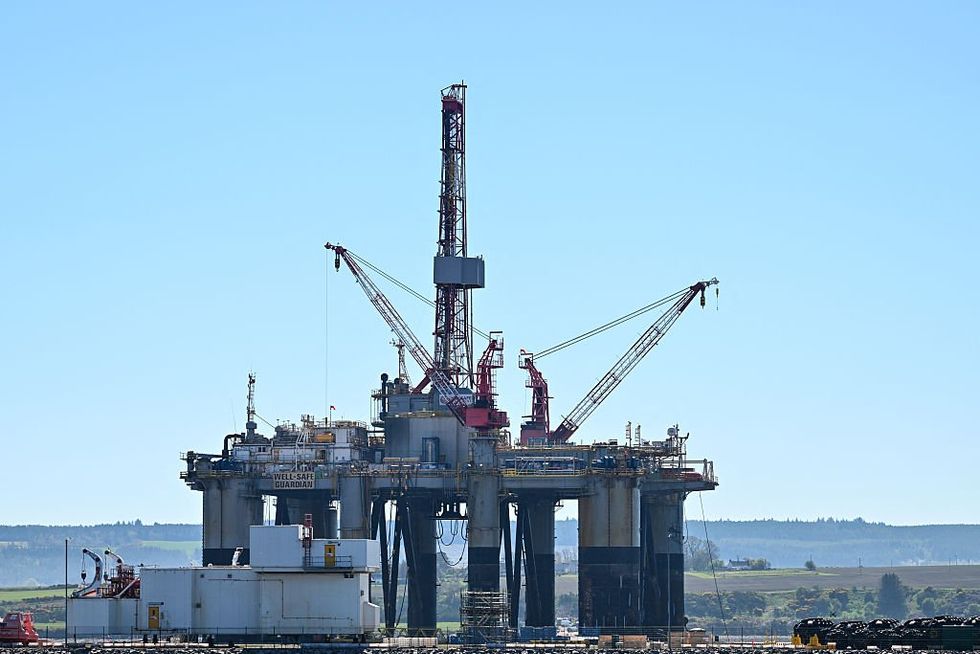
Britain risks an ‘imperfect storm’ in the North Sea as Norway reaps the rewards of a stable oil regime, expert claims
|GETTY
“So, that exploration rebate makes the difference between the two, because it encourages investment and encourages activity.
“It explains, to my mind, why there's so much more activity in Norway.”
He said without changes to the windfall tax and current ban on new licences, Britain risked “an imperfect storm, where companies pack their bags and work overseas”.
Professor Underhill said that oil and gas had been “effectively demonised”, adding that the benefits of domestic supply were being misinterpreted or overlooked. He took issue with the argument that more North Sea production wouldn’t reduce bills.
Although most would be sold on the global market, the tax revenue would come to Britain, he said, giving the Treasury more leeway.
He also pointed out that imported liquified natural gas had a higher carbon footprint than domestically sourced fuel.
“Whether it's in wealth creation or simply keeping people warm in the winter or the lights on, I think we have taken the North Sea for granted,” he said.
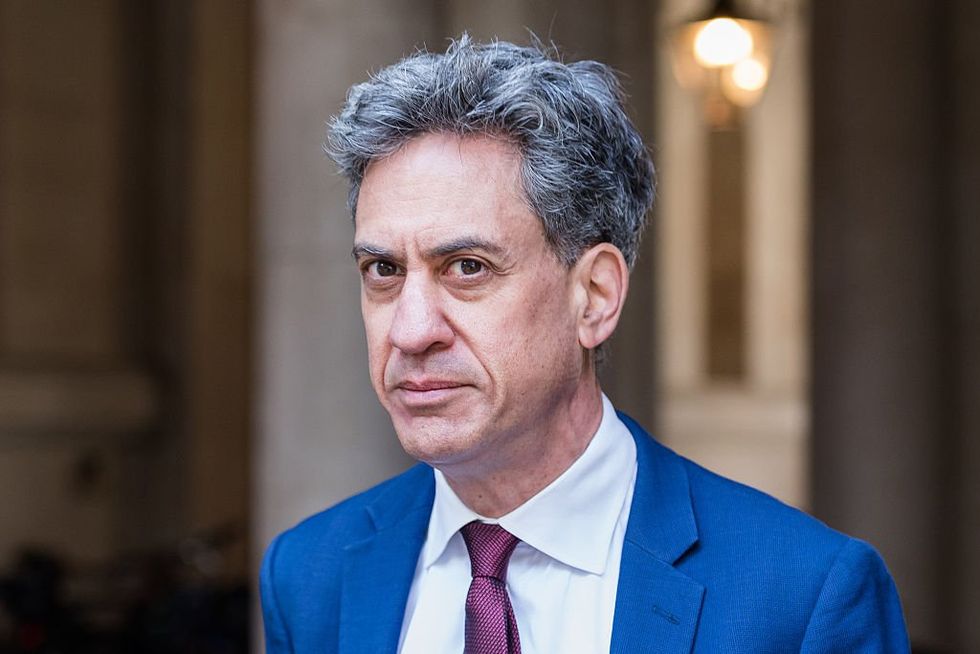
Ed Miliband has served as Secretary of State for Energy Security and Net Zero since July 2024
|GETTY
“I think there's a compelling case for domestic oil and gas on the basis of jobs, tax revenues, the income to the exchequer, for energy security and its lower carbon footprint relative to imports that we would need to meet demand instead.
“The latter is not counted on the UK emissions scorecard, something that leads to deindustrialisation to meet decarbonisation targets, yet is actually worse for the global climate.”
He added: “I often hear people say producing our own hydrocarbons won't take a penny off our bills.
“Well, actually, it's in the gift of the Treasury to determine what to do with the tax that’s raised. That is the chance to reduce bills, petrol prices, by reducing fuel duty and the like.
"So I don't accept the argument that the domestic production does not aid the UK.”
Professor Underhill has advised the Government on its North Sea plans, and it was his work that led to the adoption of ‘tiebacks’, where existing infrastructure can be used to develop adjacent fields.
This allows more drilling to go ahead without breaching the Government’s manifesto pledge not to issues more North Sea licences.
Professor Underhill said it was important to remember what a key part oil and gas still played in our energy mix and added he feared the shift to clean power was moving too quickly.
Many renewable jobs require the same skillsets as offshore oil work. But one market was closing faster than the other could keep up.
This made promises of an “ordered and just” transition hard to recognise, he said. “It feels currently as though it's more like an unmanaged, disorderly and unjust transition, because people are losing their jobs in and around the oil and gas sector.
“The jobs in renewables aren't currently there, and renewables themselves are facing very severe headwinds in Scotland. “I think what's been underplayed is the time needed to get this right, and the costs associated with it.
All these things suggest to me that the transition is going to take longer.
“It needs to be managed and thought through. And yet, at the same time, the oil and gas sector is being disincentivised. But we still rely on oil and gas for our total energy needs - it’s 75 per cent. in this country and that’s not going to change any time soon.
“So, for me, oil and gas, whether we like it or not, has to be part of the conversation of the transition, the dictionary definition of which is a gradual change of state over time - to buy ourselves more time, and effectively have less haste, more speed, and to get it right.”
A Government spokesman said that the Energy Profits Levy was a “temporary windfall tax” that would end early if prices remained low for a defined period. If not, it will end automatically in 2030.
They claimed that the tax has raised £12billion since being introduced in 2022.
The spokesman added: “We’re giving the sector and its investors the long-term certainty to plan, invest and support jobs with plans to replace the Energy Profits Levy when it ends by 2030, or earlier if its price floor is triggered.
“We are also making sure the North Sea has a prosperous and sustainable future through record investment that helps deliver the next generation of skilled jobs while growing the clean energy industries of the future.”
Labour has previously said that international market prices mean increased North Sea production would not have an impact on bills.