








Labour considered using emergency alerts to warn Britons of a "danger to life" during the summer unrest in 2024.
The violence, triggered by Axel Rudakubana's murder of three young girls, brought the Government right to the edge of activating the nationwide warning system.
Cabinet Office documents reveal multiple occasions when officials came close to using the emergency alerts, but ultimately chose not to.
The alert mechanism, introduced in 2023, sends a distinctive siren-like alarm to mobile phones when authorities determine there is an immediate threat to public safety in a specific area.
Following Rudakubana's killing spree in Southport on 29 July 2024, unrest erupted across the UK.
Government analysis published last month blamed the violence largely on "far-right agitators".
Unrest rapidly spread throughout northern England in particular, with some mosques, community centres and libraries targeted.
Migrant hotels also saw protests across the country, with some falling victim to attacks.
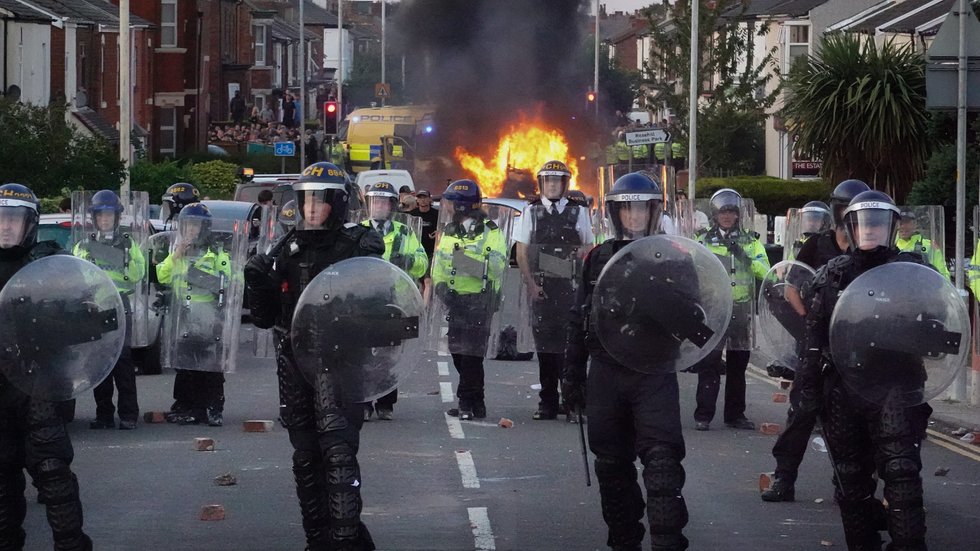
Unrest broke out in Southport and across Britain in 2024 after Axel Rudakubana's attack
| GETTYThe Cabinet Office documents said: "The following situations represent 'near misses' where the Cabinet Office has considered the use of the Emergency Alerts capability, which was ultimately stood down."
Officials specifically examined using the system "during the disorder and unrest which occurred across the UK throughout August 2024".
Authorities also contemplated issuing a "boil notice" alert to approximately 40,000 residents in Brixham, Devon, following a water contamination crisis in May 2024.
The cryptosporidium parasite infected the local supply, hospitalising some people and leaving hundreds suffering from severe gastrointestinal illness.
SUMMER UNREST IN RETROSPECT - READ MORE:
- 'No evidence of two-tier policing' in summer riots, official report says - claims branded 'DISGRACEFUL'
- 'Liberal elite' Guardian editors 'helped cause Southport riots' by 'ignoring' white working-class Britons, top peer claims
- Labour revives Covid-era 'spy unit' to snoop on migrant hotel critics online
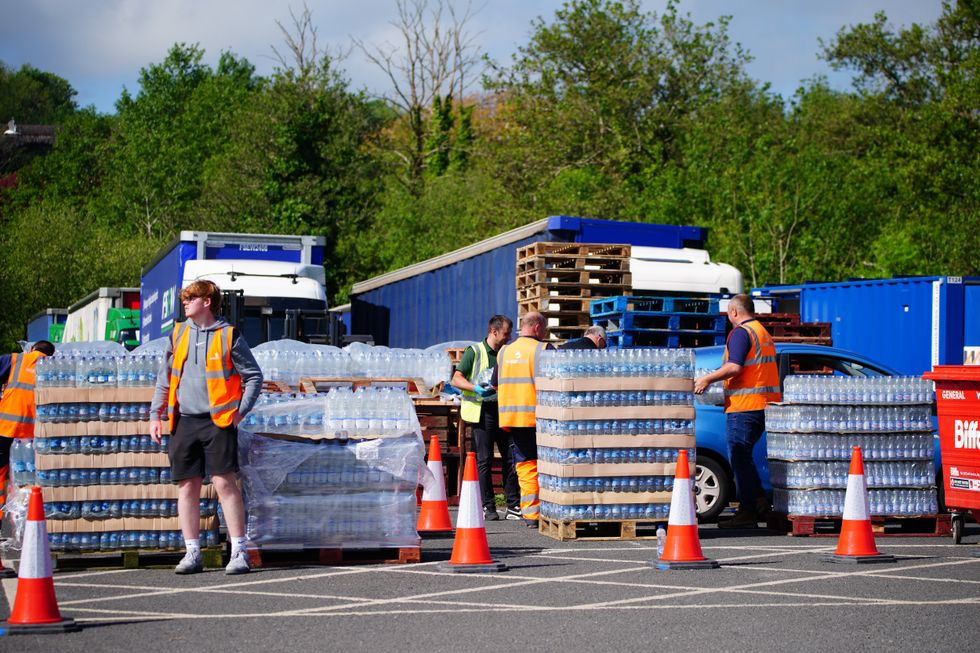
Around 16,000 households and businesses in the Brixham area of Devon were told not to use their tap water in May 2024
|PA
Falling space debris prompted another near-activation.
In January, an 11-tonne Chinese Zhuque-3 rocket threatened to strike British territory in the South Pacific upon its re-entry to the atmosphere - though the Cabinet Office assessed the likelihood as minimal.
Its wreckage ultimately landed roughly 1,200 miles south of New Zealand.
Northern Ireland's Kilroot power station presented a separate concern in September 2025 when it neared its annual 1,500-hour environmental operating limit, raising the prospect of blackouts.
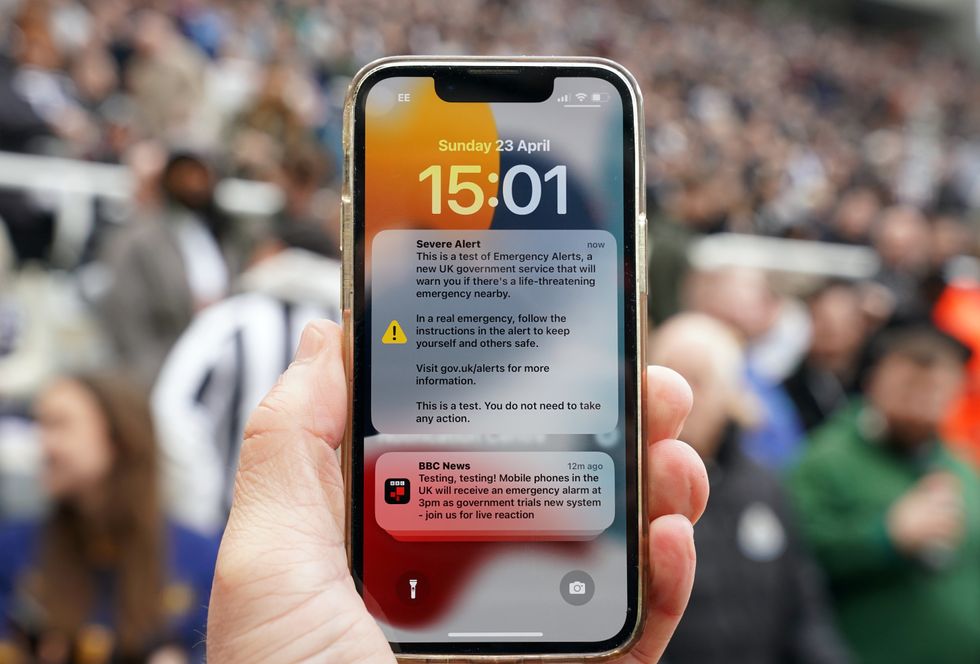
The Government insisted the alerts were a 'vital public safety tool designed to be used sparingly'
| PAExtreme weather events also featured among the potential triggers.
Officials considered activating alerts during widespread flooding that struck Cumbria, Lancashire and Greater Manchester in 2025, as well as when Storm Babet delivered exceptional rainfall and high winds to Scotland and north-eastern England in 2023.
A Government spokesman told PA: "As the public rightly expects, the government actively considers how to respond to a wide range of potential events.
"The Emergency Alerts system is a vital public safety tool designed to be used sparingly. Its activation threshold is very high and strictly reserved for threats to life."