











Man’s best friend can read us like a book – even when we’re not shouting “walkies”, a groundbreaking study has revealed.
The research found the unique relationship between man and dog is built on mutual trust and a continuous interpretation of man's subtle gestures and movements.
The findings, published in the journal Human Relations, have reshaped how we understand dogs – suggesting they don’t just react to human cues, but read and respond to us in a way that is highly complex and one that can play an active role in our care.
Focusing on trained assistance dogs, the research shows dogs are far more tuned in to human behaviour than previously understood.
TRENDING
Stories
Videos
Your Say
It found that dogs do far more than carry out practical tasks – instead providing “continuous care” without the need for speech and built on mutual trust and understanding.
"Care work is the result of bodily interaction, meaning small gestures and the working dog's sensitivity to interpreting people and responding to the needs of those who require assistance," said the co-author of the study, Suvi Satama, Assistant Professor of Management and Organisation at the University of Turku, Finland.
This allows dogs to anticipate changes in health, respond instantly and support their owner in real time – often before symptoms are consciously recognised.
The researchers, working in collaboration with scientists at Aalto University in Finland, describe this as “invisible care work”, a continuous process that goes largely unnoticed but plays a crucial role in everyday life.
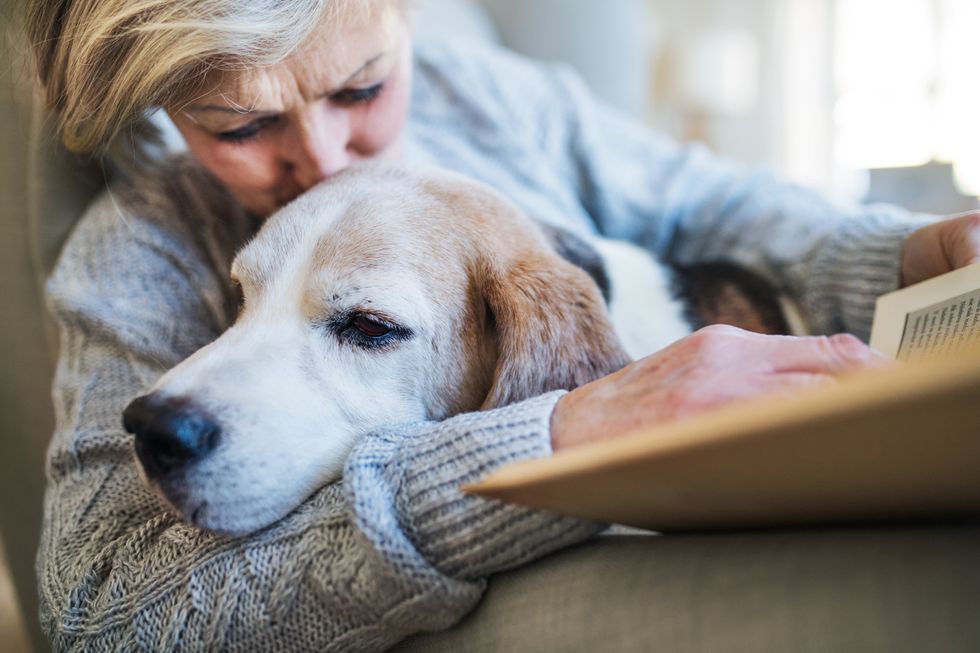
It found that dogs do far more than carry out practical tasks – instead providing 'continuous care' without the need for speech and built on mutual trust and understanding
|GETTY
The scientists carried out their analysis by examining the daily lives of 13 assistance dogs and their human companions using interviews, daily observation and photographs – which revealed a far richer picture than simple task-based support.
As well as helping with mobility and emotional reassurance, dogs were found to monitor their owner’s health condition, anticipate needs before they are expressed, provide reassurance through presence and behaviour, and respond dynamically to subtle physical and emotional cues.
In one example, people with diabetes may rely on their dog to detect changes in blood sugar levels.
When the dog alerts them, the person is expected to respond – checking levels or taking medication – helping to prevent potentially serious situations
LATEST DEVELOPMENTS
In these moments, researchers note, individuals may have to trust the dog’s judgement, even above their own perception.
Crucially, the study highlights that this is not a one-directional relationship.
The researchers say the dynamic turns the traditional care relationship between humans and dogs on its head: the care is not one-sided or something in which humans take care of dogs.
"Assistance dogs care for humans, and humans also do their best to care for their assistance dogs. In this way, vulnerability becomes relational, and both parties give and receive care," said Professor Satama.
Researchers say this challenges traditional assumptions – reframing assistance dogs as active participants in care rather than passive tools.
The research also found that assistance dogs demonstrate awareness and independence.
They appear to understand when they are working and when they are off duty – and can even act on their own initiative.
In one observed case, a dog began quietly moving across a room towards another dog during a meeting, without its visually impaired owner noticing. Researchers interpreted this as an example of the dog exercising its own "agency".
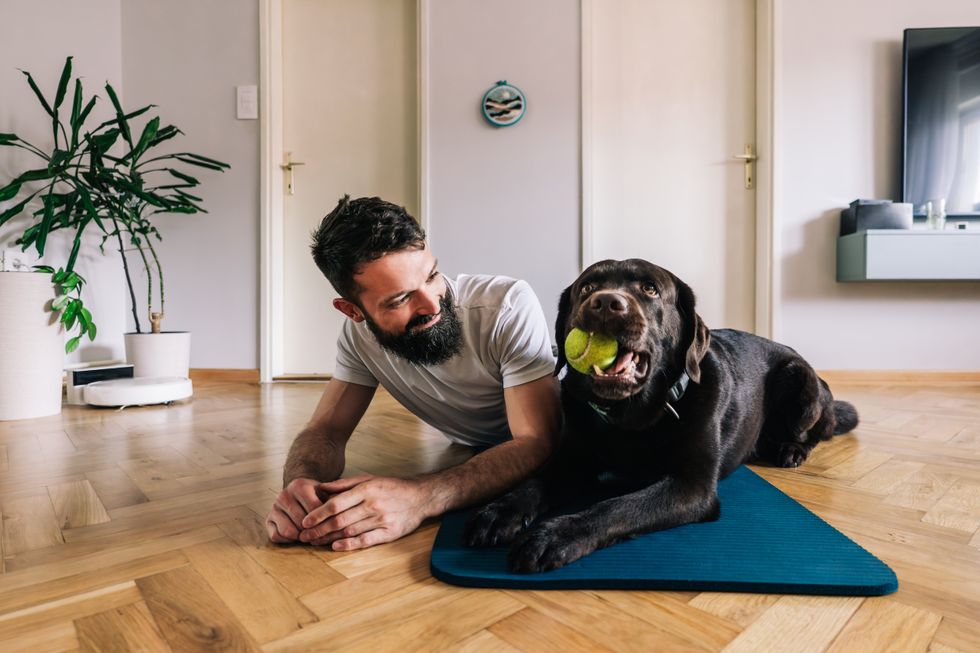
They appear to understand when they are working and when they are off duty – and can even act on their own initiative
|GETTY
Although the study focused on assistance dogs, the findings point to a broader shift in how animals are understood.
Rather than passive companions, dogs are shown to be active, intelligent and responsive partners, capable of interpreting and engaging with human needs in complex ways.
Professor Satama said: "When we recognise animals as agential caregivers, we can also better understand the care work between humans and its various dimensions."