








A leading cardiologist says he is fighting for his “reputation and medical licence” after raising concerns about the safety of Covid vaccines - a stance that has triggered possible action from the UK’s medical regulator acting against him.
Dr Aseem Malhotra revealed that the General Medical Council (GMC) is examining complaints about his public comments on the jabs after he scrutinised the data behind them.
Writing in an opinion piece for The Telegraph, the London-based heart specialist said the case raises a much wider question about whether doctors are still free to challenge established medical narratives.
“The case before the GMC is not simply about one cardiologist’s interpretation of vaccine data,” he wrote.
“It is about whether doctors in Britain are still free to question evidence without fear of professional destruction.”
Dr Malhotra’s concerns centre on research examining the safety profile of mRNA Covid vaccines.
He pointed to a peer-reviewed re-analysis of the original Pfizer and Moderna trials, published in the journal Vaccine in 2022, which examined serious adverse events recorded during the studies.
According to the research, he said, individuals were “two to four times more likely to suffer a serious side effect from the vaccine… than be hospitalised with Covid”, with serious adverse events occurring at a rate of roughly 1 in 800.
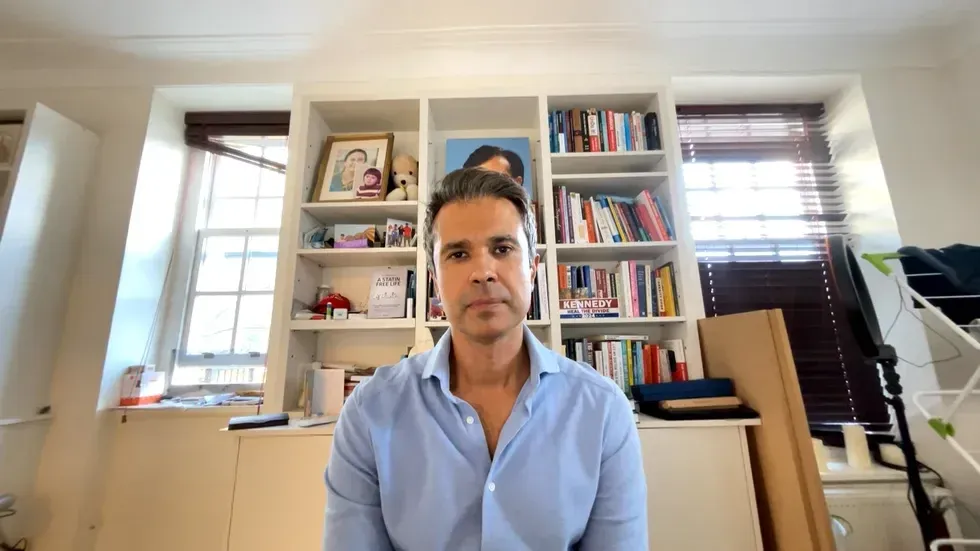
Aseem Malhotra is fighting for his reputation and medical licence after blowing the whistle on Covid vaccines
|GB NEWS
Around 40 per cent of those complications involved blood clotting problems.
“For a medical intervention administered to healthy individuals on a mass scale, that safety signal warranted serious public debate,” Dr Malhotra wrote.
He compared the figures with earlier vaccine programmes that were halted after much smaller risks were identified.
The US swine flu vaccine programme in 1976 was stopped after a neurological complication was found in about 1 in 100,000 recipients.
Meanwhile, an early rotavirus vaccine was withdrawn in 1999 after it caused a bowel complication in roughly 1 in 10,000 children.
Dr Malhotra said those comparisons highlight why safety signals should always be taken seriously.
His concerns began to intensify in 2021. Initially, he supported vaccination and encouraged uptake publicly.
LATEST DEVELOPMENTS:

Around 40 per cent of complications involved blood clotting problems
| PA“In early 2021, I had no significant safety concerns about the Covid vaccines,” he wrote.
“I received two doses of the Pfizer BioNTech mRNA vaccine. I appeared on Good Morning Britain, encouraging uptake in high-risk communities.”
But his thinking began to change following the sudden death of his father.
Dr Kailash Chand OBE - honorary vice-president of the British Medical Association - died after suffering a cardiac arrest.
A post-mortem revealed severe coronary artery disease that Dr Malhotra believes had progressed unusually quickly for someone of his father’s age and lifestyle.
“At first, I rejected any suggestion of a vaccine link outright,” he wrote.
However, by late 2021, he said emerging data was raising new questions.
Protection against infection appeared to wane while countries with high vaccination rates continued to experience Covid waves.
At the same time, reports of heart inflammation and other cardiac complications were appearing in drug safety databases.
A study published in the journal Circulation reported raised levels of inflammation - markers linked to heart attacks - in some patients after receiving mRNA vaccines.
Although the research did not prove the jabs caused the heart problems, Dr Malhotra said it suggested a possible biological explanation involving inflammation affecting blood vessels.
He later compiled his analysis into a 10,000-word peer-reviewed paper published in the Journal of Insulin Resistance in 2022, which he says has become the most downloaded paper in the journal’s history.
But his stance quickly triggered backlash from sections of the medical establishment.
Complaints were submitted to the Royal College of Physicians, which suspended his fellowship after allegations that his public comments had brought the college into disrepute.
Soon afterwards, the General Medical Council received complaints about his conduct.
Dr Malhotra says the core accusation is that by publicly scrutinising the data, he may have undermined confidence in vaccination.
“But that argument rests on a dangerous premise - that trust is maintained by silence rather than transparency,” he wrote.
He insists he has never opposed routine immunisation.
“I have not advised patients to refuse routine immunisation. I have not discouraged uptake of established childhood vaccines,” he said.
“My concerns relate specifically to the risk–benefit profile and policy decisions surrounding Covid mRNA vaccines.”

Although the research did not prove the jabs caused the heart problems, Dr Malhotra said it suggested a possible biological explanation involving inflammation affecting blood vessels
|GETTY
The controversy escalated last year when Dr Malhotra spoke at the Reform Party conference, where he discussed concerns raised by oncologist Professor Angus Dalgleish about aggressive cancer patterns.
During the speech, he referenced cancer diagnoses in members of the Royal Family - something he said was not intended as proof of causation but to reflect public anxiety about rising cancer rates.
Within minutes, senior Reform figures distanced themselves from his remarks.
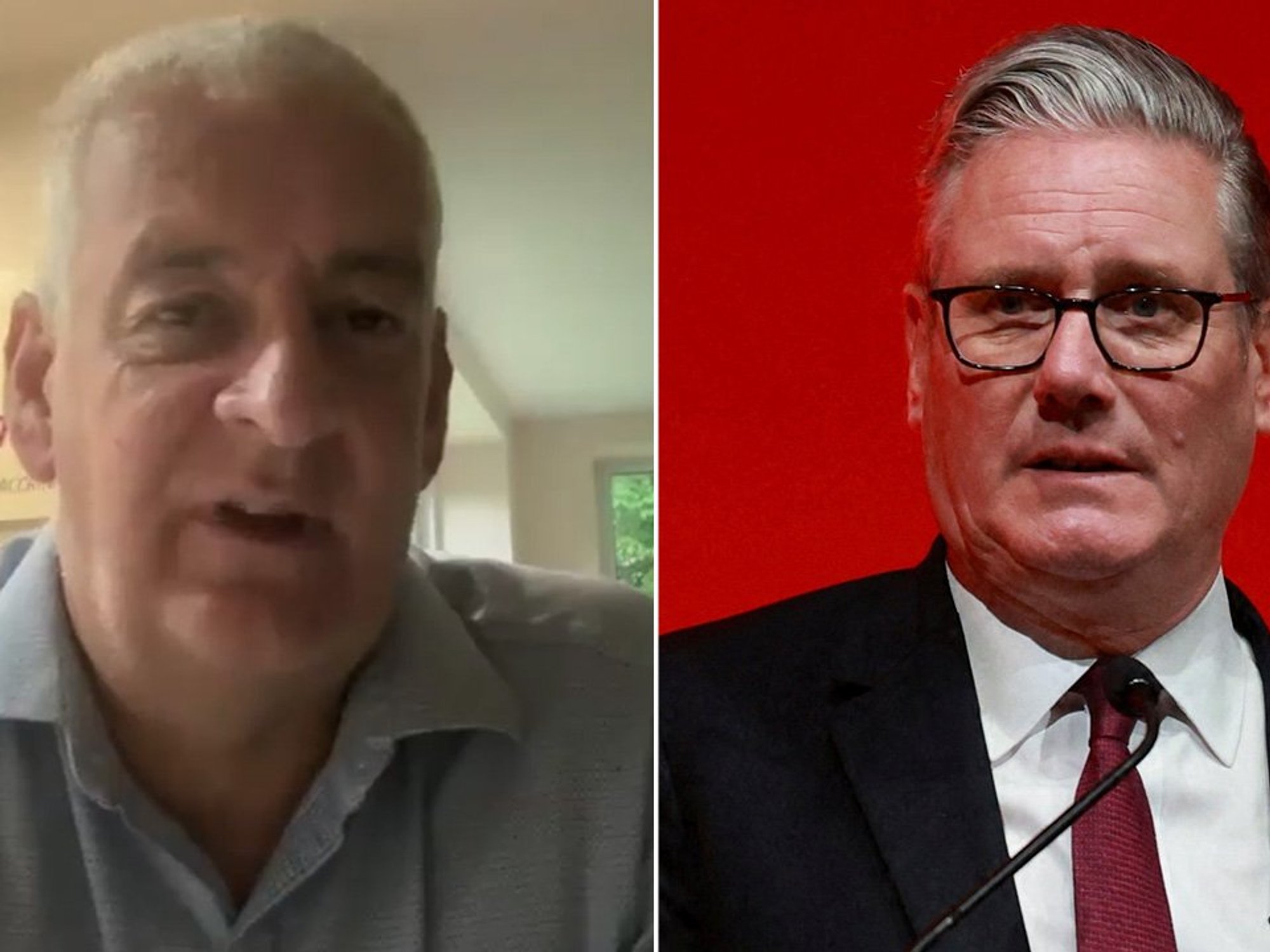
Days later in Parliament, Prime Minister Sir Keir Starmer condemned what he described as “dangerous conspiracies”.
The comments sparked fresh calls from some doctors and campaigners for Malhotra to be struck off.
However, the cardiologist argues that challenging orthodoxy has been a defining part of his career long before the pandemic.
He was among the first heart specialists in Britain to campaign against excess sugar and ultra-processed foods, helping launch Action on Sugar in 2014.
The campaign pushed for reformulation of processed foods, clearer labelling, and a sugary drinks tax.
At the time, he says, advocating low-carbohydrate diets to reverse type 2 diabetes was widely dismissed as fringe.
Today, the approach is supported by growing clinical evidence.
Malhotra argues this reflects a fundamental truth about medicine - that scientific knowledge evolves.
“Medicine is not an exact science - it is an applied science: complex, probabilistic, constantly evolving,” he wrote.
He frequently cites Professor David Sackett, widely regarded as the father of evidence-based medicine, who warned:
“Half of what you learn in medical school will turn out to be either outdated or dead wrong within five years. The trouble is no one can tell which half.”
Dr Malhotra’s campaign has also attracted international attention.
On the day his research paper was published in 2022, he says he received a call from US Health Secretary Robert F Kennedy Jr.
He called to thank him for his bravery.
He said: “Dr Malhotra, it’s Robert Kennedy Jr. I want to thank you for your courage.”
The two later discussed pharmaceutical regulation and informed consent, and Dr Malhotra was eventually appointed Chief Medical Advisor to MAHA Action, a non-profit co-founded by Kennedy.
He has also appeared on The Joe Rogan Experience, where he discussed vaccine safety data and excess mortality patterns.
Despite the controversy, Dr Malhotra insists the issue ultimately goes far beyond his own career.
“If regulators punish doctors for raising peer-reviewed safety concerns, what message does that send to younger clinicians watching?” he wrote.
“That silence is safer than scrutiny.”
He added: “My position has always been that questioning data is not anti-science. It is the essence of science.”
And he warned that the outcome of any GMC investigation could shape the future of medical debate in Britain.
“Medicine advances through challenge, replication and debate - not through silence.”