









A council row has erupted after a widow purchased a fly-tipped wasteland and turned it into a farm for children.
Tara Dexter bought a smallholding while mourning the death of her veteran partner, Gary, in Sidlesham, West Sussex.
The pair had talked about one day owning a small farm and creating their own version of the 1970s sitcom, the Good Life, so Ms Dexter decided to make their dream a reality.
She told the Daily Mail: "We'd always wanted a little slice of nature to work as a smallholding and when I saw this I snapped it up.
"It was £57,000 and was a real mess but I was prepared to work hard. I rolled up my sleeves and got to work.
"I worked all the hours I could transforming it and clearing the rubbish and mess from the site.
"It now has around 2,000 plants, fencing, hedgerows and has been cleared of all the toxic rubbish that was here."
However, she is now embroiled in a row with Chichester District Council, who argue the development on the smallholding has breached planning rules.
The 57-year-old, from Yapton in West Sussex, said her mini farm, which is now home to pigs, chickens, peacocks and other animals, has helped her through the death of her partner to cancer.
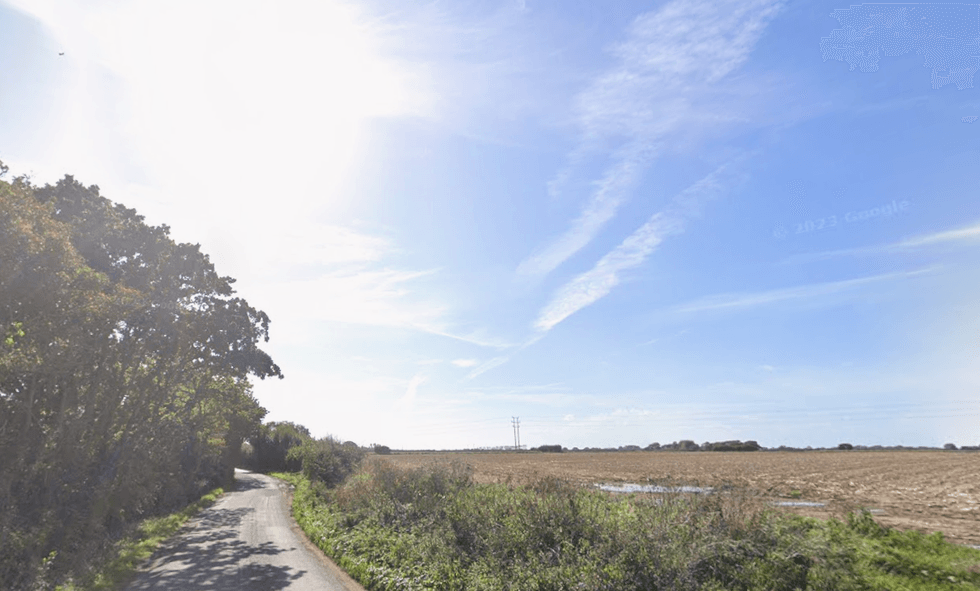
The plot is located on Ham Road in Sidlesham which was previously used a fly-tipping spot
|GOOGLE STREET VIEW
Previously an area where rubbish was dumped, the plot is now visited by deer and buzzards, as well as schoolchildren from the nearby primary school.
The council even provided Ms Dexter with £3,000 in grants to plant hedgerows and trees on the land, but are now trying to close her micro-farm down.
They have argued the container unit and sheds are a breach of countryside planning rules.
However, Ms Dexter claims the council initially had no issue with the buildings, but when it came to applying to the planning department, her application was rejected.
She had paid £20,000 for the container and applied wooden cladding to it, to ensure it blended in with the environment.
LATEST DEVELOPMENTS

Chichester District Council said the Planning Inspector found the 'development caused unacceptable harm to the character and appearance of the countryside'
|GOOGLE STREET VIEW
She has sought legal advice following the council handing down an enforcement notice against her, to which her solicitor has appealed to the council three times.
They are now appealing to the Planning Inspectorate as a "last chance", who have examined the property.
Ms Dexter said: "It's so unfair because this was just wasteland which had been fly-tipped for years and years.
"Now we have nature back on the land. How can what I'm doing be so bad? I'm not asking to build or put houses or have several units here; it's just one and I've made it as natural-looking as possible."
The grieving widow said her mental health has suffered since her partner's death, who she described as her "soulmate".
However, the micro farm brought her solace, calling it her "retreat".
Without the container and shed, Ms Dexter explained she cannot work on the land and consequently, she will have to sell the land.
She said she has already received offers from members of the traveller community to purchase the land.
In a statement, Chichester District Council said: "The planning application for a container on the land was refused by the council in 2024, as it conflicted with key policies aimed at protecting the countryside and because the site lies within a floodplain.
"The decision was subsequently reviewed by a Planning Inspector, who agreed with the council and dismissed the appeal.
"The Inspector noted that the container's prominent position made it appear stark within its rural surroundings, and that its domestic-style design was out of keeping with the rural landscape."
The council continued saying the Planning Inspector found the development caused unacceptable harm to the character and appearance of the countryside, concluding that any welfare benefits for educational use could have been achieved in a less damaging way.
Both the council and the inspector determined the proposal failed to comply with local and national planning policies, and enforcement action has since been taken to secure the container's removal, though that decision has been appealed and is currently before the Planning Inspectorate.