






The ditching of the most apocalyptic global warming forecast is proof science is never settled, a climate analyst has said.
Professor Roger Pielke Jr suggests a “comprehensive reassessment” of both policy and future predictions on climate is now needed.
Scientists and the media have long quoted from the Intergovernmental Panel on Climate Change's (IPCC) worst-case scenario, which foresaw temperatures soaring by up to 5C, massive sea level rises and global crop failures.
Some even predicted it could ultimately bring about extinction events on the scale of the dinosaurs.
But modellers working for the UN-backed climate body, which provides climate change information to governments, now say the chances of this worst-case scenario actually happening are “negligible”.
They say that “recent emission trends” and the lower cost of renewables have helped rule it out.
The scenario – RCP 8.5 - had been treated by experts, policymakers and the media as a “business as usual outcome”, despite the fact it was intended “to explore an unlikely high-risk future”.
Professor Pielke had long called for the scenario to be dropped, only to be branded a “climate change denier”.

Professor Roger Pielke Jr says the ditching of the most apocalyptic global warming forecast is proof science is never settled
|AEI
It was his substack, The Honest Broker, which highlighted the axing of the scenario.
He said he was pleased it had been ditched but pointed out that for 20 years it has been “the dominant lens” through which climate predictions were made, and on which climate policies were based.
Tens of thousands of papers used it as a source, he said.
Prof Pielke, Senior Fellow at the American Enterprise Institute and a professor emeritus at the University of Colorado Boulder, said: “It’s difficult to express how significant this is.
“It's mathematically true that the 8.5 scenario is the dominant perspective, the dominant lens through which we've seen climate change for years.
“The picture painted by these studies is not related, as we know now officially, to the real world we're headed into - that's the disjointedness of all this.
“It's more than just research and assessment - the 8.5 scenario has, because of its prominent role in research, found its way into policy, regulation, finance and planning.
“It's everywhere, and that's why this is so significant, because it literally is everywhere.”
LATEST DEVELOPMENTS:
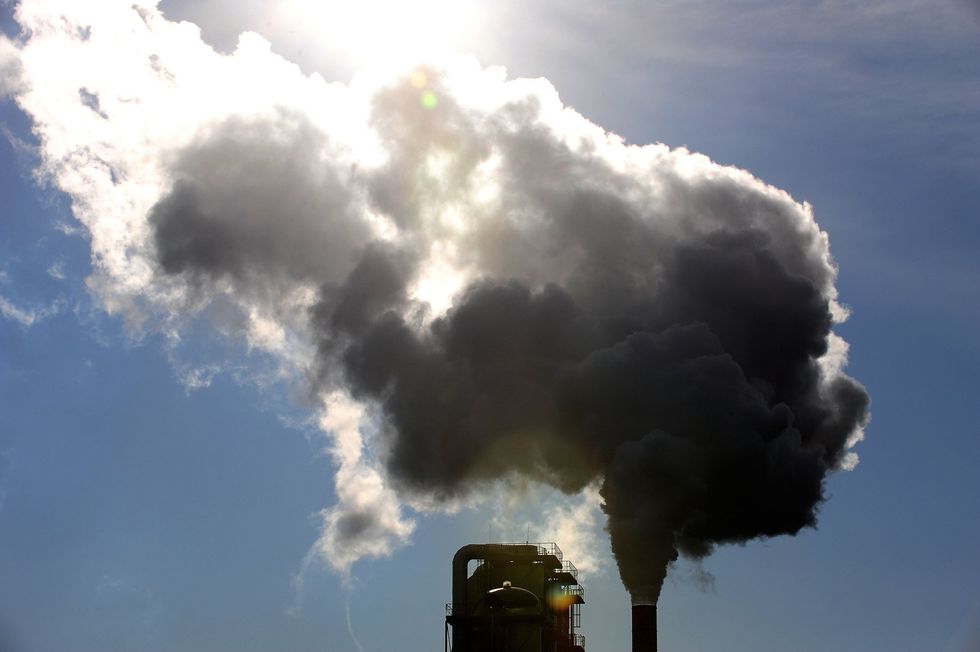
Tens of thousands of papers cite the IPCC report as a source
|PA
Prof Pielke questioned why the scenario had endured for so long. Several experts had questioned its likelihood.
“We've known for about a decade now that it's an implausible scenario,” he said.
“When we first started doing research on it, the response was ‘you must be a climate denier, because this is not part of the narrative’.”
He warned this kind of reaction could damage trust in experts and said scientists shouldn’t be frightened of re-assessing their own conclusions.
He said: “I guess the elephant in the room is why does it take 20 years to update scenarios? Imagine doing economic policy with data from 2005 - it's ridiculous.
“So another part of this is, can climate science be trusted?
“The defining feature of science is self-correcting. So, if there is resistance to self-correction along the way, I think it compromises trust, or potentially could compromise trust.
“All the people have been arguing that climate science is settled science, that there is no room for discussion or debate - it's probably time for them to stop with that sort of rhetoric, and say ‘thank goodness we're learning, science is evolving’.”
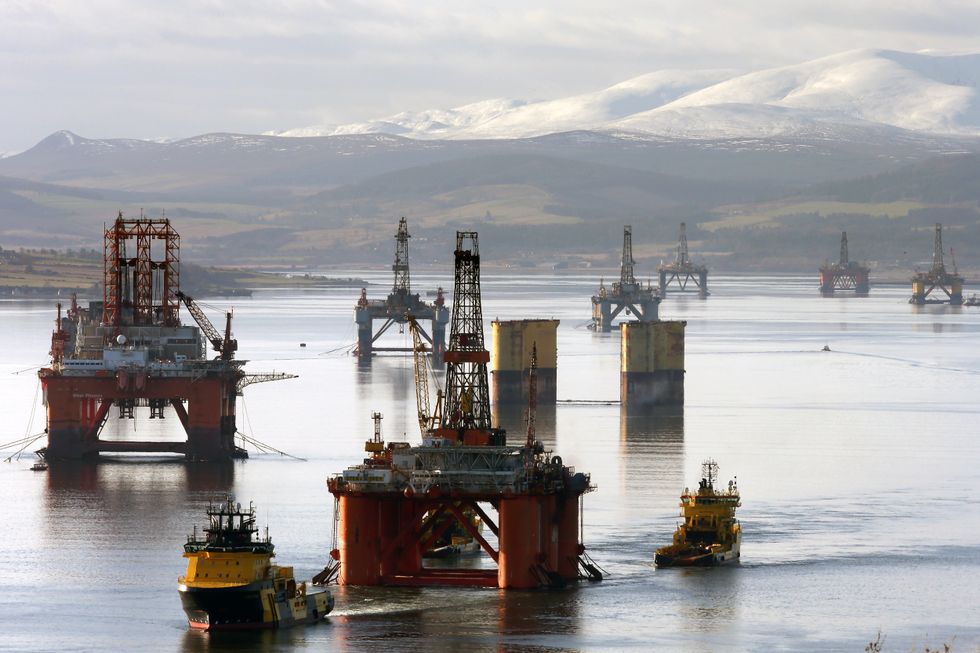
Professor Roger Pielke Jr said scientists shouldn’t be frightened of re-assessing their own conclusions
|PA
He suggested policies based around the most extreme forecast may now need to be revisited.
He said: “I think there needs to be a comprehensive reassessment of where we're at with climate science and projections of the future.
“The extreme scenarios are so well baked into regulation, policy, and planning that there needs to be a wholesale accounting of how those policies stand up, given this new perspective.”
But this didn’t diminish the importance of dealing with climate change, he stressed.
Scientists warn the planet could warm by up to 3.5C this century under the new high-end scenario - enough to bring climate disruption, rising seas and more extreme weather.
Prof Pielke said: “To be clear, climate change is real, and this doesn't make the problem disappear - but it makes it decidedly less apocalyptic and catastrophic.
“There's a need to reassess and put things back into perspective. Climate change is real, but it's not the end of the world.”
The good news, he said, was that a better outlook meant a smaller mountain to climb if we are to tackle global warming.
This would lead to better energy security and cheaper bills, as well as a healthier planet.
He said: “There's a silver lining here for climate advocates.
“If you're on an 8.5 trajectory with massive emissions, the scope of change in reductions off that extreme scenario is huge.
“If it turns out we're on a much more moderate scenario, then the mitigation challenge, while still enormous, is much less than it would have been.
“So I think my advice to the climate advocates is, take the win.
“You may not be able to sell policies on the back of the apocalypse, but you know, climate change is real enough, and the same sort of policies are going to make sense regardless, because people don't like higher-priced energy and they do like energy security.”
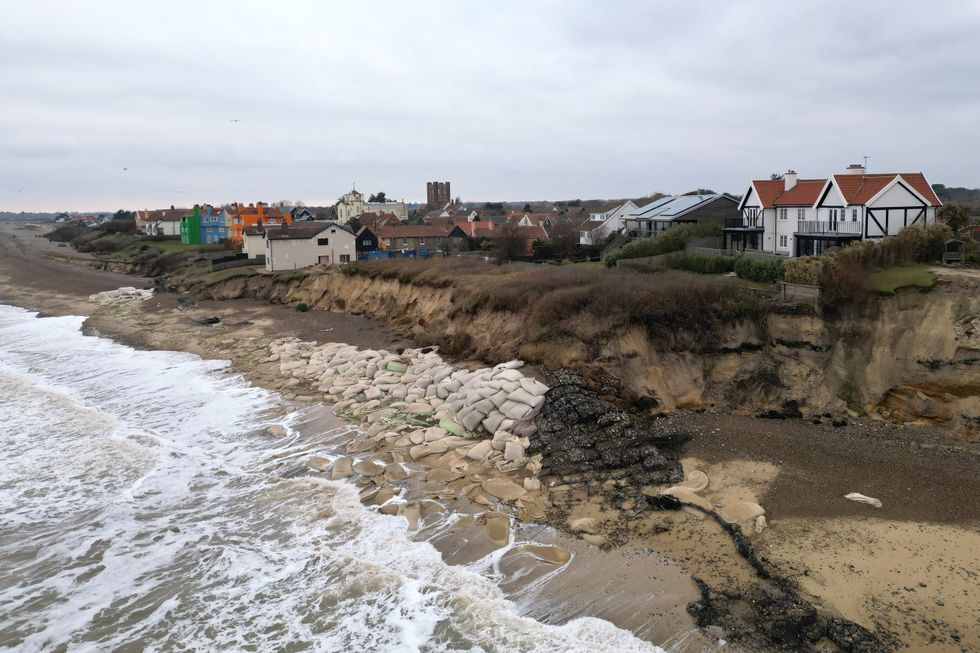
Scientists warn the planet could warm by up to 3.5C this century under the new high-end scenario - enough to bring climate disruption, rising seas and more extreme weather
|PA
Prof Pielke also questioned whether climate policy and renewables had ruled out RCP 8.5.
He said that its assumptions, which included a massive increase in the use of coal, made it inherently implausible.
Writing in the journal Geoscientific Model Development (GMD), the experts behind the models explained why the old worst-case scenario would be dropped.
They wrote: “The scenarios should cover plausible outcomes ranging from a high level of climate change (in the case of policy failure) to low levels of climate change resulting from stringent policies.
“For the 21st century, this range will be smaller than assessed before: on the high-end of the range, the high emission levels have become implausible, based on trends in the costs of renewables, the emergence of climate policy and recent emission trends.”
The Netherlands Environmental Assessment Agency’s Detlef van Vuure, lead author of the GMD study, said that cheaper renewable energy and countries’ efforts to combat climate change over the last decade had brought about the change.
He said that the former worst-case scenario had been useful for certain risk-management purposes, such as flood defences, where extremes needed to be taken into account.
He warned that the new worst-case scenario would still be devastating and said that there was “no reason to celebrate”.