










Britain experienced an earthquake nearly every single day this year, according to fresh data from the British Geological Survey.
The figures reveal that 309 tremors were recorded across the country up to December 18 2025, making it an above-average year for seismic activity.
It turns out the UK typically sees between 200 and 300 earthquakes annually, whereas 2025 has pushed just beyond that range.
BGS seismologist Dr Brian Baptie said the country "on average experienced an earthquake almost once a day this year."
TRENDING
Stories
Videos
Your Say
The findings come from a network of 80 monitoring stations operated by the BGS across the nation.
The year's most powerful tremors struck near Loch Lyon in Perth and Kinross, Scotland, just hours apart on October 20.
The first registered at 3.7 magnitude, with a 3.6 magnitude quake following shortly after.
One resident described the experience as feeling "like a subway under my house."
These twin events sparked 198 reports to the BGS from people who felt the ground shake.
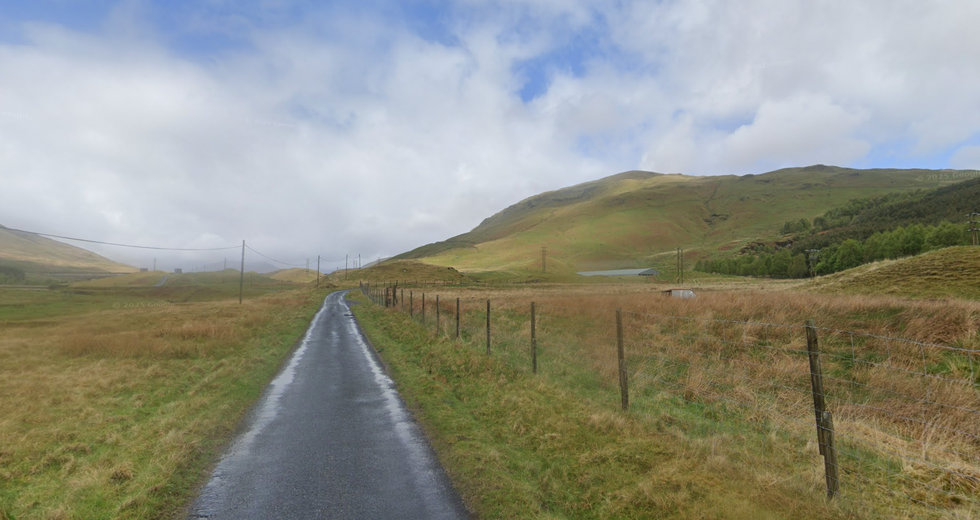
Pubil in Perth and Kinross, Scotland, recorded the largest quake this year, standing at 3.7 magnitude
|GOOGLE MAPS
But that wasn't the end of the activity in the area – a total of 34 earthquakes hit near Loch Lyon between October and December.
Perth and Kinross actually recorded five of the top 11 strongest UK earthquakes this year.
Scotland, Lancashire, Yorkshire and Wales saw the most seismic activity throughout 2025.
Silverdale in Lancashire was hit by a 3.2 magnitude earthquake on December 3, with more than 700 people reporting they felt the tremors.
A smaller aftershock followed the next day, linked to a 3.3 magnitude quake that struck the area at the start of the month.
LATEST DEVELOPMENTS
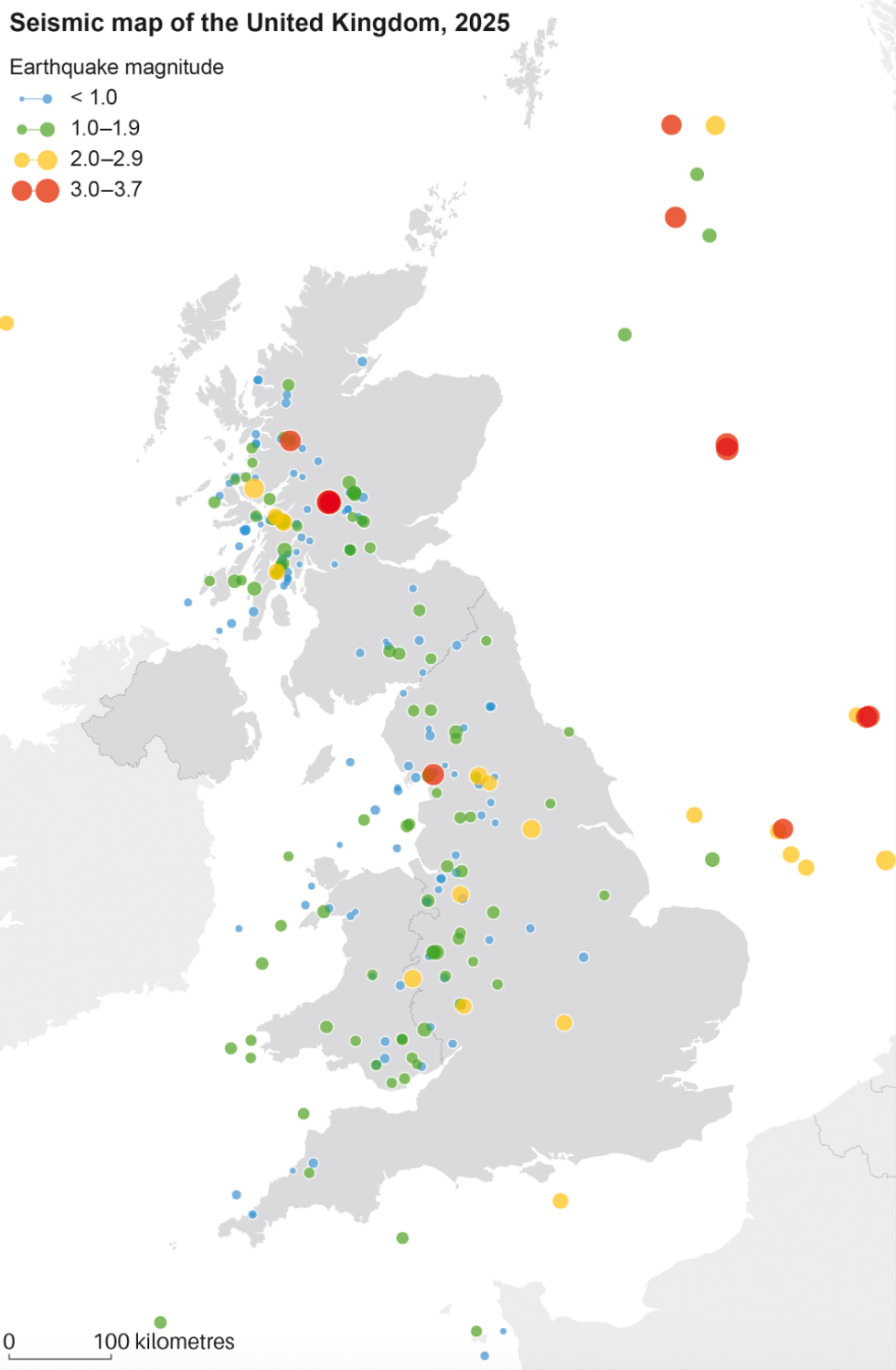
West England, Scotland and Wales were the worst affected areas this year
|BRITISH GEOLOGICAL SURVEY
Over in Yorkshire, Pontefract experienced a 2.6 magnitude tremor on September 7, while Litton in North Yorkshire recorded a 2.5 magnitude quake in May.
Residents near Knucklas in Powys, Wales, also felt a 2.5 magnitude tremor on July 2.
Dr Baptie explained why certain parts of the country shake more than others.
"The west of Scotland is one of the more active parts of the UK," he said.
"Some of this can be attributed to well-known geological faults like the Great Glen Fault and the Highland Boundary Fault."
"By contrast, north-east Scotland experiences very few earthquakes."
He stressed that studying these smaller tremors remains vital for understanding how rare larger quakes might affect energy and infrastructure projects.
The BGS received 1,320 reports from members of the public who felt tremors this year.
For context, magnitude four events typically occur every three to four years in the UK, while magnitude five quakes happen every few decades – the last being in Lincolnshire in 2008.
Our Standards: The GB News Editorial Charter
More From GB News