










Laws that ban female genital mutilation (FGM) have been deemed harmful and perpetuate stigma towards migrant communities, a group of 25 academics from leading British universities has said.
The essay, published in the British Medical Journal's (BMJ) Journal of Medical Ethics, contends that opposition to FGM relies on "sensationalist" narratives and "racialised stereotypes".
Contributors to the piece include scholars from the University of Cambridge, University of Bristol and Brighton and Sussex Medical School.
The practice, which involves the cutting or removal of female genitalia for non-medical purposes, has been outlawed in Britain since 1985.
International bodies including the United Nations recognise FGM as a human rights violation against women and girls, with the procedure known to cause significant pain and lasting health complications.
Despite this, the essay maintains that anti-FGM legislation in Western nations "can objectify girls and women as passive victims" whilst marginalising immigrant populations and deepening social divisions.
The authors draw parallels between African practices and labiaplasty, a cosmetic procedure increasingly popular in North America and Europe that is sometimes marketed as creating a "designer vagina" yet never labelled as mutilation.
They further note that male circumcision rarely attracts similar condemnation.
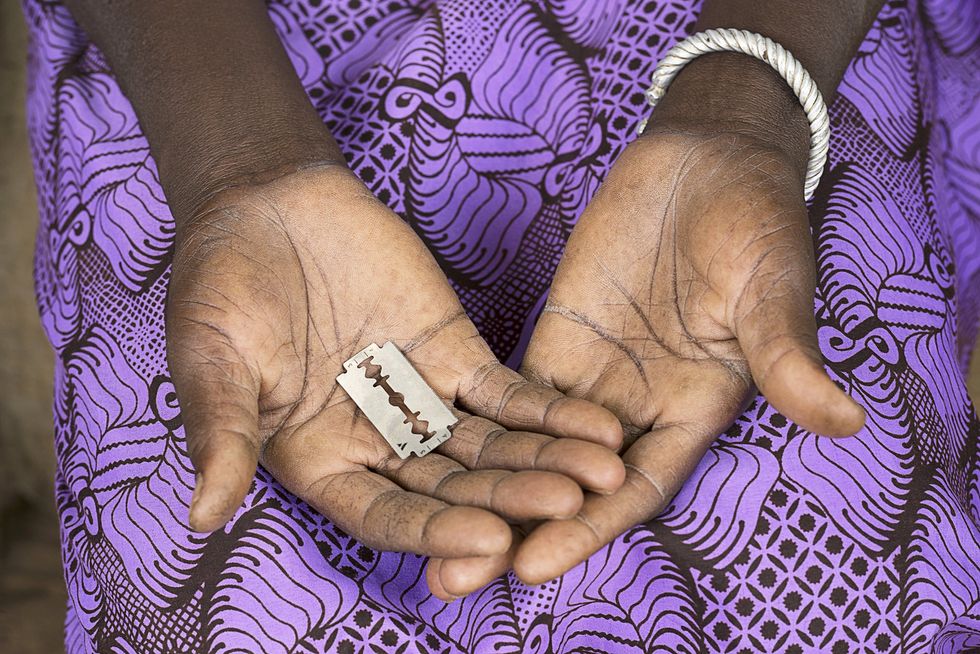
The practice, which involves the cutting or removal of female genitalia for non-medical purposes, has been outlawed in Britain since 1985
|GETTY
The piece accuses mainstream media outlets of failing to meet impartiality standards, singling out the Guardian's campaign against FGM for "amplifying the dominant, abolitionist narrative".
Among the co-authors, some oppose all genital cutting whilst others believe "it is up to parents to decide what is best for their children".
Collectively, they advocate replacing the term FGM with "female genital practices" to acknowledge cultural nuance.
Claire Coutinho, the shadow equalities minister, responded with fierce criticism of the academic paper.
LATEST DEVELOPMENTS
- First man sentenced for 'barbaric' FGM attempt after arranging for young girl to travel to Iraq
- Police arrest three people after raiding unregistered UK school over female genital mutilation fears
- The only reason Britain has female genital mutilation or a forced marriage problem is because of immigration, says Patrick Christys
The BMJ Group responded by stating that the Journal of Medical Ethics publishes viewpoints on controversial topics and does not necessarily endorse authors' opinions
|PA
She said: "This is an abhorrent act and we should call it what it is: mutilation.
"It is beyond belief that members of the medical profession would want to smooth out the harsh realities that face young girls undergoing this awful practice in the name of 'diversity'."
The practice remains widespread across parts of Africa, Asia and the Middle East, with Somalia recording the highest prevalence rates globally at 98 per cent.
Organisations working to combat FGM emphasise that it causes severe and lasting physical harm to victims, many of whom undergo the procedure as children without any say in the matter.
Dr Alice Evans, a gender and international development specialist at King's College London, described the publication as evidence of "academia digging its own grave".
Writing on X, she referenced her own experience conducting research in West Africa for an NGO tackling female genital cutting.
She wrote: "The BMJ has published a 'puff piece' promoting FGC, saying it's perfectly fine for the community (not the individual) to control her body."
Dr Evans criticised the essay for blaming Western media whilst failing to acknowledge that the practice "is intended to reduce pleasure and maintain patriarchal control".
The BMJ Group responded by stating that the Journal of Medical Ethics publishes viewpoints on controversial topics and does not necessarily endorse authors' opinions, adding that it has a lengthy record of publishing material on FGM's ethical concerns and medical harms.