










A battle to save Britain's native bees is underway after invasive Asian hornets have been seen moving north.
Investigators are waging a high-tech war against the invasive yellow-legged hornets - with the South East becoming the primary battleground.
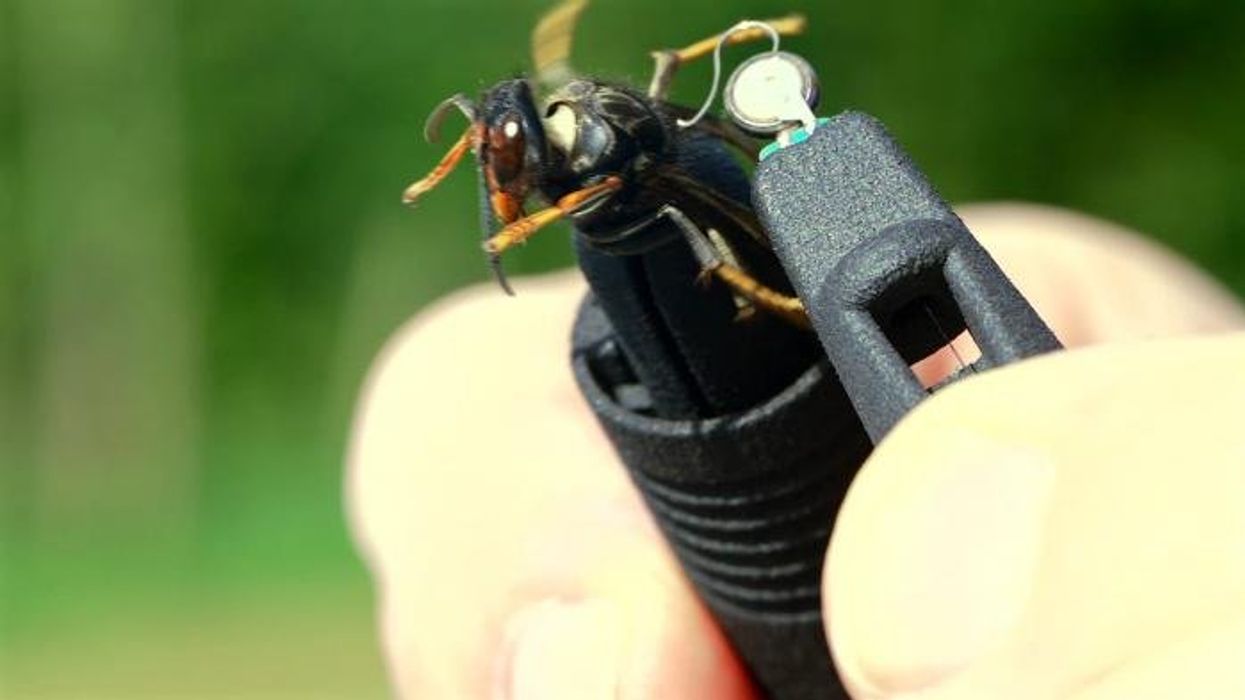
The UK's "National Bee Unit" is deploying tiny tracker devices on captured hornets.
The Dutch-designed transmitters fit around the insect's narrow waist, and can be monitored using car-mounted receivers, handheld equipment, and smartphone apps.
Researchers can then follow hornets back to their nests, which are often hidden high in trees.
So far, the tracking system has sped up hornet detection efforts. Aecord 161 nests were destroyed this year thanks to the new approach.
But fears are rising about whether Britain's current resources can cope with the invasion.
Credible sightings of the hornets reached 544 in 2025, an eerie 666 per cent surge on the year before.
Last year's figures were likely dampened by wet spring weather.
Just 72 sightings were recorded in 2023, with only one or two annually for the six years before that.
"It has been a big increase," said Diane Drinkwater, chairwoman of the British Beekeepers Association.
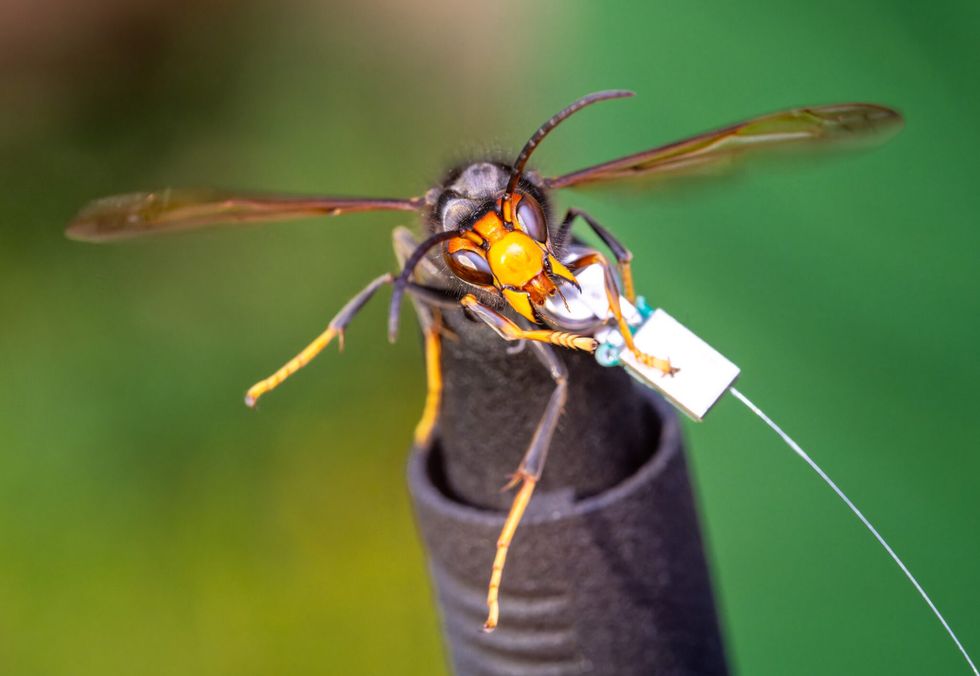
The Dutch-designed transmitters fit around the insect's narrow waist
|ROBOR NATURE
The invasion has spread well beyond its traditional southeast stronghold - with Dover still a hotspot.
Nests have now been eliminated as far west as Dorset and Hampshire, with more discoveries near Liverpool and York.
"There's an increasing level of angst [among beekeepers]," Ms Drinkwater said. "I think many of our members have been concerned by the sightings that are outside the South East. Sightings in Runcorn and Yorkshire have really concerned people."
Despite the growing threat and wider geographical spread, staffing levels at the national bee unit have remained largely unchanged.
Freedom of Information requests reveal how the unit only has 59 employees, down from 64 four years ago.
ASIAN HORNET INVASION - READ MORE:
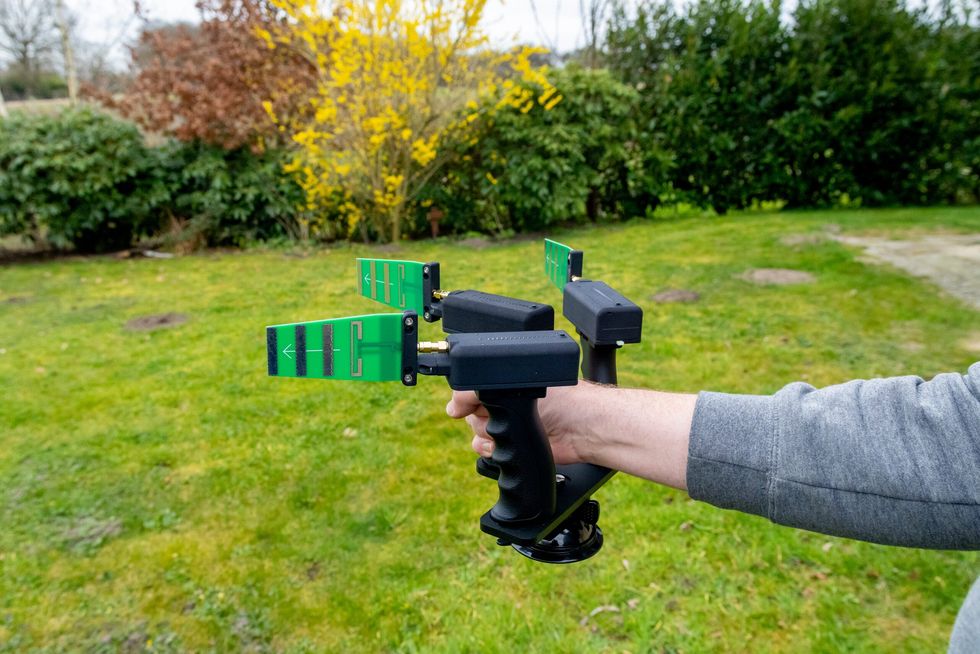
Researchers can track the invading hornets back to their nests with tracking guns like this
|ROBOR NATURE
Staff numbers in the South East battleground have declined, falling from nine in 2023 to just seven now.
"I think it's been very hard on some of the bee inspectors," Ms Drinkwater said.
Many hornets are blown across the Channel from France, where Cambridgeshire beekeeper Andrew Durham has warned that numbers are "out of control".
Further research from the National Bee Unit and Newcastle University suggests nest-finding efforts could be overwhelmed within a decade if public reporting remains thorough.
Without strong public engagement, that timeline could shrink to just three years.
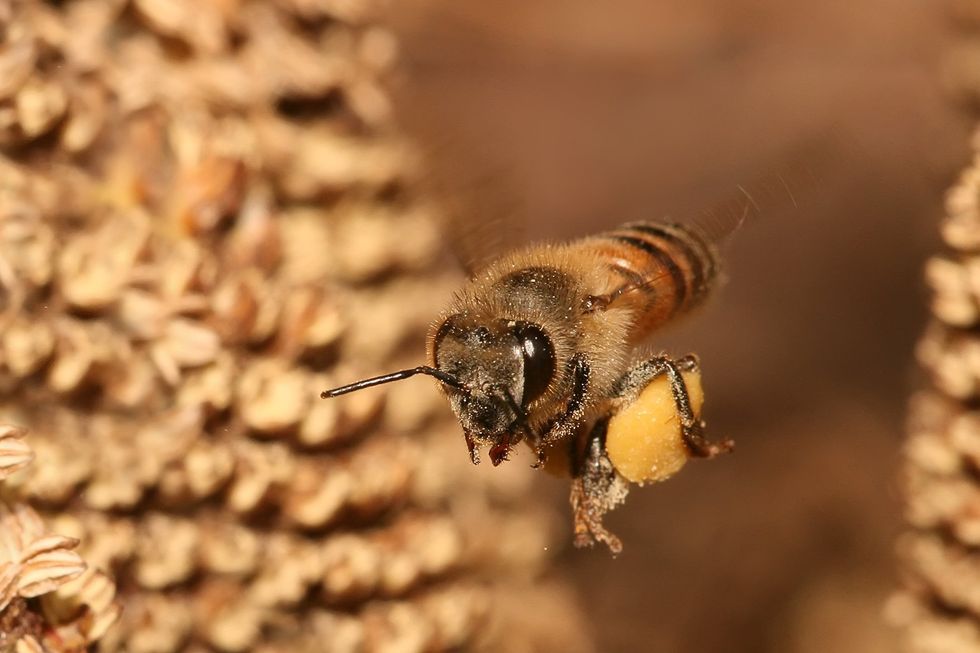
PICTURED: A western honey bee carries pollen in a basket back to its hive. The native population of bees are at risk from waves of hornets coming in across the Channel
|WIKIMEDIA COMMONS
"You can throw your National Bee Unit people at it as much as you like. But it will not take much of an increase for them to fall over," Mr Durham said.
He believes the tipping point could arrive at between 300 and 400 nests annually.
"It is the early stages of invasion. We are at an absolutely critical phase in our battle against this invasive hornet," he added.
A mild winter could help undetected hornets survive, which genetic testing confirmed happened for the first time in 2024.
Professor Nicola Spence, Defra's chief plant and bee health officer, confirmed the Government is committed to eradicating the invaders.
"Yellow-legged hornets cause significant damage to native pollinators, including our much-loved honeybees," she said.
Sightings of the invasive insects can be reported through the Asian Hornet Watch app.