









A pro-Iran "hate march" in London has been cancelled after an intervention by the Home Secretary.
Late on Tuesday night, Shabana Mahmood formally announced the ban on the Al-Quds Day march with a protest clampdown in force from March 11 to April 11.
Ms Mahmood said: "I have approved the Metropolitan Police’s request to ban the Al Quds march.
"I am satisfied doing so is necessary to prevent serious public disorder, due to the scale of the protest and multiple counter-protests, in the context of the ongoing conflict in the Middle East.
TRENDING
Stories
Videos
Your Say
"Should a stationary demonstration proceed, the police will be able to apply strict conditions. I expect to see the full force of the law applied to anyone spreading hatred and division instead of exercising their right to peaceful protest."
Sir Mark Rowley, the Met Commissioner, requested the Home Office cancel the annual march and rally - which was due to take place March 15.
Sir Mark had determined the risk of serious disorder had reached a point which justified the march's cancellation.
The Al-Quds Day rally is an annual march held on the last Friday in Ramadan and was started by the dead Ayatollah Ali Khameini's predecessor, Ayatollah Ruhollah Khomeini.

PICTURED: Protesters march through London for an Al-Quds Day rally
|GETTY
It encourages Muslims worldwide to voice support for Palestine and opposition to Israel, with Jewish groups calling the event antisemitic.
The Islamic Human Rights Commission (IHRC), the organisers of the event, has claimed it is a peaceful event.
But cross-party support had risen for the event to be banned after conflict broke out in Iran.
Lord Austin of Dudley said: "I’m all for freedom of speech, but this is a hate march by fans of a theocratic Islamist dictatorship that recently slaughtered 36,000 of its own citizens who dared to come out and protest against it."
PROTESTS - READ MORE:
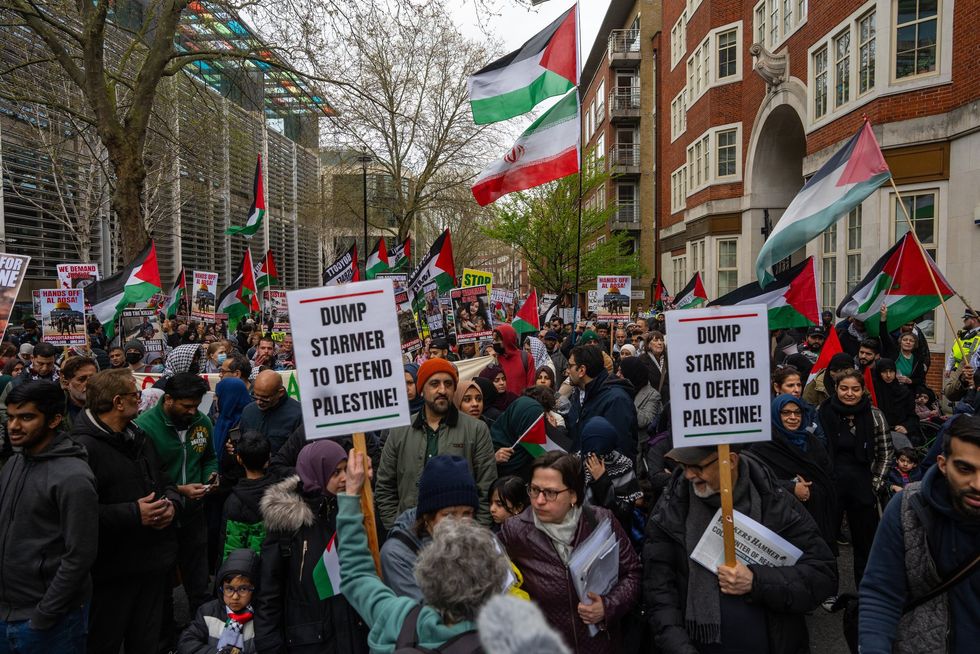
The Al-Quds march has previously faced calls to be banned, including in 2017
|GETTY
Courts Minister Sarah Sackman was the first minister to call for a ban, saying the event had "no place in our society".
She told Times Radio: "I’m clear that hate on marches like the Al Quds march has no place in British society. The authorities and the police should take the enforcement action needed against these marches."
She would later tell LBC the event was "thoroughly anti-British".
Shadow Home Secretary Chris Philp wrote to the police commissioner last week to urge him to cancel the event.
He warned of an "increased risk of serious public disorder" and a "serious disruption to communities" if the event was to go ahead as planned.

Home Secretary Shabana Mahmood announced the ban after a request from the Metropolitan Police
|GETTY
And Reform UK's deputy leader and business spokesman Richard Tice praised the decision.
He said: "These hate marches have been filled with antisemitism & divisive incitement since October 7. That makes them a breach of the law."
In a statement, the Met Police said banning the event was not a decision the force took lightly, but added that the Al-Quds march raised "unique risks and challenges".
Security risks and concerns raised by the force included the "likely high number of protestors and counter protestors" a high risk of volatility due to the ongoing Iran war
The force added there were threats on UK soil from the Iranian regime, which raised the risk of injury to both protesters and members of the public.
"In the last year MI5 and Counter Terrorism Policing have foiled over 20 Iranian state-backed attacks on the UK. Last week counter-terrorism officers arrested four people under the National Security Act after they allegedly spied on Jewish communities for the Iranian regime and, separately, at the weekend a man was reportedly stabbed by someone who had opposing views on the Iranian regime," the Met Police said.
The force added that even with the ban in place, they expect the weekend to be "challenging" and "potentially violent".
Static assemblies, different from protest marches, cannot be banned in law. The Met Police will place "strict conditions" on any such gathering.
The Campaign Against Antisemitism said: "This is a positive development and a move that CAA and others, including a number of MPs, have been calling for because allowing this hate-fest to go ahead would have sent the message that Islamists rule the roost in Britain."
This marks the first march to be banned since 2012, when a series of marches by the English Defence League (EDL) were blocked by the coalition Government.
Previous Al-Quds Day rallies have led to clashes with the police, with the Hezbollah flag being seen waved before the terror group's proscription in 2019.
It is not the first time the event has faced calls to be banned, with the London Assembly passing a unanimous motion in 2017 to condemn the annual event.
However, London Mayor Sir Sadiq Khan said at the time it could not be banned so long as it was held "within the parameters of the law".
More From GB News