







Mass prescribing drugs for conditions like Attention Deficit Disorder is a 'vast experiment' on the UK's children and does nothing to address the root causes of the problem, a world-leading trauma expert has said.
Dr Gabor Maté, author, speaker and leading expert on Attention Deficit Disorder (ADD) who famously diagnosed Prince Harry with the condition, says the surge in diagnoses reflects a deeper crisis in childhood - not simply a medical disorder.
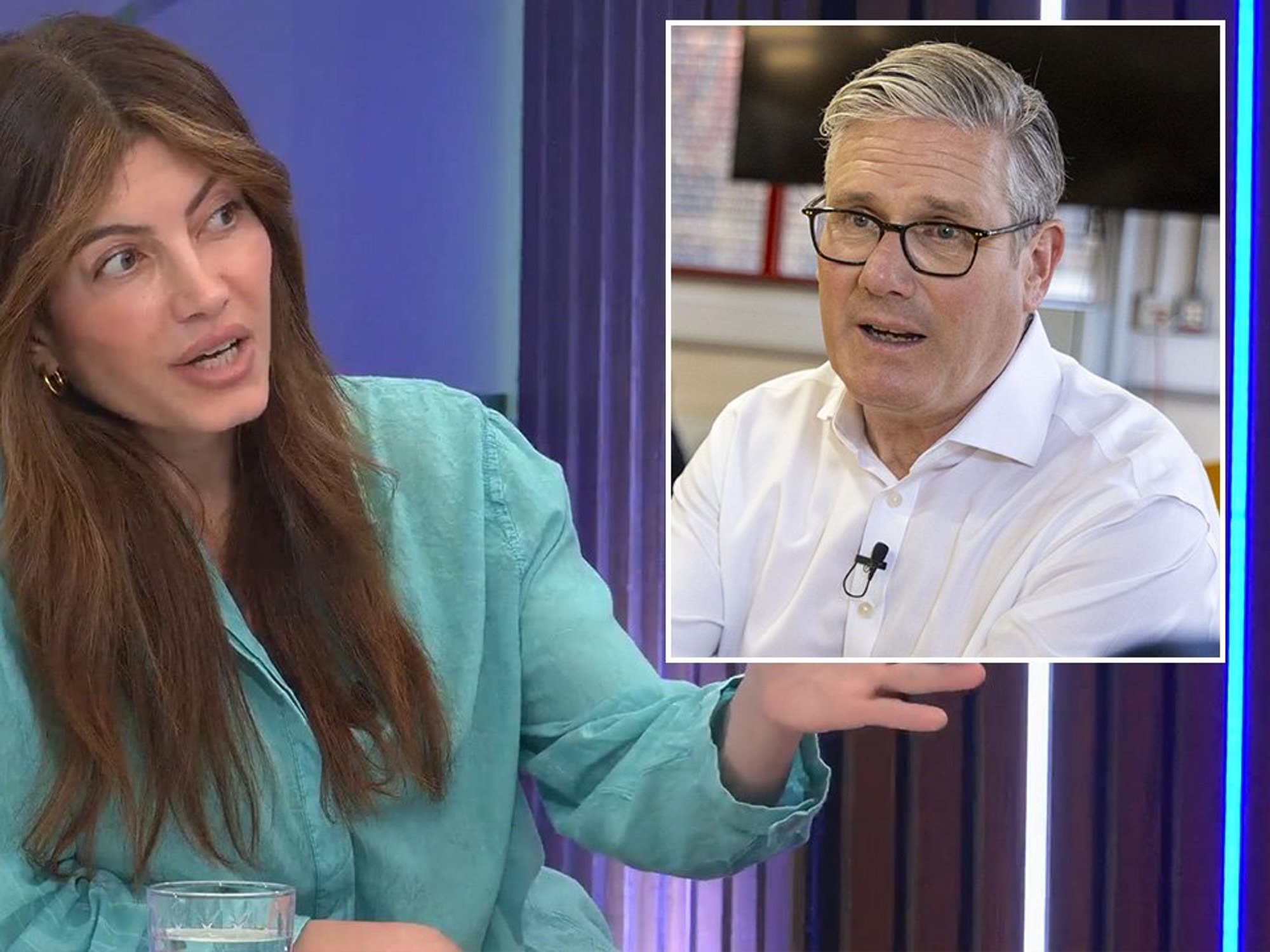
His comments come as an ongoing review ordered by Health Secretary Wes Streeting has suggested the condition may be overdiagnosed and overmedicalised, with too many children being fast-tracked onto medication.
The number of people diagnosed with ADHD has more than doubled since 2021, the review said, highlighting a particularly “unusual” increase for girls and young women.
Now more than 800,000 people in England have been formally diagnosed with ADHD, according to NHS data.
At the same time, one in 44 children has the condition on their medical records, as well as one in 125 adults.
Many specialists insist ADD and its sister condition Attention Deficit Hyperactivity Disorder (ADHD) is a well-established neurodevelopmental genetic condition with a strong scientific basis.
They argue medication can be life-changing - improving concentration, reducing impulsivity and helping children function at school and at home.
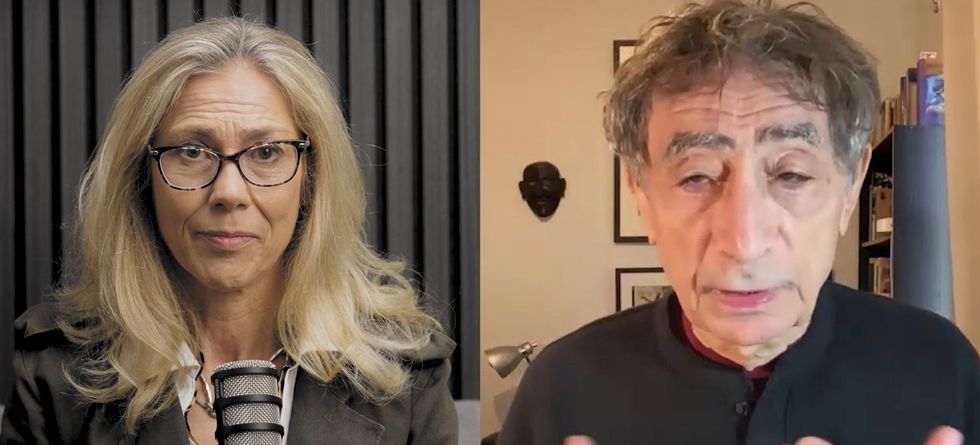
Lucy Johnston sat down with Dr Gabor Maté for an exclusive interview
|CARE VISIONS TALKS
Some also say rising diagnosis rates reflect better awareness, improved screening and long-overdue recognition of children who were previously missed.
The review commissioned by Wes Streeting is expected to examine both overdiagnosis and underdiagnosis - as well as whether support is reaching the right children at the right time.
But Dr Maté, author of Scattered Minds: The Origins and Healing of Attention Deficit Disorder, says even this debate - overdiagnosed or underdiagnosed - risks missing something more fundamental.
Speaking on the Care Visions: Family Talk podcast, he argues the label explains behaviour but not its cause.
The leading trauma expert who diagnosed Prince Harry with ADHD during a live interview in 2023, said: “All they are is a description of certain patterns. And the question is why? And the diagnosis doesn’t explain anything about the why.”
Dr Maté rejects the idea that ADD and ADHD are inherited disorders - the long-held belief of the NHS.
“I think that’s total nonsense. It's a complete misreading of the genetic literature,” he said.
He added: “The fact is, nobody’s ever found a single gene that if you have it, you’re going to have ADHD, and if you don’t, you won’t.
“Nor has anyone found a group of genes that automatically determine the condition, or the absence of which rules it out.
“There are some genes that make it more likely, but just because a child may be more prone to something doesn’t mean it’s fixed.”
LATEST DEVELOPMENTS:
Instead, he says what children may inherit is sensitivity - not a disorder.
For example, he said, what many of these children also share is asthma or allergies, which he says are other markers of hypersensitivity.
“What is genetic is the high degree of sensitivity. That means they’re much more affected by the environment. And the real issue is 'what is the environment like?' Modern science tells us that genes are turned on and off by the environment.”
He argues this helps explain why diagnoses appear to be rising so quickly, something genetics alone cannot account for.
“Genes don’t change in a population over 10, 15, 20 or 30 years,” he argued. The change, he argues, is in the conditions children are growing up in.
Rather than a disease, Dr Maté says many symptoms of ADD are coping mechanisms shaped by early experience.
“Let’s take tuning out - the absent-mindedness. What is that? Not a disease. It’s actually a coping mechanism,” he said.
“If I were to stress you, you could fight back or you could hang up. But what if you couldn’t? Your brain would kind of shut down and tune out to protect you from the stress.”
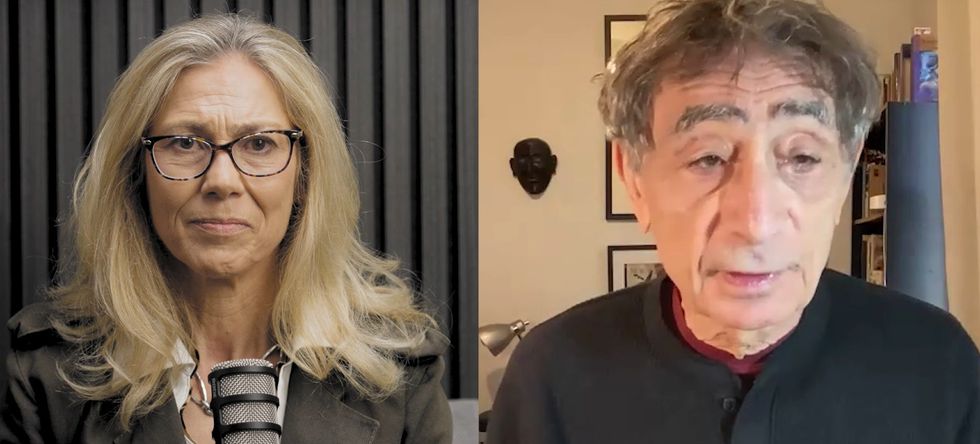
Dr Gabor Maté says what children may inherit is sensitivity - not a disorder
|CARE VISIONS TALKS
In this view, behaviours often labelled as disordered may instead be adaptive responses - the brain protecting itself in environments it experiences as overwhelming.
Dr Maté says today’s children are growing up in conditions that place families under constant and often invisible strain.
“It is extraordinarily difficult these days to be a parent, no matter how loving and well-intentioned parents are.”
Economic pressure, long working hours, unstable housing, and rising anxiety among adults all feed into family life. At the same time, many parents are raising children in relative isolation, without the extended family and community networks that once helped share the load.
He argues humans did not evolve to raise children in small, stressed, nuclear households, but in wider communities where care was distributed.
In modern life, that support has fractured - leaving parents overwhelmed and children absorbing that stress from the earliest stages of development, even before birth.
He also points to stress during pregnancy, early attachment, and emotional availability in infancy as critical factors shaping how the brain develops.
Dr Maté is critical of the rapid move towards medication, though he is not entirely against it.
“As a person with ADD, I’ve taken them myself, and as a physician, I have prescribed them. But at the very best, they regulate symptoms in the short term.” he said.
“The long-term studies indicate that the medications don’t help anybody develop anything.”
“There should never be the only answer, and rarely should they be the first answer.”
He says medication may have a place, but warns it is being used too quickly and too broadly.
“It’s a vast experiment,” he said - referring especially to the increasing use of antipsychotic drugs to control children’s behaviour.
“Do we know what the effects are going to be 40 years from now on somebody who at age five was given? We don’t. It’s an experiment.”
Dr Maté says the rising numbers of children being diagnosed with ADD and ADHD points to something deeper than overdiagnosis or increased awareness.
“I think those are valid points. But they don’t cover the whole picture,” he said.
“In the United States, 25 per cent of adults identified themselves as having ADHD… which is an impossible number.”
But he adds that beyond awareness and misdiagnosis, there is a genuine rise in distress.
“We’re definitely seeing more young people with these traits. I think we’re genuinely seeing more human beings distressed in all kinds of ways.”
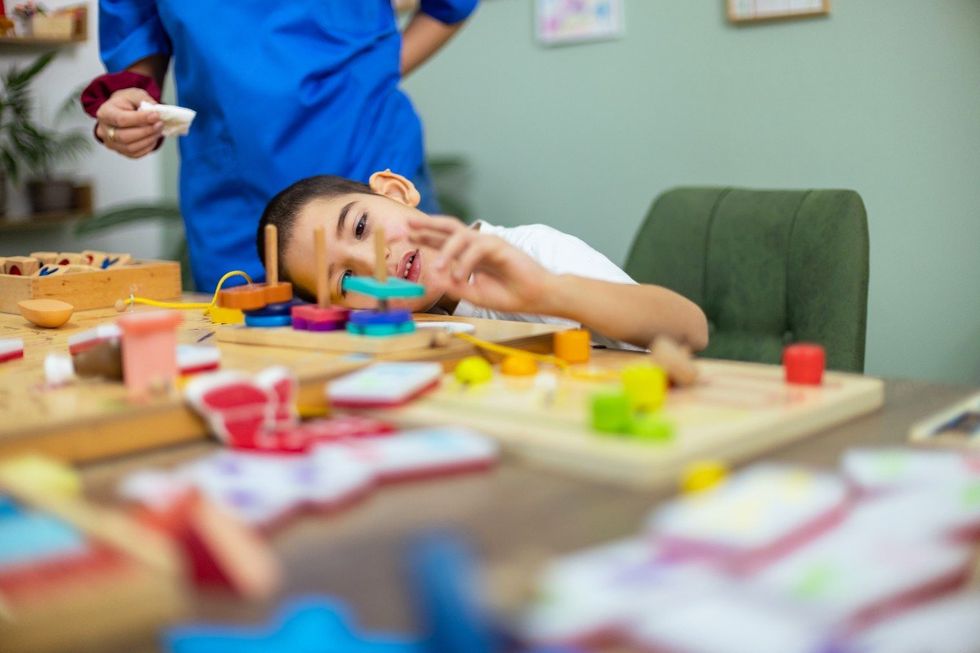
Dr Maté says the rising numbers of children being diagnosed with ADD and ADHD points to something deeper than overdiagnosis or increased awareness
|GETTY
He links this not just to the rise in cases of ADD, but to wider increases in anxiety, depression, addiction and self-harm among young people. All these related problems cannot be ascribed to simple genetics, he said. “Would anyone seriously argue that there is a gene for self-cutting?”
At the heart of his argument is how the brain forms in early life.
“No child is born with impulse regulation. No child is born with emotional self-regulation. No child is born with any attention. Those have to develop,” he said.
And that development depends heavily on the environment.
“It develops under the impact of the environment.”
“So when the parents are stressed, the child is stressed. It’s that simple.”
He stresses this is not about blaming parents - but about recognising the pressures they are under.
“This is a social, political, and economic issue, it’s not bad parents.”
“It’s a question of parents under so much stress that they’re not able to meet the emotional needs of their kids.”
He added: “What we’re talking about here is a culture that fails our children.”
“We’re living in a toxic culture now… that affects children by affecting the capacity of parents to be fully present for those kids.”
Dr Maté has examined these ideas in his bestselling books, including Scattered Minds and The Myth of Normal, where he argues that many modern conditions are rooted in stress and early life experience rather than fixed disease.
The full interview with Gabor Maté is available on the Care Visions: Family Talk podcast.