










Jobless Britons have lost the UK economy £125billlion a year since the Covid-19 pandemic and are hurting gross domestic product (GDP) growth, analysts warn.
Former Labour Health Minister Alan Milburn's report into youth unemployment took into account losses in taxes alongside higher health and welfare spending, which is more than annual education spending in England and could rise if the situation worsens.
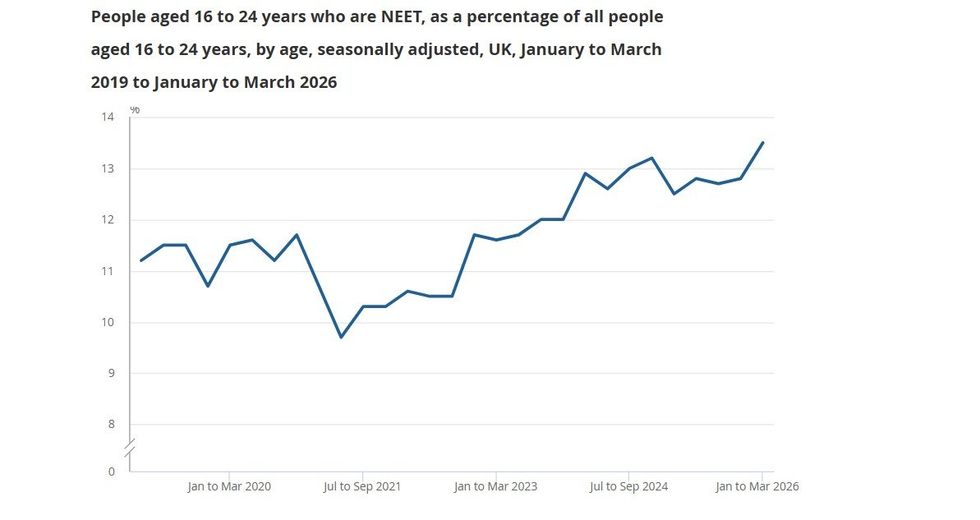
More than one million young people across the UK are currently neither in education, employment nor training (NEETs), according to figures published by the Office for National Statistics (ONS) today.
The data reveals that 1,012,000 individuals now fall into the NEET category, marking a 2.8 percentage-point surge compared with pre-pandemic levels.
Fresh analysis conducted by Impetus, a charity focused on education and youth employment, calculates that this dramatic post-pandemic rise is draining £27billion from the British economy annually through lost GDP.
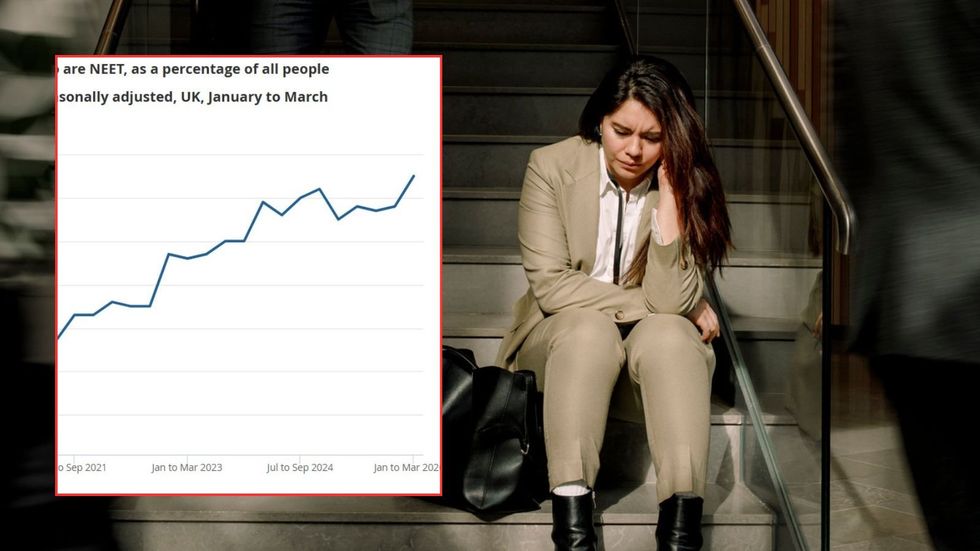
Unemployed Britons are costing the UK economy £27billion annually, new research has found
|GETTY / ONS
The figures emerge alongside the release of the Interim Milburn Review Report, which examines the scale of youth disengagement from work and learning.
According to the charity, the consequences of youth unemployment extend far beyond immediate financial hardship, with research demonstrating lasting damage to career prospects.
Being out of work before the age of 23 has been associated with reduced earnings persisting for 20 years or more. Young people classified as NEET at 18 or 19 face a 20 per cent greater chance of remaining jobless a decade later.
Background plays a significant role in determining vulnerability, with those from disadvantaged circumstances twice as likely to find themselves outside education and employment compared with more affluent peers.
LATEST DEVELOPMENTS
 Britain is going through a joblessness crisis | GETTY
Notably, qualifications explain only half of this disparity. The risk of becoming NEET diminishes substantially with better qualifications, according to the charity's findings.
Each additional level of educational attainment cuts a young person's likelihood of falling into this category by half. Certain demographic factors create compounding disadvantages.
Impetus research has shown that young people facing a combination of socioeconomic deprivation, limited qualifications and special educational needs or disabilities are nearly three times more prone to becoming NEET.
For those most disconnected from employment opportunities, comprehensive support proves essential. This includes access to mentoring programmes and career guidance to help bridge the gap into the workforce.
 The hike in minimum wage is pricing young people out the market, according to experts | GETTY
Susannah Hardyman MBE, the chief executive of Impetus, described the milestone as "a national tragedy, and one that was not inevitable."
She warned: "Unless drastic action is taken, we are at risk of a whole generation being scarred by a lack of employment and education opportunities."
The charity leader emphasised that intervention must begin early, particularly for those confronting multiple barriers including poverty, poor qualifications and special educational needs.
Ms Hardyman endorsed the Milburn Review's call for a comprehensive approach, stating: "With £27bn lost in GDP annually, and the NEET numbers only going in one direction, the Government has an imperative to act."