







Nearly two in five people of working age in one UK area are claiming out-of-work benefits, making it the country’s unemployment capital.
In total, more than 38 per cent of residents aged 18 to 65 are currently receiving state support.
The figures highlight a sharp divide in job prospects, with thousands relying on benefits amid limited opportunities.
A Welsh valleys community has emerged at the centre of this trend, with Blaenau Gwent topping the list of benefit dependency hotspots, according to Department for Work and Pensions data.
Out of 41,235 working-age residents, 15,772 are claiming support, including 6,773 people receiving Universal Credit with no requirement to search for work.
The DWP data examined working-age benefit combinations, specifically tracking those receiving Universal Credit with no work requirement alongside Jobseeker's Allowance recipients.
The coastal resort of Blackpool ranks second nationally, with 36.4 per cent of its population claiming benefits.
DWP statistics show 31,728 residents in the area receive state support, including 14,891 on Universal Credit with no requirement to look for work and 130 claiming Jobseeker's Allowance.
 The number of unemployed people per job vacancy is at a new post-pandemic high | GB NEWS
Merthyr Tydfil occupies third position at 36.2 per cent, where 12,873 people out of a working-age population of 35,602 receive monthly payments from the department.
The picture could not be more different in prosperous parts of the country.
East Renfrewshire in Scotland records the lowest dependency rate at merely 6.1 per cent, with neighbouring East Dunbartonshire close behind at 6.2 per cent.
Wokingham in Surrey leads England with just 7.3 per cent of its 112,071 working-age residents claiming unemployment support.
The surge in benefit claims arrives as welfare expenditure is projected to increase by £18billion to reach £333billion during the current year, based on documents released alongside this month's Spring Statement.
LATEST DEVELOPMENTS:
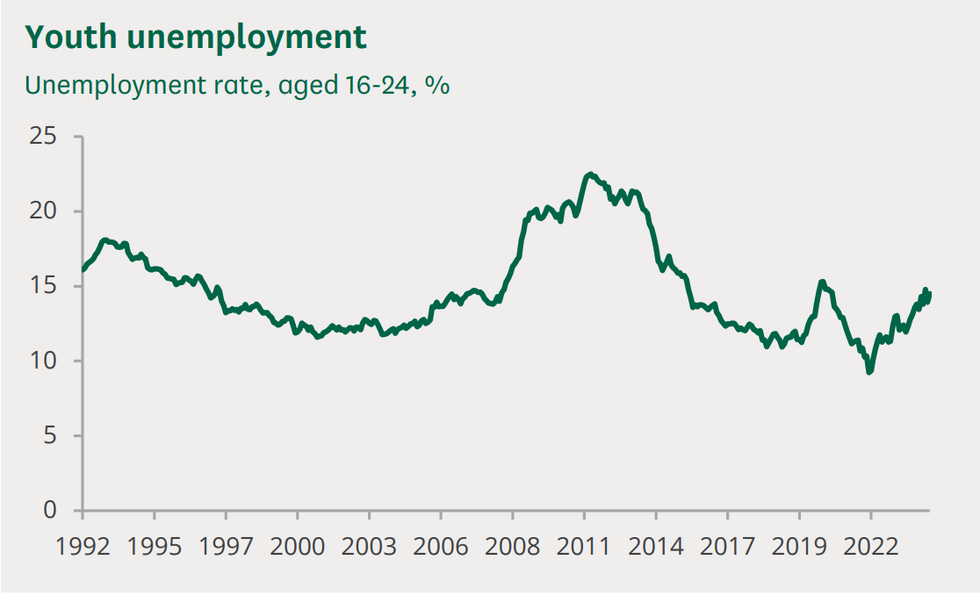 Youth unemployment since 1992 | House of Commons Library
To find these hotspots, The Sun analysed the latest DWP data on working-age benefit combinations.
The Office for Budget Responsibility has cautioned that spending will continue climbing by approximately £15billion annually on average, hitting £407billion by 2030-31.
The OBR attributes this escalating cost primarily to increased spending on pensioner benefits and support for those with long-term health conditions.
These additional expenses are forecast to grow by around 0.4 per cent of national GDP over the coming five years.
Meanwhile, the number of young people not in education, employment or training has reached 957,000, rising by 36,000 since Labour entered Government.
DWP explained behind every one of these numbers is a person who deserves a real chance to get on in life, instead of written off by the broken welfare system
| PAShadow Chancellor Mel Stride condemned the ballooning welfare bill, stating: "The welfare bill is spiralling out of control. Health and disability spending alone is heading for £100billion by 2030 yet Labour would rather dodge the hard choices than fix the system. Britain can't afford more benefits. We need to fund our defence, cut taxes, and reward work not pour ever more money into welfare."
Reform UK's Lee Anderson issued a stark warning: "Of course we should support people who genuinely need help, but taxpayers aren't mugs.
"When numbers rocket like this the system clearly being abused. The government needs to show some backbone and get a grip on this otherwise the country's heading for bankruptcy."
A DWP spokesperson said: "Behind every one of these numbers is a person who deserves a real chance to get on in life, instead of written off by the broken welfare system we inherited
"We are changing this by giving people the genuine support they need to move into work from voluntary support in our Jobcentres and the £3.5billion investment to support more sick or disabled people into work, to our Connect to Work programme which is being rolled out in every corner of the country while getting rid of the financial incentives for ill health."