








UK businesses are cutting jobs at the fastest pace seen so far this year, as global tensions begin to hit the economy.
New data suggests the fallout from the Iran war is already feeding through into hiring decisions, with fewer roles available and more people out of work.
Research from the Recruitment and Employment Confederation and KPMG found the number of job seekers rose sharply in March, driven by increasing redundancies and a slowdown in hiring.
High street firms are feeling the pressure most. Retail and hospitality businesses are struggling as higher labour costs combine with weaker consumer spending.
While the index measuring permanent job placements showed a slight improvement compared to February, it still pointed to an overall decline in job opportunities.
Vacancies dropped across both the private and public sectors, and demand for temporary staff also continued to fall.
The UK is set to take the biggest hit to economic growth among major G20 economies as a result of the Iran war, according to new forecasts from the Organisation of Economic Co-operation and Development (OECD).
Growth is now expected to reach just 0.7 per cent this year, down from a previous forecast of 1.2 per cent, while inflation is also predicted to come in higher than earlier estimates.
The OECD said the conflict has forced it to downgrade outlooks for several of the world’s largest economies, warning that a prolonged war could lead to significant global energy shortages.
Wholesale oil and gas prices have already surged following disruption to supply routes, including the effective closure of the Strait of Hormuz, a key global shipping channel, and damage to energy infrastructure in the Middle East.
The organisation also cautioned that sustained increases in fertiliser costs could reduce crop yields and push food prices higher next year.
Economists warn that persistently high energy prices risk slowing growth further, keeping inflation elevated and delaying any potential interest rate cuts.
 The number of unemployed people per job vacancy is at a new post-pandemic high | GB NEWS
Britain's jobless rate has remained stuck at 5.2 per cent for the three months to January, according to Office for National Statistics data, marking the highest level recorded in five years.
The last time unemployment reached such figures was during the three months ending January 2021.
Young workers face particularly dire circumstances, with 14.5 per cent of those aged 18 to 24 currently without employment, the worst reading since early 2015. Job openings have also contracted, with vacancies falling by 6,000 to reach 721,000 in the three months to February.
The Chancellor has indicated that unemployment should peak this year before declining, offering the prospect of improvement in 2027.
Pay growth has weakened considerably, with starting salaries rising at their slowest pace in five months according to the REC and KPMG findings.

Firms slash jobs at fastest pace this year
|GETTY
Average earnings including bonuses grew by 3.8 per cent, while weekly pay with bonuses increased by 3.9 per cent, both measures down from 4.2 per cent the previous month.
Wage increases have reached their lowest point in more than five years, though pay continues to outpace inflation in both private and public sectors.
Bank of England policymakers are closely watching salary trends amid concerns that elevated inflation could trigger a wage-price spiral.
The central bank had been expected to reduce rates from 3.75 per cent, but the Iran conflict and surging oil prices have heightened inflation fears, delaying any potential cut.
Thomas Pugh, chief economist at RSM, noted that the labour market's fragility heading into the Iran crisis means higher energy costs will only worsen conditions.
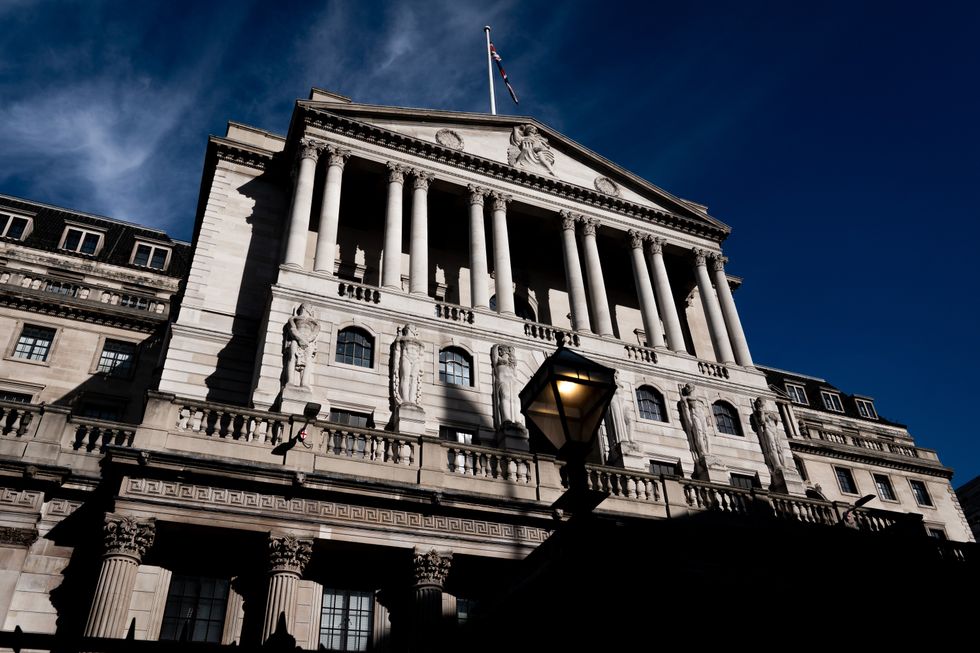
Bank of England policymakers are closely watching salary trends amid concerns that elevated inflation could trigger a wage-price spiral
| PA"That weakness will temper the likely hawkish shift from the Monetary Policy Committee this afternoon and is the key reason why we expect a prolonged hold if energy prices stay high, rather than rate rises," he said.
REC chief executive Neil Carberry acknowledged that "the Gulf Conflict provided a headwind to hiring in March but this did not stop the trend of stabilisation that has defined 2026 so far."
He added that business prospects remain finely balanced, with confidence proving crucial, noting that households and companies are holding cash reserves that could boost growth if economic conditions become more favourable.