









Coventry Building Society has warned that homebuyers and sellers are in a "lose-lose situation" as Britain's property crisis continues to take its toll on the economy.
The building society is sounding the alarm over the impact of stamp duty, which is a tax imposed on the sale of homes, on the wider property market.
Stamp duty land tax receipts have reached £4.3billion so far in 2026, representing a decline of approximately six per cent when measured against the equivalent period in 2025, according to analysis of HM Revenue and Customs (HMRC) data.
This drop has occurred despite a greater number of property transactions now attracting the tax following threshold adjustments that took effect on April 1, 2025.
Coventry Building Society has issued a warning
| COVENTRY BUILDING SOCIETYThe building society suggests that market activity in early 2025 may have received a temporary lift from purchasers hurrying to finalise deals ahead of the revised thresholds coming into force.
During April alone, buyers contributed £1.3billion in stamp duty payments as more Britons found themselves pulled into paying the tax.
The threshold at which stamp duty becomes payable was reduced from £250,000 to £125,000 last April under plans rolled out by Chancellor Rachel Reeves.
This resulted in an immediate £2,500 increase in the tax liability on a property priced at the English average.
 The current stamp duty framework requires buyers in England and Northern Ireland to pay tax on properties exceeding £125,000 | GETTY
LATEST DEVELOPMENTS
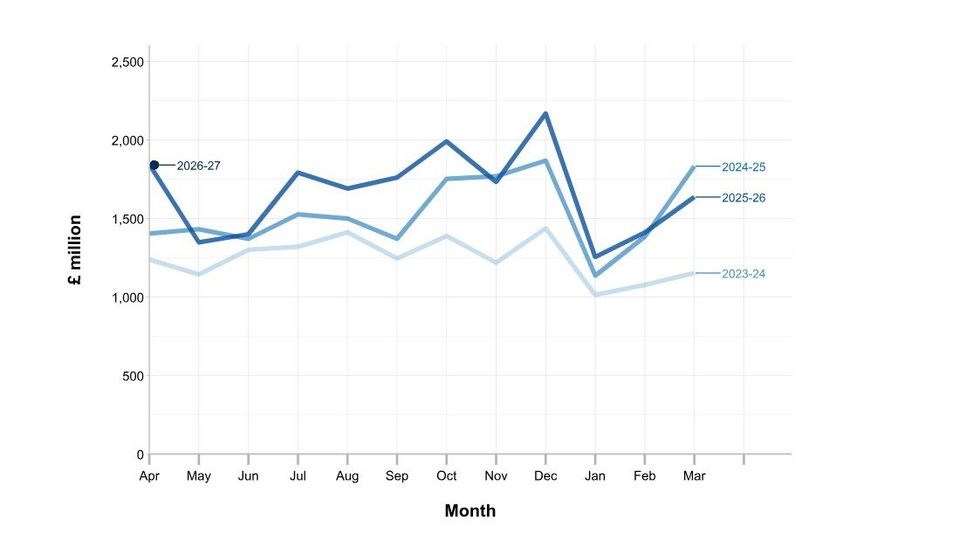
How have stamp duty receipts changed in recent financial years?
|HMRC
For someone moving home and purchasing at typical market values in England, the stamp duty bill now stands at £4,500, compared with just £2,000 before the threshold alterations were implemented.
Jonathan Stinton, the head of Mortgage Relations at Coventry Building Society, said: “When Stamp Duty goes up, activity can slow down – because you can’t turn up the tax without taking some steam out of the market.
"For many buyers, finding thousands of pounds for upfront costs on top of deposits, legal fees, and moving costs can be enough to rethink a move.
"Bringing more homes into the tax net might seem like an easy win for the Treasury, but if higher upfront costs discourage people from moving, the overall take can actually start to fall.
 A record proportion of first-time buyers are now liable for stamp duty payments | GETTY
"There’s a risk of creating a lose-lose situation where homebuyers are paying more, but the expected boost to tax receipts doesn’t fully materialise.
“Reforming stamp duty could help keep the market moving, which is especially important at a time when many households are feeling cost of living pressures.
"Without a change to the system, the risk is we continue to slow down a housing market that depends on people being able to move freely.”