






State pensioners with as little as £597 in additional yearly income could face tax demands from HMRC from next month as higher pension payments edge closer to the tax-free threshold.
The full new state pension is due to increase to £11,973 per year from April under the Government’s triple lock policy.
The weekly payment currently stands at £230.25 for those who reached state pension age after April 2016 and have sufficient National Insurance contributions.
With the personal allowance frozen at £12,570, pensioners earning more than £597 on top of their state pension could exceed the threshold and become liable for income tax.
TRENDING
Stories
Videos
Your Say
The narrowing gap between the state pension and the personal allowance has raised concerns that increasing numbers of retirees could be brought into the tax system for the first time.
The personal allowance will remain fixed at £12,570 until April 5, 2031 under current Government policy.
This means the difference between the tax-free allowance and state pension payments is expected to continue shrinking if pension increases continue.
Rachel Reeves has said pensioners who rely solely on their state pension will not face tax bills as a result of the changes.
The Labour Government has confirmed that retirees whose only income comes from Department for Work and Pensions payments will not be required to pay income tax.

State pensioners with as little as £597 in additional yearly income could face tax demands from HMRC
|GETTY
However, pensioners receiving income from workplace pensions, private pension pots or other sources could find themselves exceeding the tax-free allowance.
Retirees with additional earnings above £597 annually would move beyond the personal allowance and therefore become liable for tax on the excess income.
Financial experts said this could affect pensioners with even modest additional savings or small workplace pensions.
Derence Lee, chief finance officer at Shepherds Friendly, said taxing pension income could have wider implications for some retirees.
LATEST DEVELOPMENTS
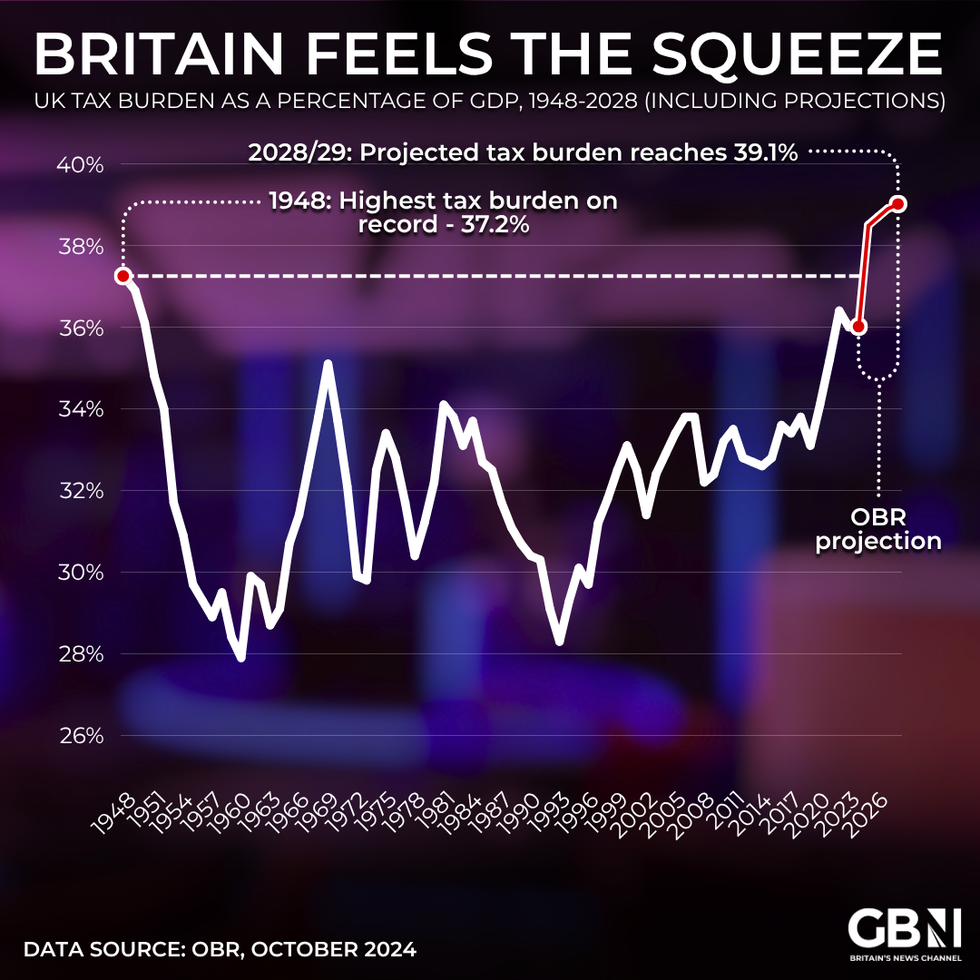 UK tax burden as a percentage of GDP | GB News
"Taxing pensioners could have significant financial implications, particularly for those who rely heavily on their pensions to cover essential living costs and make ends meet."
He said the triple lock had helped pensioners keep pace with rising living costs but warned that the interaction with frozen tax thresholds could create additional financial pressure.
Mr Lee advised people approaching retirement to consider building up additional savings through tax-efficient accounts where possible.
He suggested using Individual Savings Accounts and making full use of workplace pension schemes to build retirement income.
Mr Lee added: "Due to the increasingly aging population and the context of economic uncertainty, it can be hard to predict what the future of the triple lock will look like, so it's always best to have a financial back up plan in place where possible."
Sarah Pennells, consumer finance specialist at Royal London, said pensioners should review their overall retirement income to determine whether they may face tax liabilities.
Ms Pennells said: "If your total income in retirement, including any workplace or private pensions, is more than the Personal Allowance, you will be taxed automatically or sent a tax bill."
She said people with defined benefit pension schemes should receive regular statements showing the income they can expect to receive each year.
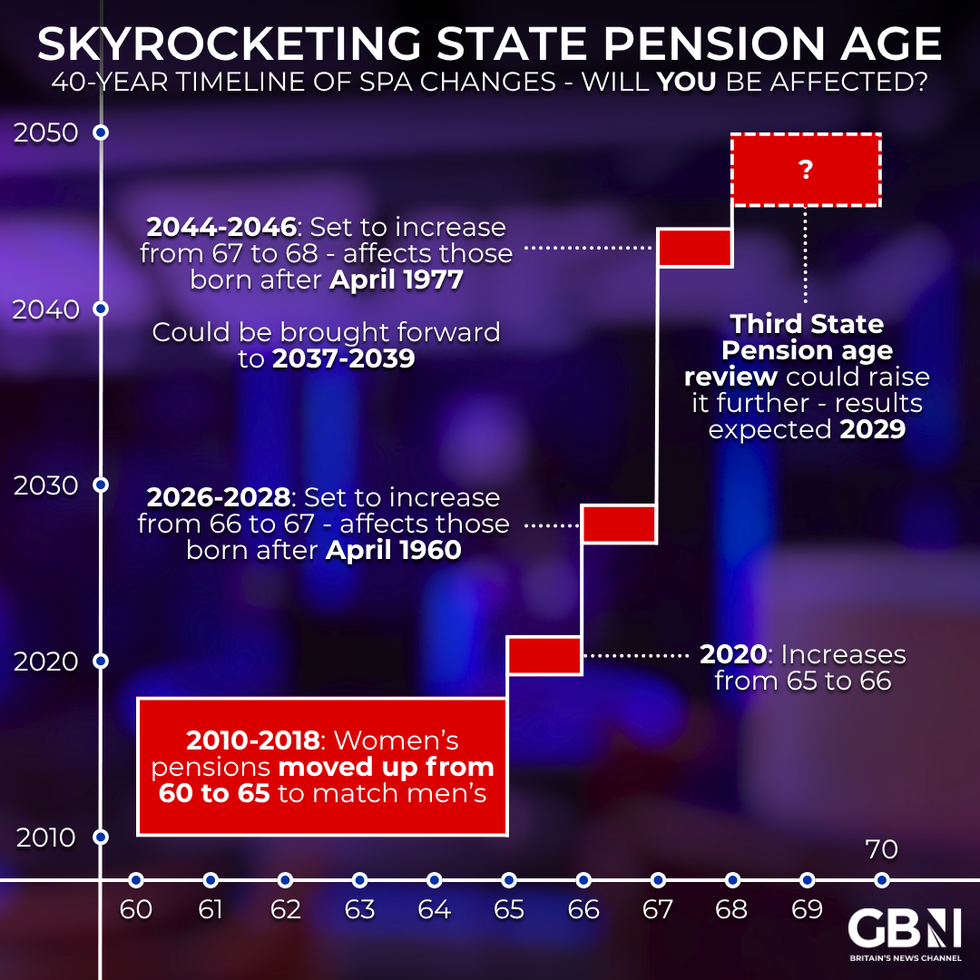 Are you affected by state pension age changes? | GETTY
Ms Pennells also noted that retirees drawing money from defined contribution pensions may have flexibility over how much they withdraw annually.
She said adjusting withdrawal levels could allow some pensioners to reduce or avoid exceeding the personal allowance.
Ms Pennells added that tools are available online to help retirees assess their potential tax position.
She said the official Government website provides a calculator that allows individuals to estimate whether they are likely to owe tax based on their total income in retirement.
More From GB News