







Millions of pensioners across Britain will see their income rise next month as three major payment changes to the state pension and related benefits come into force from April 6.
The Department for Work and Pensions (DWP) has confirmed that the state pension will increase by 4.8 per cent under the Government’s triple lock policy.
The rise is based on the highest of three measures used to calculate annual increases, with average wage growth proving the largest factor this year.
Those receiving the full new state pension will see their weekly payments increase to £241.30 from April.
TRENDING
Stories
Videos
Your Say
This represents an increase from £230.25 per week, giving pensioners on the full rate an additional £574.60 over the course of a year.
Over 12 months, the full new state pension will amount to £12,547.60 compared with £11,973 previously.
The new state pension applies to men born on or after April 6, 1951, and women born on or after April 6, 1953 who have reached the current state pension age of 66.
HM Treasury said the increase reflects the Government’s commitment to maintaining the triple lock during the current parliament.
"Thanks to our commitment to the pension Triple Lock for this parliament, pensioners on the full new State Pension across the UK are set to receive an extra £575 a year, which they'll start seeing from April 2026."
The actual amount received by individuals may vary depending on their National Insurance contribution record.

The full new state pension will amount to £12,547.60
|GETTY
Alongside the increase to the new state pension, the basic state pension paid to older pensioners will also rise from April.
The full basic state pension will increase from £176.45 per week to £184.90.
This represents a weekly rise of £8.45 and brings the total annual payment to £9,614.80, compared with £9,175.40 previously.
The basic state pension applies to men born before April 6, 1951 and women born before April 6, 1953.
To qualify for the full basic state pension amount, individuals must have a sufficient number of qualifying National Insurance years.
LATEST DEVELOPMENTS
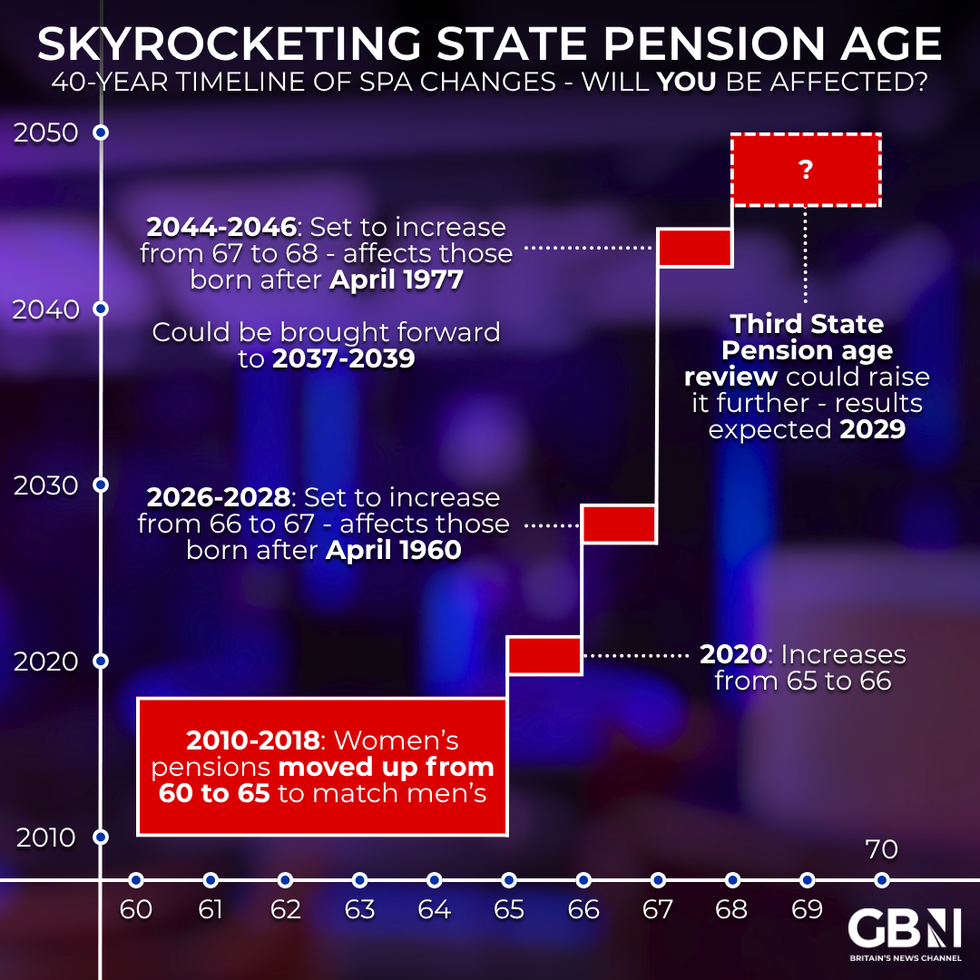 Are you affected by state pension age changes? | GETTY
Men born between 1945 and 1951 typically need 30 qualifying years while those born before 1945 generally require 44 qualifying years.
Women born between 1950 and 1953 usually need 30 qualifying years while those born before 1950 require 39 years.
Pensioners who have not built up enough qualifying years will receive a lower amount than the full £184.90 weekly rate.
Payments under Pension Credit are also increasing from April to help pensioners on lower incomes meet living costs.
The standard minimum guarantee for the benefit will also rise by 4.8 per cent.
Single claimants will see their weekly payments increase from £227.10 to £238.
The standard minimum guarantee for the benefit will also rise by 4.8 per cent
|GETTY
This represents a rise of £10.90 per week, which equates to an additional £566.80 over a full year.
Couples claiming the benefit jointly will see their weekly payments increase from £346.60 to £363.25.
That change represents a weekly increase of £16.65 and amounts to an additional £865.80 across 12 months.
Pension Credit is designed to support pensioners on lower incomes by topping up their weekly income to a minimum level.
The benefit can also provide access to additional support including help with housing costs, council tax reductions and other financial assistance available to eligible pensioners.
Our Standards: The GB News Editorial Charter
More From GB News