






State pension age increases "would widen inequalities in both incomes at old ages and lengths of life at retirement", analysis has found.
David Finch, assistant director for The Health Foundation's Healthy Lives team, is sounding the alarm over the potential consequences resulting from the age hike.
From April 6, the state pension age will be raised from 66 to 67 years old as part of reforms from the Department for Work and Pensions (DWP).
The first Britons to be impacted by this change will be individuals born between April 6 and May 5, 1960, who will need to wait another month before being paid their payment.
Britons are being warned about the most recent hike to the state pension age
|GETTY
Despite employment prospects improving for those approaching state pension age, Mr Finch cited that overall rates "tend to drop" as people reach their late 50s.
Notably, figures suggest there remains a significant gap in employment outcomes between individuals with and without working-limiting health conditions.
Mr Finch said: "There is a clear risk that people who are unable to work and without other financial resources until they reach state pension age will live in poverty for longer, as has happened with past rises in state pension age.
"A priority Government measure should be topping up incomes to match pensioner benefit levels during the extra wait created by the rise in state pension age to 67.
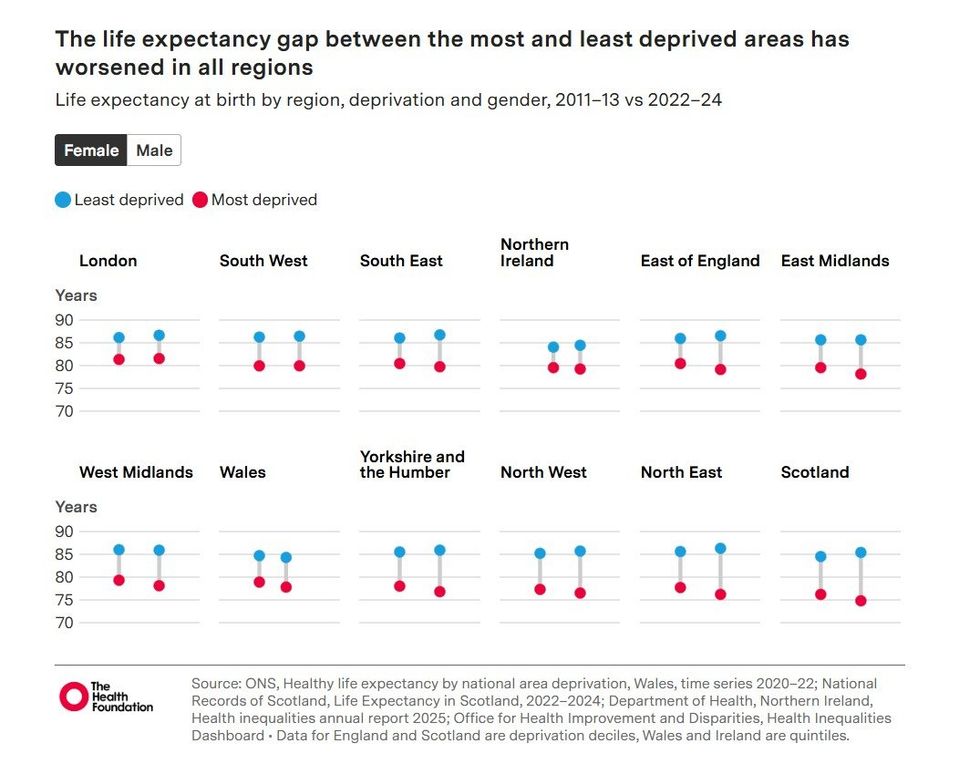
Some regions show a significant life expectancy gap between their most and least deprived areas
|THE HEALTH FOUNDATION / ONS
LATEST DEVELOPMENTS
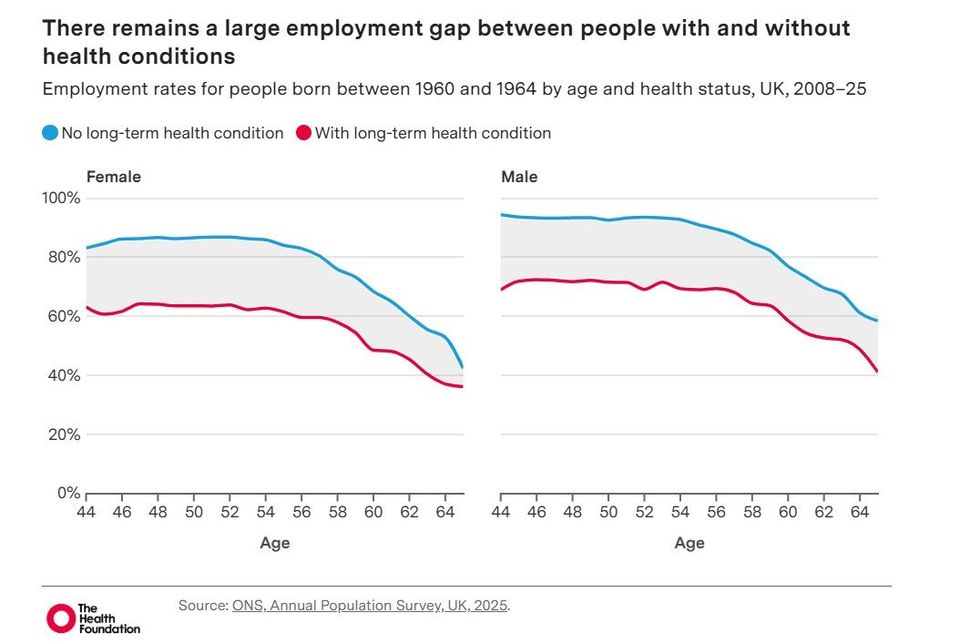
Those with health conditions struggle to maintain employment, figures show
|THE HEALTH FOUNDATION / ONS
"This is especially crucial as life expectancy trends point towards some people living in more deprived areas, who are already expected to have a shorter life span overall, having an increasingly shorter life in retirement than their wealthier peers."
He added: "If current trends persist, there is a risk that further rises in state pension age would widen inequalities in both incomes at older ages and lengths of life in retirement.
"While there is a case for immediate financial support for people left at risk of an extended period in poverty due to their inability to work, this should by no means be viewed as a sensible long-term solution to an avoidable problem."
Research from the Standard Life Centre's Future of Retirement found that those currently just below the state oension age are nearly three times as likely (14 per cent) to have gone without essentials such as food, clothing or heating in the last 12 months compared to those aged 66 to 69 (five per cent), who are above State Pension age.
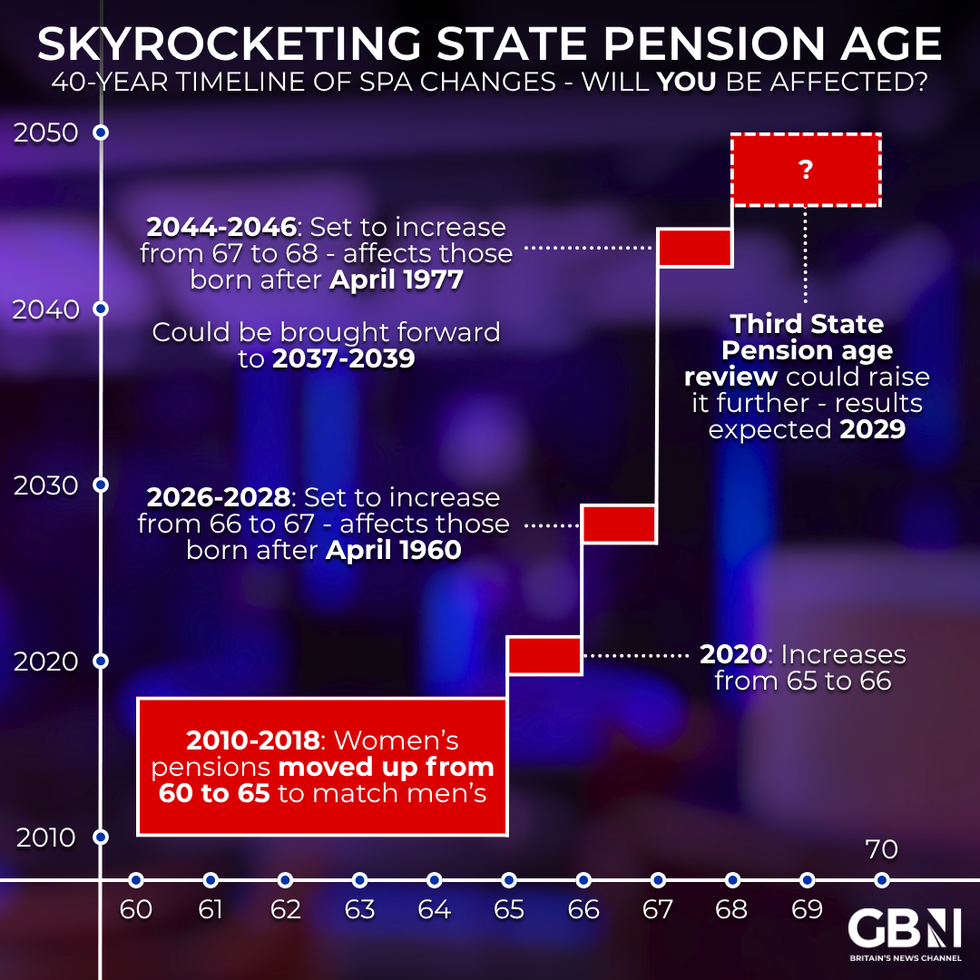 Are you affected by state pension age changes? | GETTY
Furthermore, just over a quarter of Britons in their early 60s admit they currently struggle to make ends meet on a day-to-day basis, compared to 15 per cent of people older than the state pension age.
Patrick Thomson, the head of Research Analysis and Policy at the Standard Life Centre for the Future of Retirement, said: "The rise in State Pension age is less than a week away and, while most people impacted know it is coming, they really don’t like it.
"Many say the change makes them feel pressured, anxious, or insecure. Most people affected expect the increase to impact their finances, retirement choices, or health - and are making changes to adapt - working longer, saving more, or drawing down on savings."