





Rachel Reeves has announced plans to give regional mayors control over a share of income tax, in a move aimed at boosting local investment.
The Chancellor said the proposal would not increase taxes, but instead allow more of the money already raised to be spent locally rather than controlled centrally by the Treasury.
Under the plans, regional leaders could be given the power to decide how a portion of income tax revenue is used in their areas, with the aim of supporting growth and improving local services.
Ms Reeves said the move would help shift decision-making away from Westminster and into the hands of those closer to local communities.
The proposal forms part of a wider push to drive economic growth across different regions of the UK, particularly outside London and the South East.
However, questions remain over how the system would work in practice and how funding would be distributed between regions.
The Treasury has stressed that the changes would not increase the overall tax burden, but would instead change how existing revenues are allocated.
TRENDING
Stories
Videos
Your Say
Giving the annual Mais Lecture at Bayes Business School in London, she said: "I have asked my officials to work with mayors and businesses to develop a road map for future fiscal devolution to be published at this year’s budget.
"This will set out plans to give regional leaders control of a share of some national taxes which have, for too long, been allocated by central government.
"They will look at income tax alongside other taxes, with reforms initially targeted at those places that have the greatest capacity to deliver them and the greatest potential to benefit."
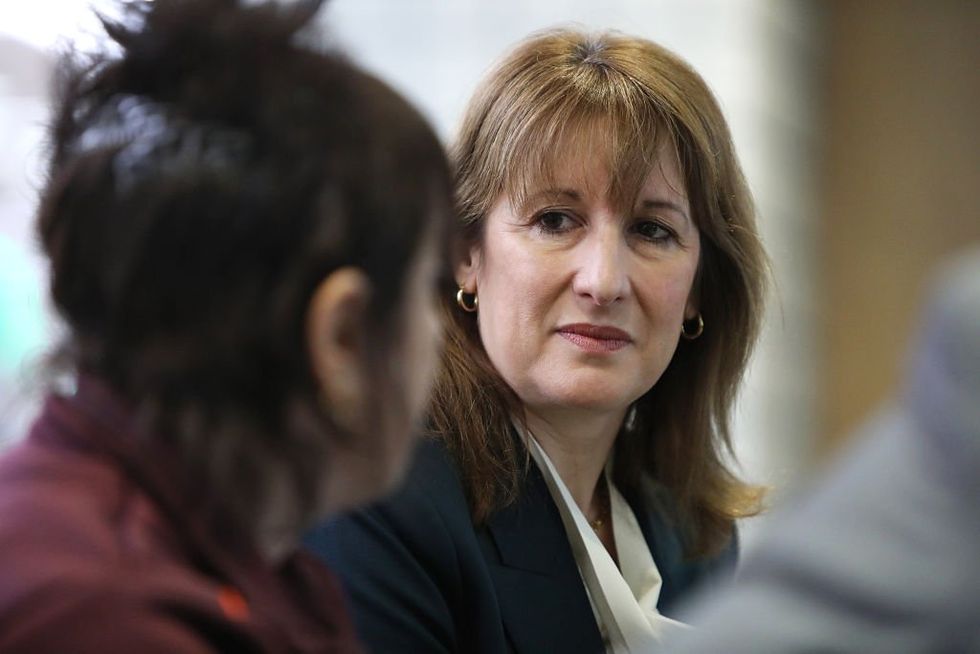
The Chancellor also set out plans for "city investment funds" backed by £2.3billion of funding
| GETTYThe Chancellor also set out plans for "city investment funds" backed by £2.3billion of funding, focused on northern England and the West Midlands, giving regional leaders control of "long-term, self-sustaining capital" to invest, with a commitment to the retention of business rates.
In the same speech, Rachel Reeves also signalled a shift in the UK’s approach to Europe, arguing that closer alignment with EU rules could help boost trade and bring down prices.
The Chancellor warned Britain risks being "stranded" between competing global trading blocs unless it strengthens its relationship with Brussels. She said that while the UK would still diverge from EU regulations in some areas, this should be "the exception, not the norm".
Speaking at the annual Mais Lecture at Bayes Business School in London, Ms Reeves placed deeper economic co-operation with Europe at the centre of her plan to revive growth.
LATEST DEVELOPMENTS:
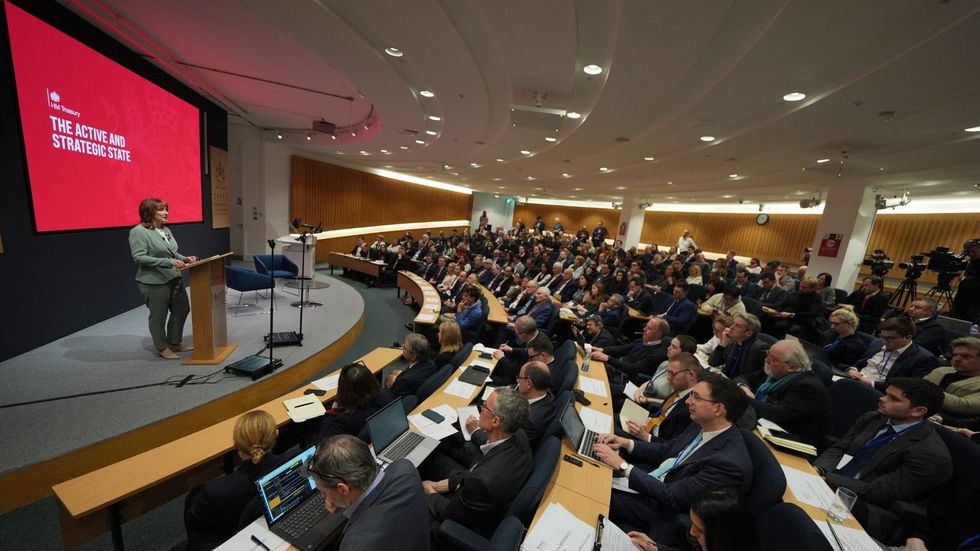
Chancellor of the Exchequer Rachel Reeves delivers the Mais Lecture at the Bayes Business School in central London
|PA
She argued that closer alignment could help reduce inflation and support businesses, describing the potential benefits as "considerable".
Ms Reeves said Brexit had created "profound uncertainty" and suggested it may have reduced UK economic output by as much as eight per cent, while also contributing to higher costs for firms and consumers.
However, she insisted she was not seeking to reverse Brexit, but to build a "new and stable future relationship" with the EU.
"Where it is in our national interest to align with EU regulation, we should be prepared to do so," she said, adding that any alignment should support growth, investment and job creation while maintaining the UK’s economic security.

Ms Reeves has announced plans to give regional mayors control over a share of income tax, in a move aimed at boosting local investment
| GETTYShe acknowledged that some sectors may still require regulatory independence, but stressed this should be limited.
Ms Reeves also admitted she would need to "make and win the political argument", with some Brexit supporters viewing divergence from EU rules as a key benefit of leaving the bloc.
She added: "Britain’s future prosperity will not be built in isolation, but through partnerships… and no partnership is more important than that between the UK and our European neighbours."
More From GB News