










Retired public sector workers could receive a financial boost approaching £900million as rising inflation increases pension payouts.
The Bank of England had previously expected inflation to fall back to its two per cent target by April, but now warns that higher energy costs linked to the Middle East crisis could push inflation to 3.5 per cent by September.
An additional 1.5‑point rise would translate into an average annual gain of around £300 for each state pensioner next year.
Inflation‑linked payments to former Government employees already cost nearly £59billion in 2026‑27, and further increases are expected if price pressures continue.
TRENDING
Stories
Videos
Your Say
Britain’s accumulated public sector pension obligations now total £5.8trillion, according to calculations by former Bank of England economist Neil Record.
Around three million retired state employees receive these guaranteed lifetime payments, including former doctors, military personnel, civil servants and teachers.
Annual increases are set each April using the previous September’s Consumer Price Index (CPI) figure.
For the current financial year, recipients received a 3.8 per cent uplift, adding roughly £2.1billion to overall costs.

Public sector pensions surge as inflation forecast rises, costing taxpayers millions more
|GETTY
If inflation reaches the upper end of forecasts, total spending could rise to £61billion, an increase of up to £2billion.
Taxpayers are also contributing £38.7billion this year towards the pension entitlements of current public sector workers — up £8billion since 2023‑24.
Maxwell Marlow, of the Adam Smith Institute, said: “Working Britons are taxed at record highs to pay for, among other things, these bloated defined benefit contributions,” arguing that taxpayers cannot be expected to shoulder further increases.
He pointed to the UK’s debt‑to‑GDP ratio, now above 100 per cent, and limited economic growth, saying pensions “must be retroactively changed to defined contribution schemes to protect taxpayers from their own Government”.
LATEST DEVELOPMENTS:
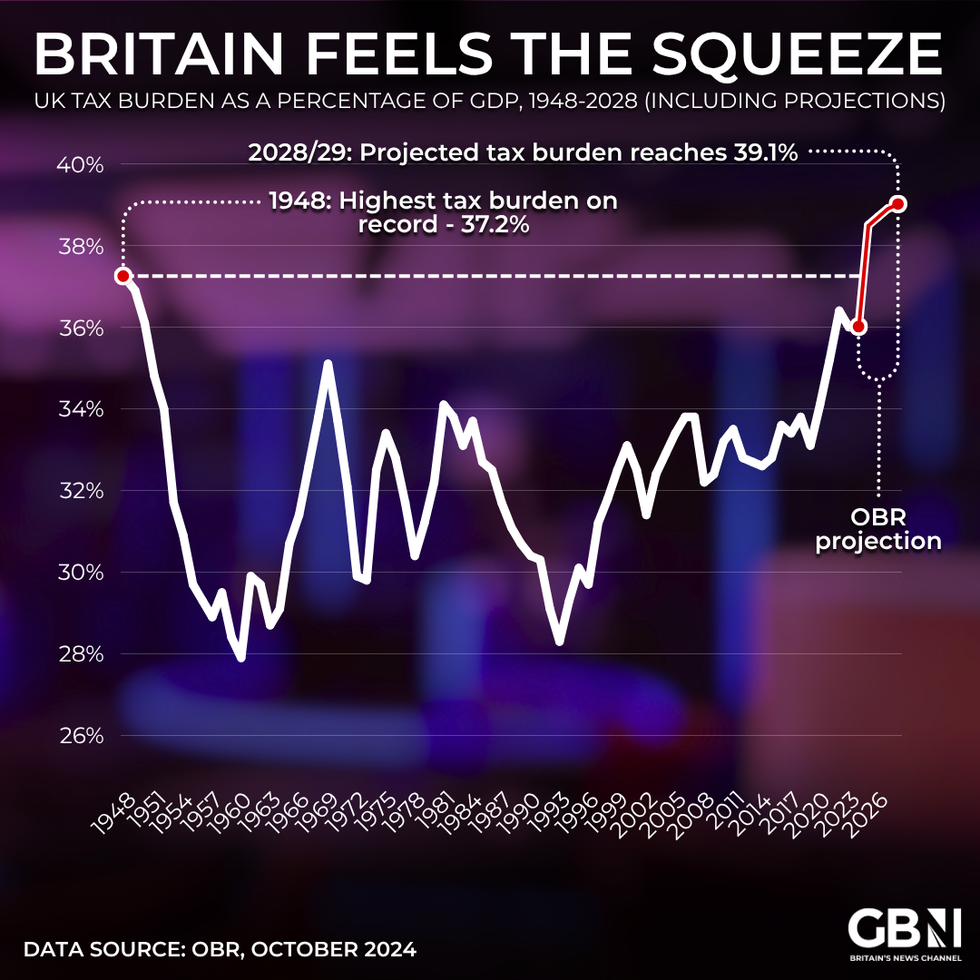 UK tax burden as a percentage of GDP | GB News
The comments reflect growing concern about the long‑term sustainability of public sector pension commitments.
Parliamentary efforts to examine the rising costs are now underway.
Baroness Neville‑Rolfe, a former Conservative minister, secured an amendment to the Pension Schemes Bill requiring the Government to commission an expert review of public sector pension affordability within 12 months of the legislation becoming law.
“Public sector pensions are vastly costly,” she said, arguing that the scale of the commitments is not transparently recorded in Government accounts.
She warned the issue raises questions of intergenerational fairness, saying today’s workers are funding retirees’ benefits while facing the prospect of a worse settlement themselves.
“By the time they retire, the problem will be a lot worse,” she said.
The Treasury declined to comment.