









Millions of social housing tenants face some of the highest energy costs in the country, with limited ability to cut bills through home upgrades such as solar panels.
However a new tariff from Octopus Energy aims to change that by offering cheaper power without tenants having to fund the technology themselves.
Octopus Energy has launched 'Britain's first smart energy tariff' designed specifically for social housing, offering potential savings of up to £200 a year for tenants across North England.
The energy supplier has partnered with Together Housing Group to roll out its Tenant Power scheme to an initial 1,500 homes, with the first households already benefiting.
Homes fitted with solar panels and battery storage allow tenants to generate their own renewable electricity. Any unused power is automatically sold back to the national grid at times of high demand.
The scheme is designed to benefit both tenants and landlords. Residents pay less for their energy than they would on standard variable tariffs, while housing associations receive payments for surplus electricity sent back to the grid.
This shared benefit model tackles a long-standing problem in the social housing sector, where landlords have struggled to justify the cost of investing in green technology.
By giving landlords a financial return on solar and battery installations, the tariff removes a key barrier that has previously slowed environmental upgrades.

Octopus Energy has launched a new tariff
| PANigel Banks, Zero Bills Director at Octopus Energy, told GB News that the company's smart controls decide when electricity is stored in batteries and when it is sold back to the grid. On sunny days, surplus power is stored and later released during periods of high demand.
The level of savings available to tenants depends on the discount agreed between Octopus Energy and each housing association. This discount is applied to the standard unit rate of electricity.
The solar panels and battery systems are funded and installed by landlords, in this case northern England-based Together Housing. By investing in the technology, housing associations enable Octopus to sell excess electricity back to the grid, with the resulting income shared with landlords while also funding discounts for tenants.
Crucially, the discount for tenants is fixed all year. Even during winter months, when energy use and bills typically rise, residents continue to benefit from the same reduced electricity rate.
Mr Banks said: "Tenant Power is the UK's only practical solution that ensures both tenants and landlords share in the benefits of low carbon technology. By joining forces with Together Housing Group, we're delivering affordable, greener energy to thousands of social homes, making a real impact on communities and people's pockets."
He added: "We can effectively sell the excess energy back to the grid, enabling us to pay the landlord a return for the tech, as well as deliver the savings for the tenant.The great thing about Tenant Power is that the discount is fixed for the tenant all year round, so even in winter months when bills are typically higher, they can still benefit from the discount."
Patrick Berry, Executive Director of Property at Together Housing Group, said: "We are committed to improving the lives of our residents and strengthening the communities we serve."
West Yorkshire Combined Authority has part-funded the initiative with more than £3million of investment to expand renewable power and combat fuel poverty.
Tracy Brabin, Mayor of West Yorkshire, said: "By making homes warmer to live in and cheaper to run, we'll put more money in people's pockets and create a fairer, greener region."
Richard, a Tenant Power customer from Halifax, said: "I love that my bills are lower thanks to Octopus' initiatives - the process was quick and easy and it really makes a huge difference. It's a bonus knowing I'm making the most of the sunshine with solar panels, and doing something good for the planet too."
LATEST DEVELOPMENTS:
Social housing tenants can cut bills by up to £200
| GETTYThe initial rollout to Together Housing Group properties is expected to expand further, with plans to include newly constructed homes alongside existing dwellings. This expansion could open access to affordable, low-carbon electricity for additional families throughout the country.
The potential reach of the scheme is substantial. Housing associations across England currently manage close to 3 million social properties, representing a significant opportunity for wider adoption of the tariff model.
The partnership between Octopus Energy and Together Housing Group establishes a template that could be replicated with other housing providers nationwide.
Tenant Power tariff offers a far more affordable way for tenants to benefit from solar energy, as installing solar panels and battery storage independently can cost several thousands of pounds upfront.
Mr Banks said: "If a customer wanted to install solar and battery systems on their own home with Octopus, the cost would depend on how many panels they need, whether they choose to have battery storage, and what size battery they require. The cost of a panel-only installation by Octopus starts from £6,163 (for 2 panels).
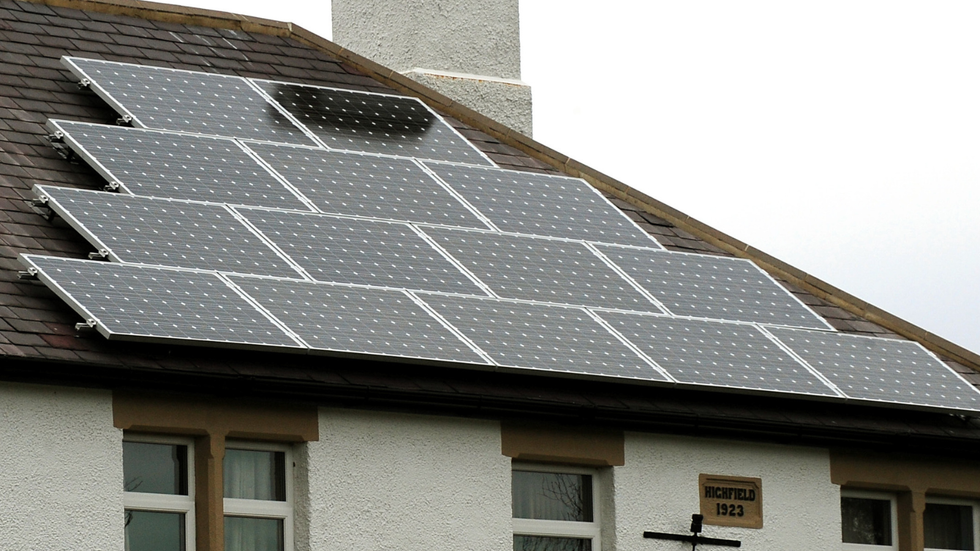
The cost of a panel-only installation by Octopus starts from £6,163 (for 2 panels)
| PA"An 8-panel installation and a 5kWh battery costs £8,123 with an essential battery or £9,691 with a smart battery. All costs are based on January 2026 prices."
How to sign up:
Tenants whose landlords offer the Tenant Power tariff are invited to sign up using a link provided directly by their housing provider. Those who have not received a link can contact Octopus Energy for assistance.
Residents whose landlords do not yet offer the scheme are encouraged to approach their housing provider to gauge interest in joining the programme. Octopus Energy has produced a template email to help tenants raise the proposal with their landlord.
For landlords, including local authorities and housing associations, participation requires entering into a partnership agreement with Octopus Energy. Properties must then be equipped with compatible solar panels, battery storage and a sub-meter to operate under the tariff.
Each participating home also requires a smart meter and an internet connection, which can be installed at the same time as the battery system.