










Energy Secretary Ed Miliband has authorised a major funding programme for green energy projects that will allow offshore wind developers to access annual subsidies of up to £1.8billion.
The cost of the scheme will be absorbed by British taxpayers as levies will be added to household energy bills over the next 20 years.
The decision follows Allocation Round Seven, which awarded contracts to six new offshore wind farms following an auction.
As the projects are constructed and brought online, the levies on bills are expected to rise steadily and could reach the scheme’s maximum cap by the 2032/33 financial year.
TRENDING
Stories
Videos
Your Say
The auction is one of the most expensive renewable subsidy rounds ever agreed in the UK and is intended to support a rapid expansion of offshore wind capacity.
Shadow Energy Secretary Claire Coutinho told GB News the agreements will place a long-term financial burden on households.
Ms Coutinho warned Mr Miliband had approved the highest prices for offshore wind power seen in ten years, which she argued were well above the current wholesale cost of electricity.
She also highlighted that the contracts are index-linked to inflation, meaning the level of subsidy paid by consumers will increase year-on-year.
Ms Coutinho said households had been promised savings on their bills, but she claimed costs had moved in the opposite direction since the election.
The East Surrey MP also warned the financial impact would extend far beyond the current Parliament.
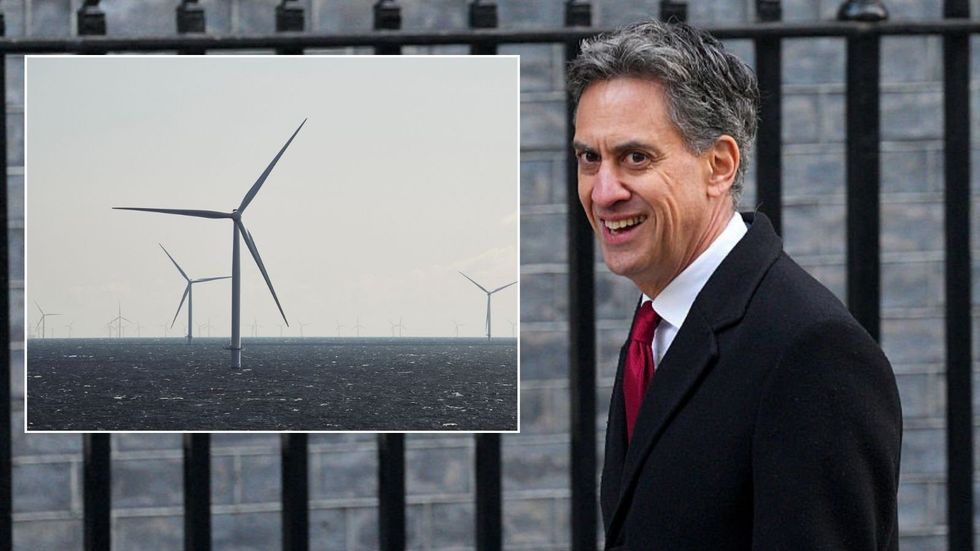
Ed Miliband has been criticised for hiking people's energy bills
|GETTY
"It's not just what you and I who will be paying," the Shadow Energy Secretary told GB News. "This is what our children will be paying as well."
She also argued headline figures for offshore wind contracts do not reflect the full cost ultimately borne by consumers.
Mr Miliband has defended the auction results, saying the new projects will deliver an additional 8.4GW of capacity, and that this would be enough electricity to power the equivalent of 12 million homes.
He argued that expanding domestic renewable generation is essential for energy security and reducing reliance on imported fossil fuels.
"With these results, Britain is taking back control of our energy sovereignty," Mr Miliband previously said.
However, the Government had pledged to cut household energy bills by £300.
Following Labour's landslide victory in July 2024, average costs have instead risen by £200.
LATEST DEVELOPMENTS

Worries about record energy bills look set to stay
| GETTYOpponents of the policy have warned households are already paying significant sums to support existing renewable schemes.
They point to estimates suggesting current renewable subsidies add around £2.6billion a year to energy bills.
Reform UK has also criticised the latest auction, vowing to cancel future green energy projects if it wins the next General Election.
Richard Tice, Reform UK's energy spokesman, said the expansion of renewable generation over the past twenty years had coincided with rising electricity prices, describing the latest offshore wind contracts as "highly reckless."
"It would be disastrous for the UK economy," the Boston & Skegness MP added.
Conservative figures argue that the UK’s energy market has become unbalanced by prioritising decarbonisation above affordability and security of supply.
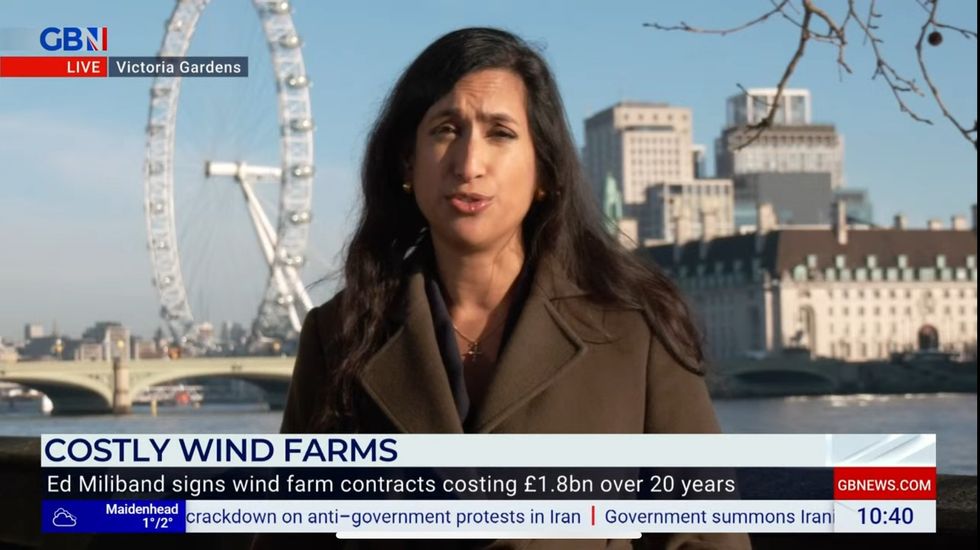
Claire Coutinho criticised Ed Miliband's approach to people's bills
|GB News
Meanwhile, Ms Coutinho said the Conservatives would pursue a different approach if the Tories returned to power, which would include increased investment in nuclear energy and new gas-fired plants to ensure reliable electricity during periods of low renewable output.
"Our energy system is warped because we’re prioritising decarbonising over everything else," the Shadow Energy Secretary added.
The Conservatives have also outlined plans for a so-called cheap power plan aimed at cutting electricity prices by 20 per cent for households and businesses.
She told The People's Channel that ministers needed to be transparent about the full costs of renewable energy policies and consider their long-term impact on consumers.
Reacting to the news, Tony Blair Institute's Senior Energy Policy Advisor, Tone Langengen, said: "Offshore wind remains vital to Britain’s clean energy future, and today’s results show it can be delivered with prices kept in check, but it’s unlikely to bring down household bills.
"We’re in a cost-of-living crisis and a climate crisis – the priority must be cheaper energy that supports growth.
“The big test for government will now be whether they can integrate this new power in a way that actually cuts bills rather than adding to inefficiency.
"The focus must be on speeding up grid development through fixing planning bottlenecks, and reforming the electricity market to unlock lower prices."
More From GB News