









To its detractors, the North Sea is a spent force, scarcely worth the price of a drill bit.
But offshore experts remember the days when the UK’s gas and oil empire was so vast it commanded its own atlas to navigate it.
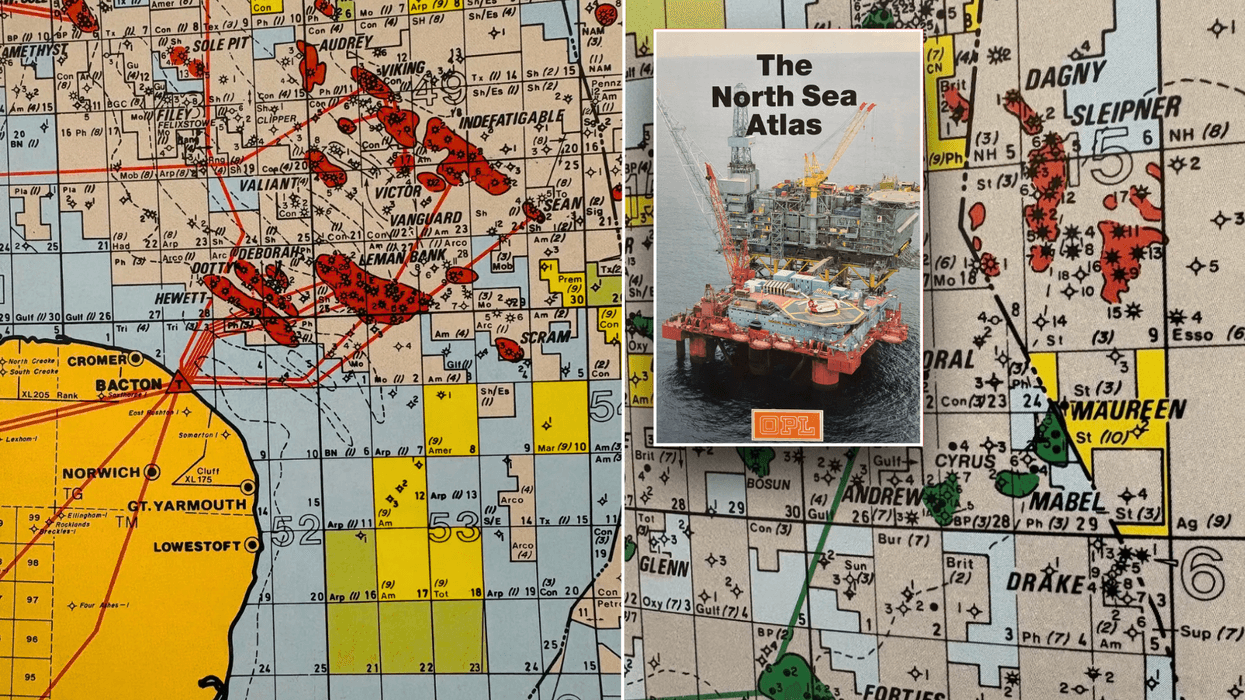
These fascinating pictures, from 1984’s North Sea Atlas, show the huge networks of fields, concessions and pipelines that helped drive the oil boom.
The publication demonstrates how money flowed into the Treasury as investors staked their claims, bringing cash and technical know-how with them.
TRENDING
Stories
Videos
Your Say
The small ads alone offer everything from specially-crafted North Sea steel to entire oil rigs. While new licences may now be banned, in the 80s they were openly advertised, along with prices.
“Nothing compared to the publication of The North Sea Atlas,” said Maurice Tidy, 85, who worked in the offshore industry in the 1980s and who unearthed the trade bible.
The good times continued right up until 1999, when oil production peaked. Since then it has fallen, a result of both dwindling resources and the approach of successive governments.
By 2015 North Sea policies had already created what lawyers described as “the most unstable fiscal regime in the entire world”.
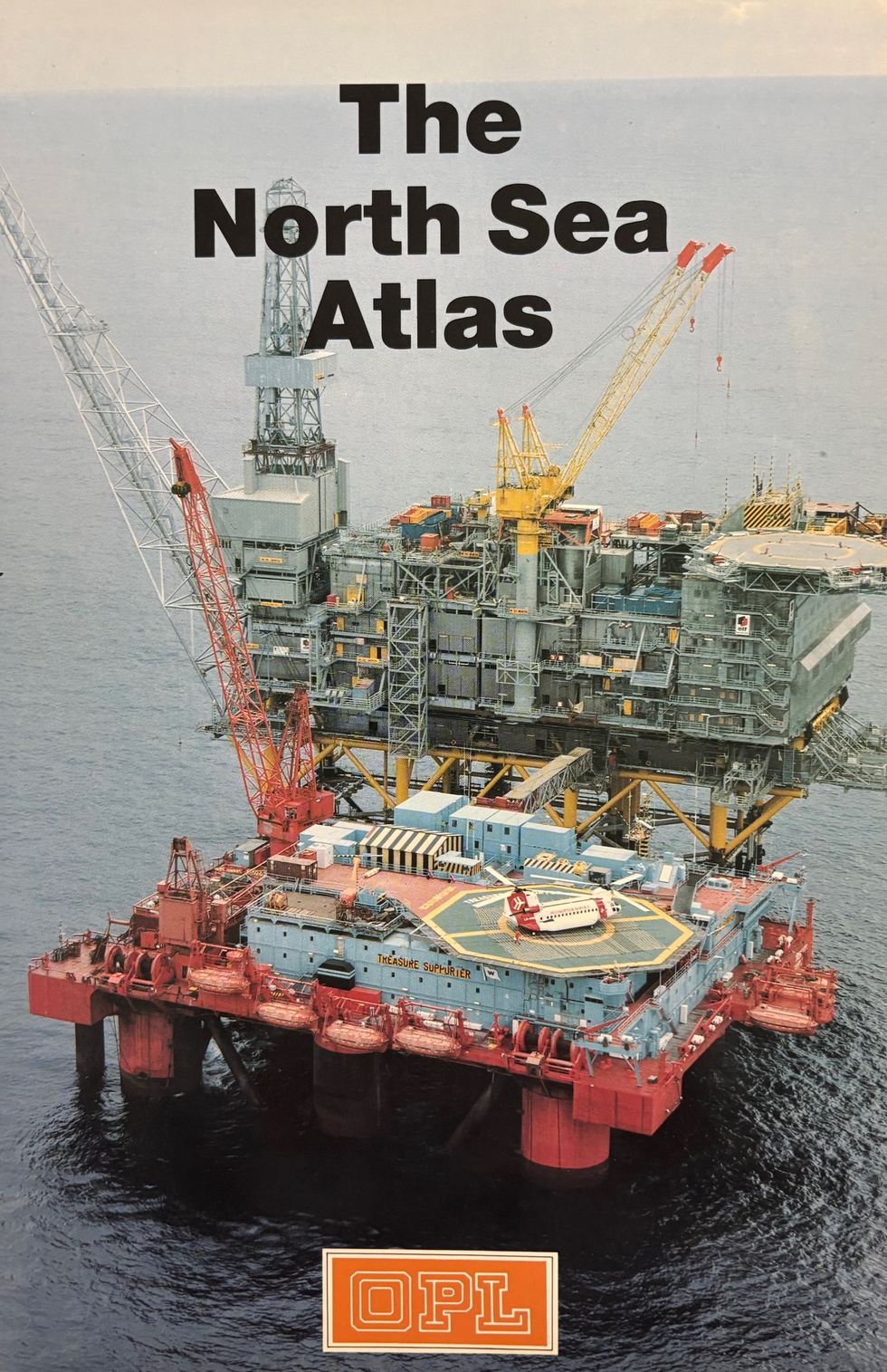
The North Sea Atlas from 1984 shows the huge networks of fields, concessions and pipelines that helped drive the oil boom
|THE NORTH SEA ATLAS
The following decade has seen Labour bring in a ban on new drilling and companies subjected to a headline tax rate of 78 per cent.
Licenced projects on Rosebank, the UK’s largest untapped oil field, and Jackdaw, a giant gas field east of Aberdeen, have been halted by legal challenges.
Offshore experts warn that the political landscape is scaring off investors, meaning without a change, the expertise simply won’t exist to extract the oil and gas.
But Mr Tidy, one of the army of workers who made the oil boom happen, remembers a day when politicians were warmer to the resources beneath the North Sea.
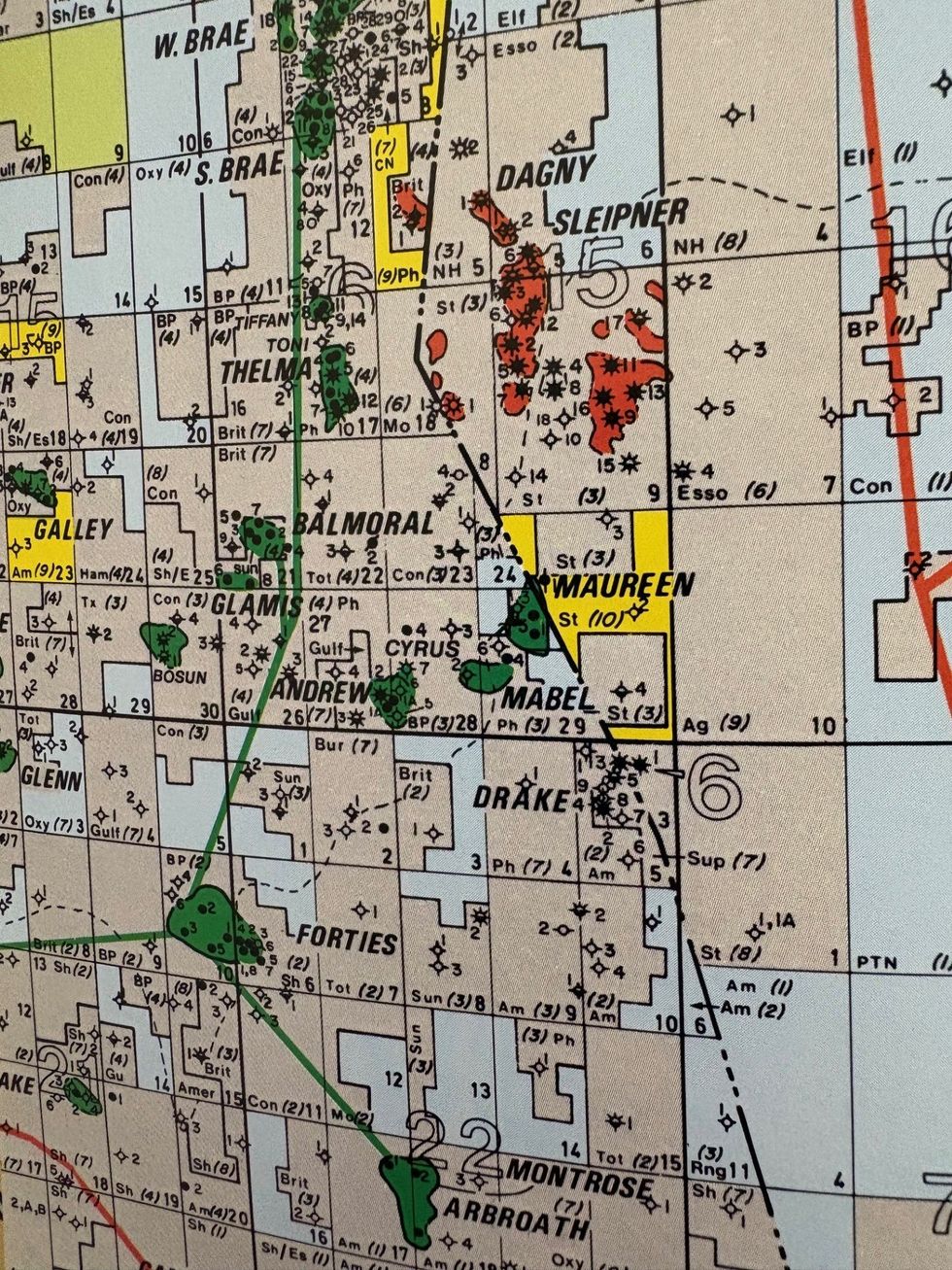
Detailed maps record some of the best known fields including Forties
|THE NORTH SEA ATLAS
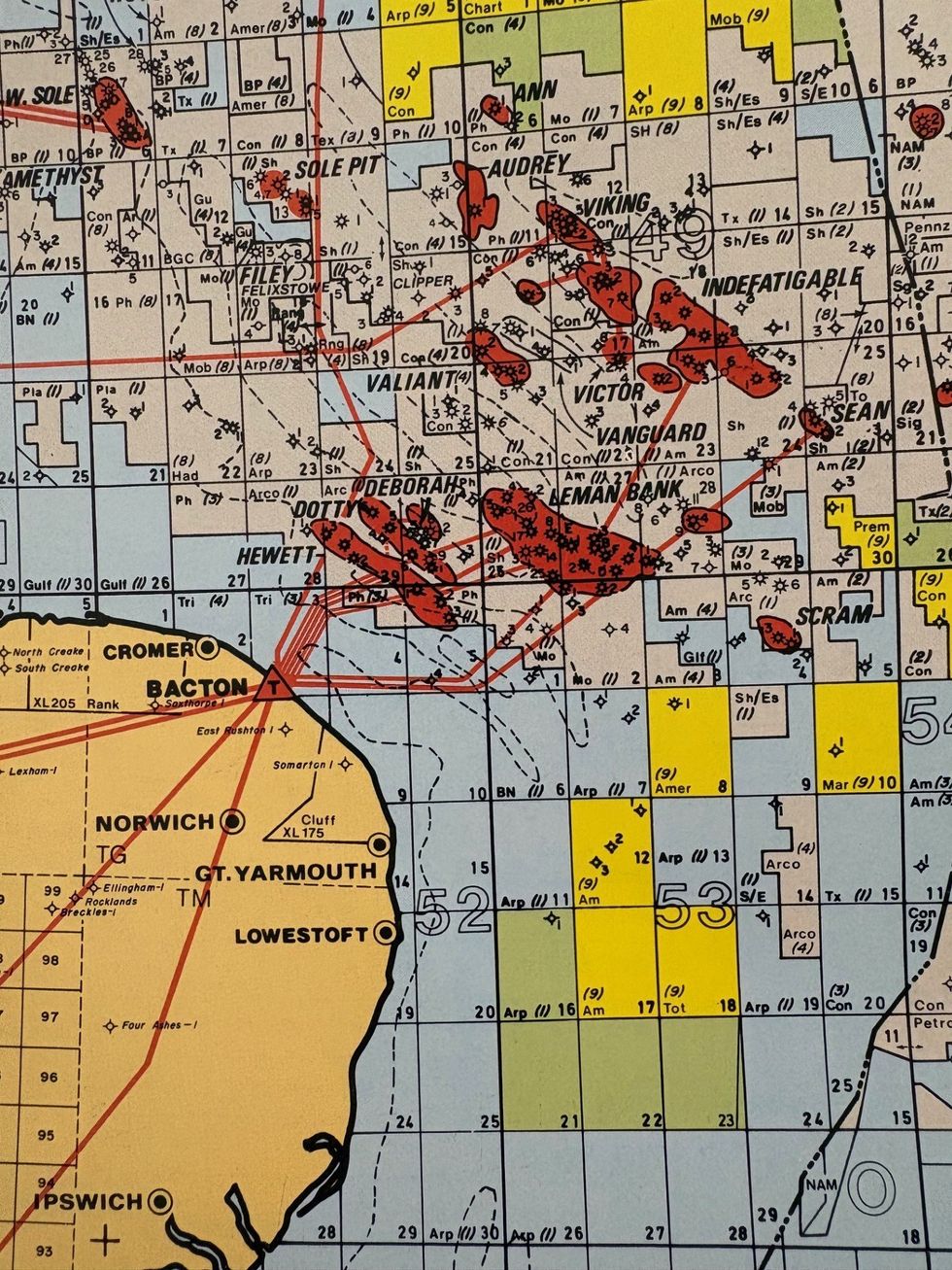
The Atlas includes details of gas fields, in red, to the north east of East Anglia
|THE NORTH SEA ATLAS
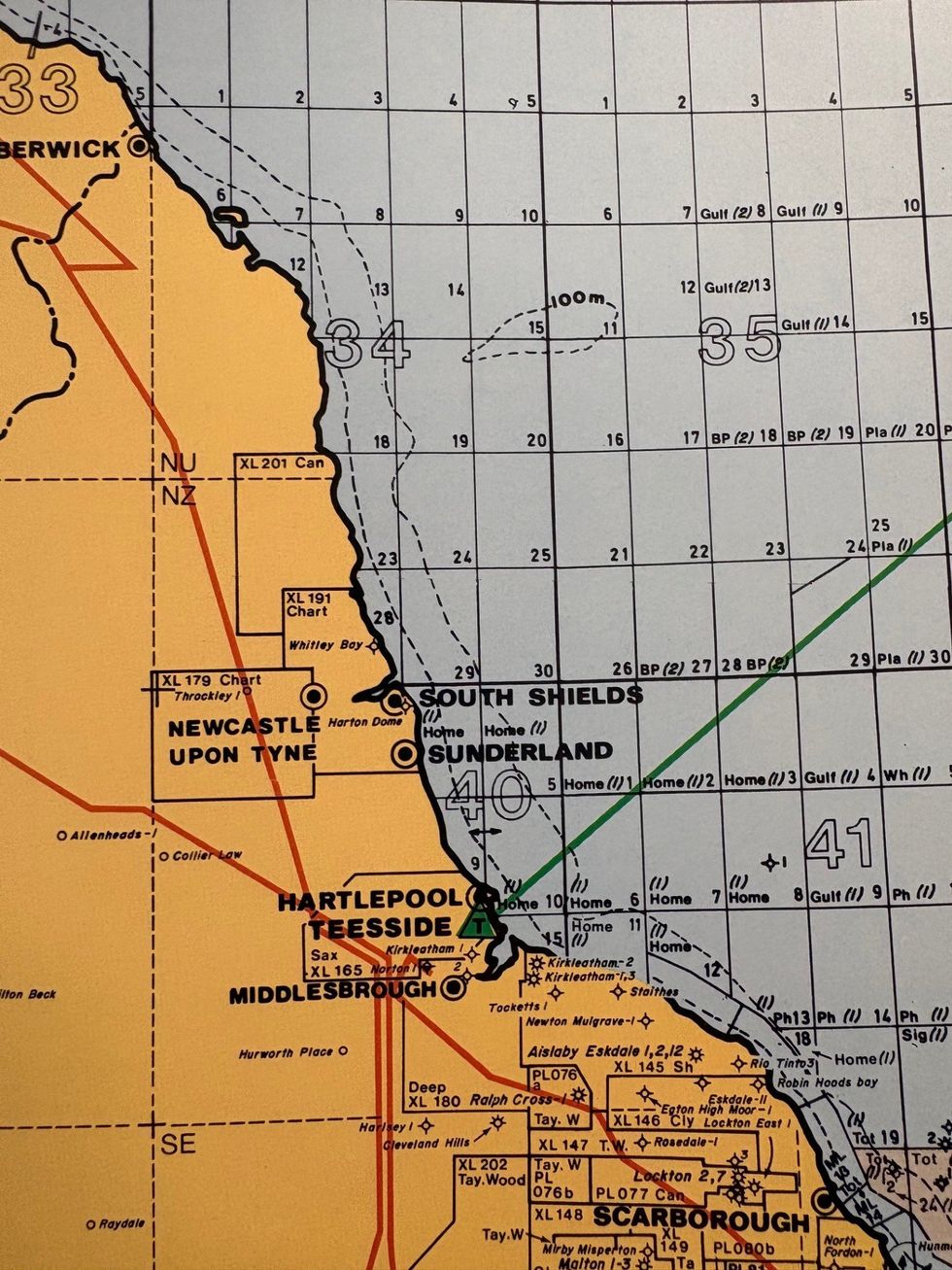
Coloured pipelines show how the oil and gas was not only brought ashore but then distributed right across the UK
|THE NORTH SEA ATLAS
Mr Tidy worked for offshore specialists Brown & Root as a proposal manager in the North Sea heyday.
Intrigued by the growing arguments over the North Sea’s future, he went through his old work documents and recovered his copy of the 1984 North Sea Atlas, produced by Oilfields Publications Ltd.
It contains detailed maps recording some of the best known fields, including Brent, which gave its name to Brent crude, Forties and Clair, believed to be the largest oil accumulation on the UK continental shelf.
Coloured pipelines show how the oil and gas was not only brought ashore but then distributed right across the UK.
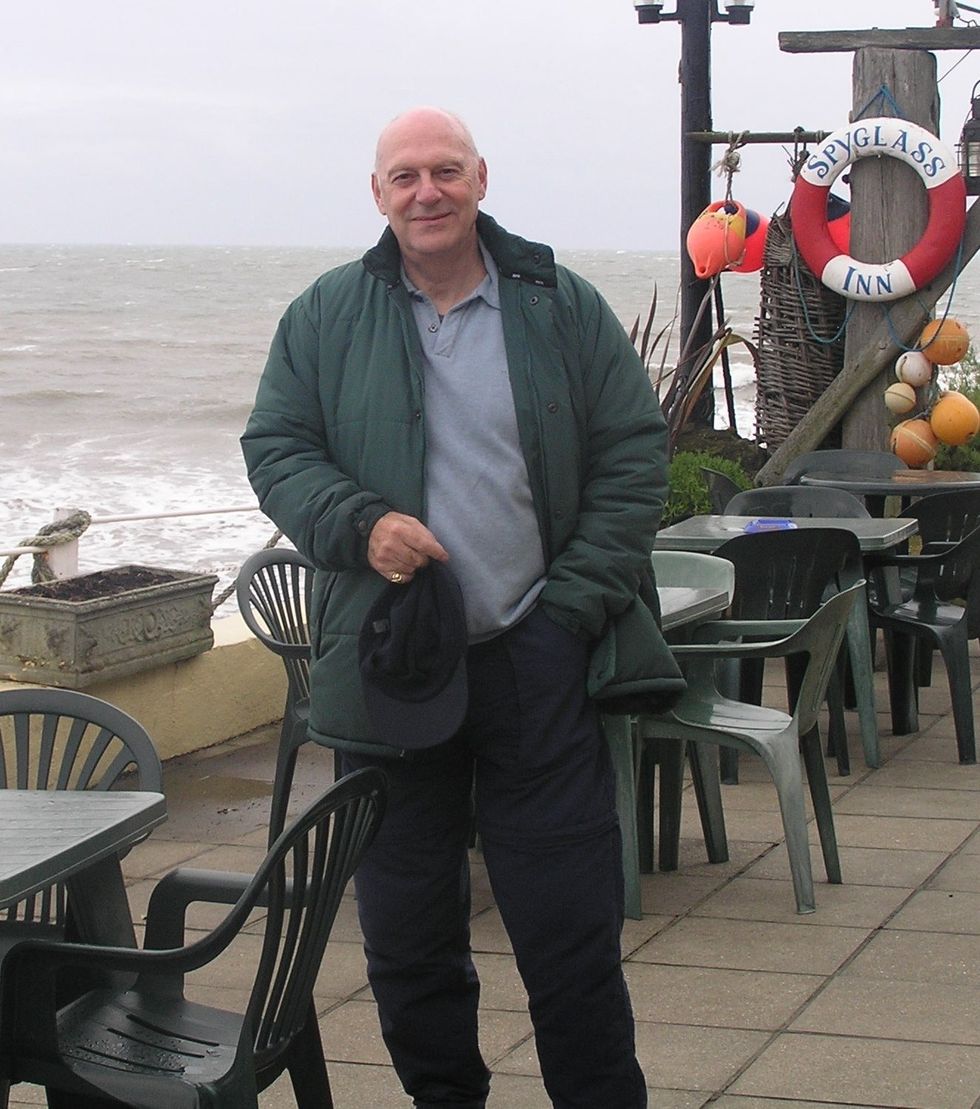
Maurice Tidy, retired offshore specialist, unearthed the industry bible
|THE NORTH SEA ATLAS
It also shows the demarcation line between UK waters and Norwegian. At the time of its publication, British North Sea output ran at about 2.5 million barrels per day compared to 700,000 barrels per day from Norway.
These figures are now nearly reversed, with Norway producing roughly three times as much oil as the UK- 2.0 million barrels per day of crude against 0.7 million.
On top of the detailed maps, the publication is full of vital advice for the offshore professional.
It contains adverts for entire oil rigs and research vessels as well as sophisticated weather equipment, robotic vehicles and steel especially fashioned to cope with the harsh North Sea environment.
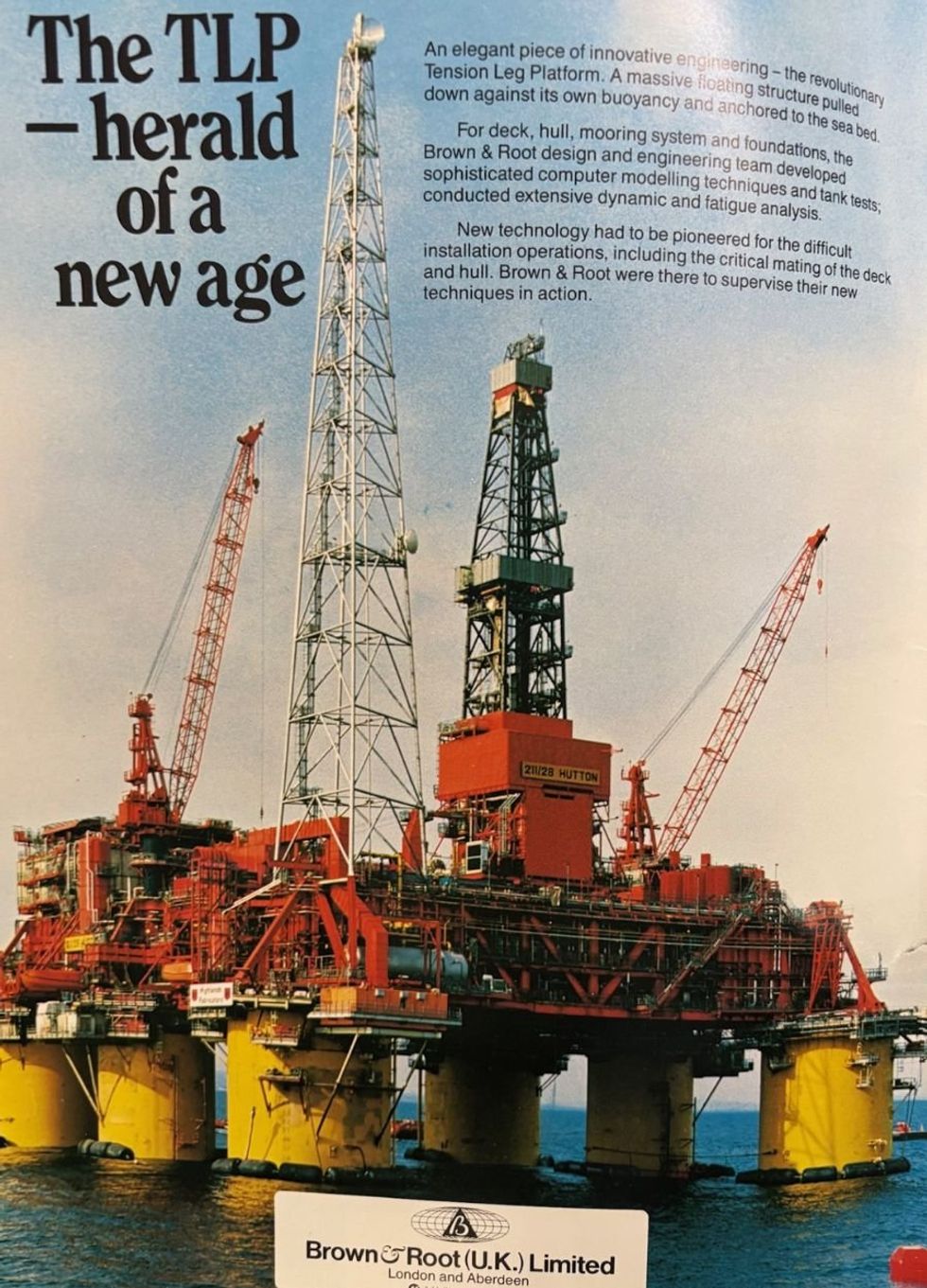
Entire oil rigs were advertised in the North Sea Atlas trade publication
|THE NORTH SEA ATLAS
It also lists the types of costs of the various licences available to suppliers. Mr Tidy told how the atlas had “lifted the veil” on the vast North Sea industry and highlighted the huge amount of labour that went into offshore work.
He said: “By the early 1980’s offshore oil and gas platforms in the North Sea were everyday news - broadcast and printed media.
“All European countries bordering the North Sea were participating. It occurred to me that we knew very little about how oil and gas reached our homes and industry. It wasn’t a secret, just out of sight, out of mind!
“Although there were a few articles in the trade press, nothing compared to the publication of The North Sea Atlas.
“The veil was lifted. Field names such as Maureen, Troll and Angus were revealed in their relative blocks and oil and gas pipelines coloured green and red travelling to land and further underground to processing facilities.
“Naturally, this was not achieved without the contribution of vast labour forces that provided work and prosperity.
“One can only surmise as to how we could meet such a challenge now.”
Trade body Offshore Energies UK has called for more exploration of tbe basin, saying exploiting domestic supply would be better for energy security, the economy and the planet.
But it has also long warned that investors were reluctant to put their money into the North Sea.
It has warned: “The North Sea could power the UK for decades, but a mix of windfall taxes and political uncertainty is driving away the billions of pounds of investments needed to maintain oil and gas production now and create low carbon energy in the future.”
Former PM Tony Blair has also intervened, with his think tank calling for drilling to restart immediately at both Rosebank and Jackdaw.