








HSBC and Coventry Building Society have become the first major high street lenders to raise fixed mortgage rates following the outbreak of the Iran war.
The banking giant confirmed its new pricing will take effect from tomorrow, while Coventry's increases come into force on Monday.
The move marks a significant shift for borrowers who had been enjoying falling costs in recent months.
Both institutions stated the rises would apply across their product ranges, though neither has disclosed the precise scale of the increases.
Nationwide also said it was increasing selected fixed rates by up to 0.25 percentage points from Friday.
The moves affect residential and buy-to-let mortgages alike, dealing a blow to homebuyers and those approaching remortgage deadlines.
Smaller lender Gen H has also reversed a planned rate cut, instead implementing increases of up to 0.25 percentage points, citing "global uncertainty" stemming from the conflict.
The conflict in the Middle East has sent shockwaves through financial markets, pushing up the swap rates that determine fixed mortgage pricing. Wholesale borrowing costs have climbed as investors anticipate rising energy prices feeding through to inflation later this year.
The yield on the benchmark 10-year gilt has increased by approximately a quarter point, moving from around 4.25 per cent to 4.5 per cent.
Before hostilities commenced last weekend, markets had priced in an 85 per cent probability of a Bank of England rate cut on 19 March, bringing the base rate down from 3.75 per cent to 3.5 per cent.
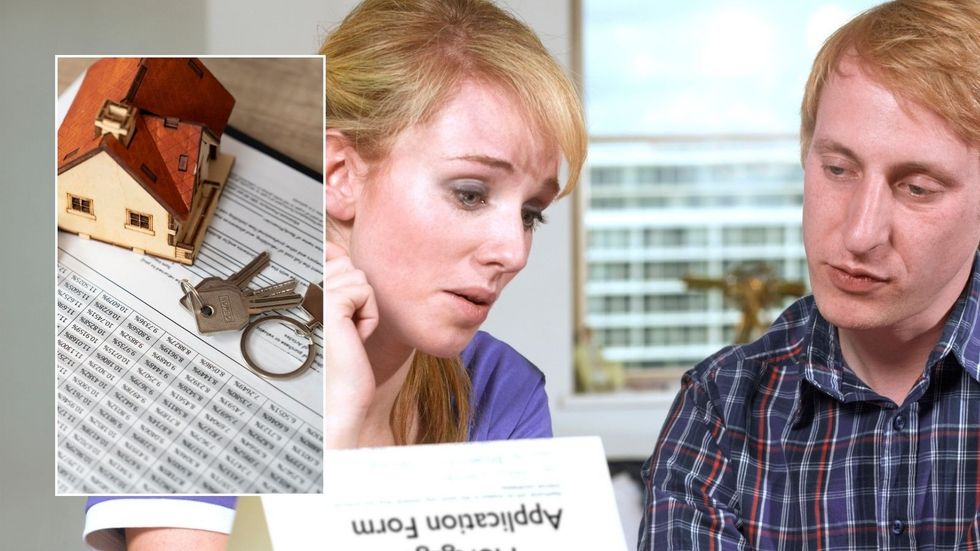
Major lenders increase prices
| GETTYThat expectation has now evaporated, with traders anticipating just one reduction for the remainder of 2026.
The National Institute of Economic and Social Research has warned that persistent energy price rises could force the Bank to push rates back above four per cent.
Mortgage brokers are urging borrowers to act swiftly before further increases materialise. Aaron Strutt, product and communications director at Trinity Financial, said: "HSBC and Coventry are the first big lenders to announce rate hikes based on the funding cost increases brought on by the chaos in the Middle East."
He added: "It seems almost certain we are going to see a lot more rate changes over the coming days, so if you are on the hunt for a mortgage, it is worth locking into a new deal now."

Mortgage brokers are urging borrowers to act swiftly before further increases materialise
| GETTYDavid Hollingworth, associate director at L&C Mortgages, echoed the warning: "Once we enter this cycle of lenders adjusting their rates, we know that it almost invariably results in others following suit."
He noted that while the upward pressure shows no sign of easing quickly, there are indications the market reaction may be stabilising for now.
According to Moneyfacts data, the average two-year fixed residential mortgage rate now stands at 4.83 per cent, while five-year fixes have reached 4.95 per cent – both ticking upward from the previous day.

The timing proves particularly challenging given that approximately 1.8 million fixed-rate deals are set to expire this year,
| GETTYThe timing proves particularly challenging given that approximately 1.8 million fixed-rate deals are set to expire this year, with most of these borrowers needing to secure new arrangements.
Mr Strutt noted that most borrowers can lock in rates up to four months before their current deals end, warning that delays could prove costly for those with larger loans.
Adam Stiles at Helix Financial Partners cautioned: "The stark reality of recent global events has hit markets with great uncertainty, which has translated into huge volatility in swap rates. Coventry and HSBC won't be the first lenders running for the hills and increasing rates."