








QatarEnergy has invoked force majeure on its liquefied natural gas (LNG) shipments after Iranian drone strikes targeted production facilities at Ras Laffan industrial city.
The declaration releases the state‑owned producer from contractual supply obligations after it suspended LNG output and related products, including fertiliser, earlier this week.
Iran has launched strikes against Gulf Arab states hosting American military installations as part of the escalating conflict involving the United States and Israel.
Force majeure clauses allow companies to suspend contractual commitments when circumstances beyond their control prevent them from meeting delivery obligations.
 QatarEnergy is a major global supplier of energy | GETTY
QatarEnergy said it “values its relationships with all of its stakeholders and will continue to communicate the latest available information”.
Qatar accounts for around one fifth of global LNG exports, making the production halt a significant disruption to international gas markets.
The company delivered 80.97 million metric tonnes of LNG during 2025.
All Qatari LNG cargoes must transit the Strait of Hormuz, where shipping traffic has slowed sharply amid heightened security risks.
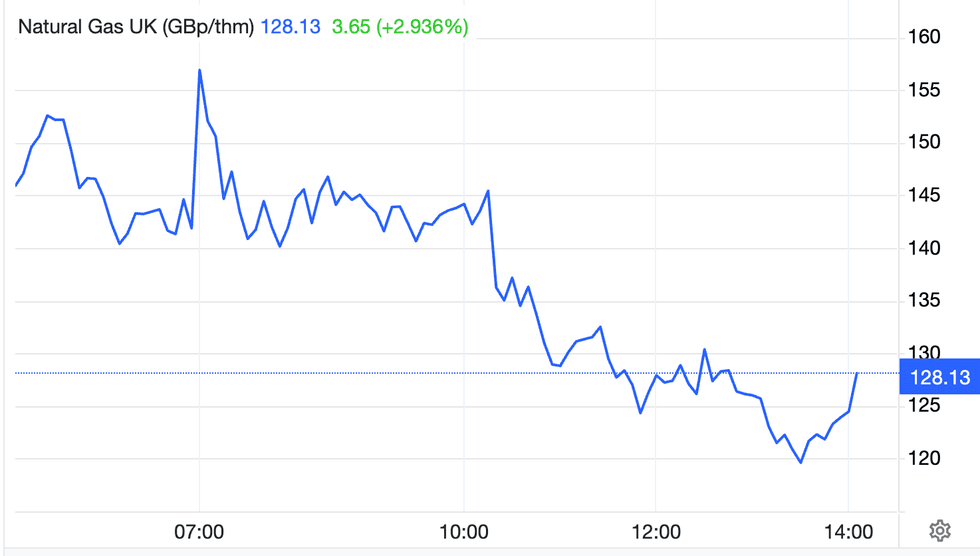
Natural gas prices in the UK today as of 2:09pm
|Trading Economics
The maritime corridor is a critical energy route linking Gulf producers to global markets.
Energy market participants have also reported rising war‑risk insurance premiums and higher shipping costs linked to the disruption.
Despite the production shutdown and shipping constraints, wholesale oil and gas prices have so far shown limited immediate reaction.
UK gas is trading at 124p per therm, while Brent crude sits at $80.79 a barrel.
Once liquefaction resumes, QatarEnergy would need around two weeks to return to full output, according to Reuters sources.
It comes after the company halted LNG production earlier this week, along with output of fertiliser and other related products, following drone strikes on its facilities.
The news follows wholesale gas prices jumping 93 per cent in a week, as escalating conflict around the Strait of Hormuz disrupts global energy flows.
The benchmark briefly hit 151p per therm, its highest level in more than three years, before easing slightly.
Markets have been rattled by Iranian threats to block the strait, a chokepoint that carries around a fifth of the world’s oil and gas. Several vessels have been attacked in recent days, prompting shipping to halt and insurers to pull cover.
The shutdown has pushed up oil prices too, with Brent crude rising more than three per cent as traders price in the risk of prolonged supply disruption.
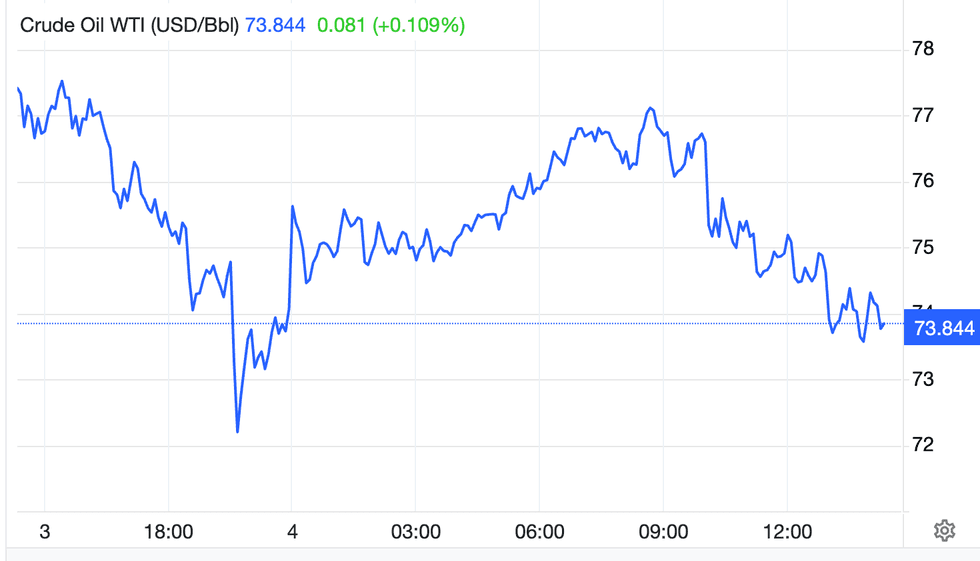
Crude oil prices today
|Trading Economics
Higher wholesale costs raise the prospect of future increases in the UK energy price cap, which directly affects household bills.
Shipping costs have surged, with supertanker rates to Asia nearly doubling as carriers avoid the region.
Analysts warn that if tensions persist, crude could climb above $100 a barrel, intensifying pressure on global energy markets and consumers.