







Inheritance tax (IHT) continues to be a significant revenue generator for HM Treasury with HM Revenue and Customs (HMRC) raking in £7.7billion between April 2025 and February 2026.
This represents a £100million rise compared to the same time last year and comes ahead of Chancellor Rachel Reeves's IHT reforms, which come into effect in April 2027.
The data indicates the Labour Government is on course to achieve yet another record-breaking year for IHT revenues for the 2025/26 financial year.
Ian Dyall, the head of Estate Planning at wealth management firm Evelyn Partners, said the continued upward trajectory in receipts "come as no surprise to those of us working closely with families on longterm wealth planning".

HMRC is raking in billions from inheritance tax
|GETTY
He noted the pace of growth has moderated in recent months, potentially reflecting slower property price increases.
According to Mr Dyall, the expansion of inheritance tax liability stems not from sudden wealth accumulation but from prolonged fiscal drag.
The finance expert said: "Nil rate bands have been frozen for many years while asset values, particularly property, have continued to inflate."
While rising property and investment values benefit asset holders, Mr Dyall warned these households face an "unexpectedly large, and rising, tax bill for their beneficiaries at death".
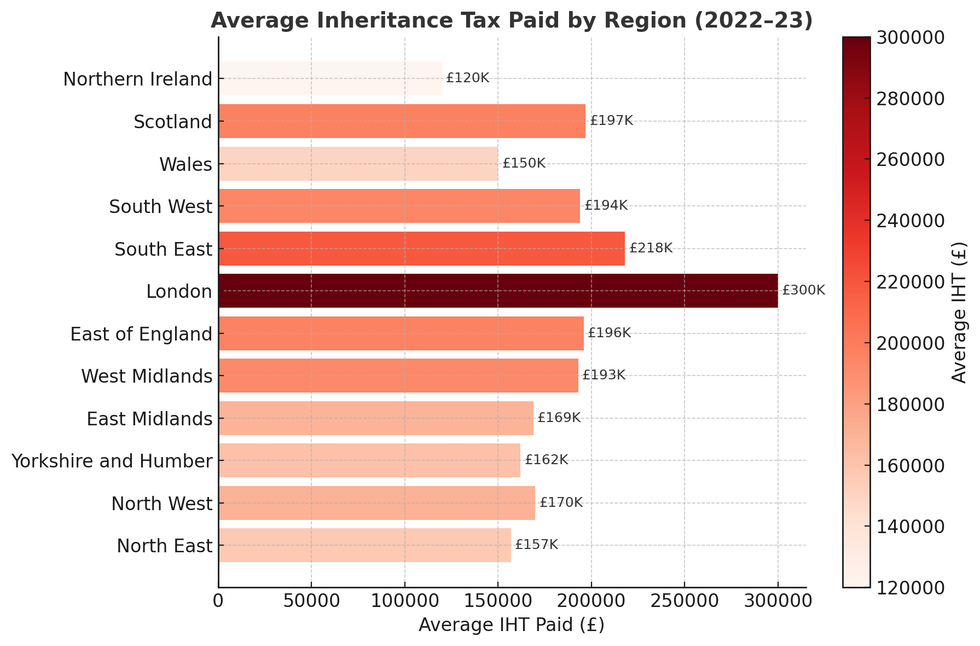 Average Inheritance tax paid by region | CHATGPT/ONS
LATEST DEVELOPMENTS
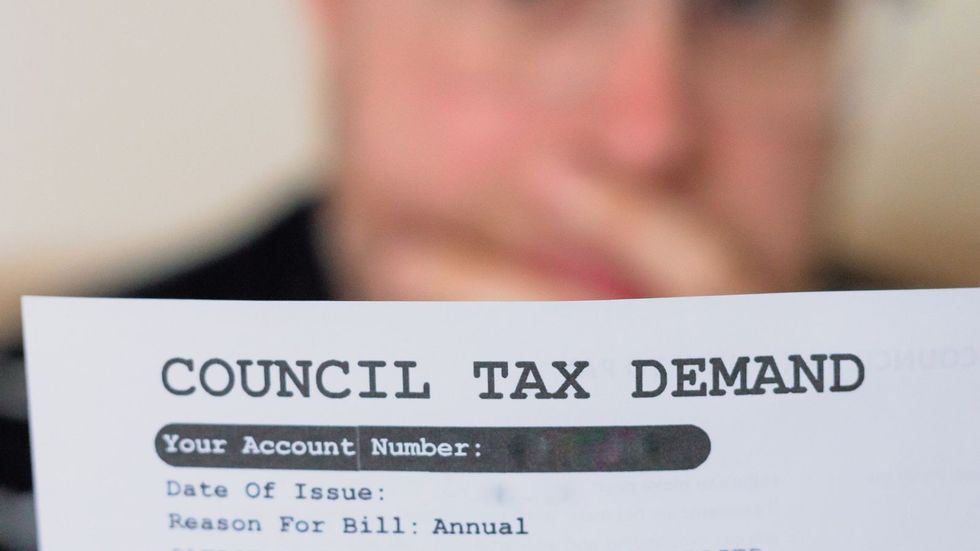 Britons are already paying more of their hard-earned cash to other tax bills | GETTY
 Estates previously considered safely beneath the threshold are increasingly entering taxable territory, he added.
Many families only become aware of their exposure when administering a will following bereavement, by which stage options for reducing the liability have substantially diminished.
The IHT system currently imposes a 40 per cent charge on estate values exceeding the nil-rate band, which stands at £325,000 per individual. An additional residence nil-rate band worth up to £175,000 applies when a family home passes to direct descendants such as children or grandchildren.
Married couples can combine their allowances, enabling them to transfer up to £1 million free of tax. These thresholds remain frozen until at least 2030-31, ensuring fiscal drag continues to capture more estates.
 Some gifts and property are exempt from Inheritance Tax, such as some wedding gifts and charitable donations | GETTY
A significant shift arrives in April 2027, when unspent pension funds will become liable for inheritance tax, dramatically expanding the number of families affected.
Mr Dyall emphasised that inheritance tax has evolved beyond a concern solely for the wealthy, now affecting "families with modest and commonplace levels of wealth."
He urged households to consider proactive measures including regular estate valuations, making use of allowances and reliefs early, and lifetime gifting. Trusts may also form part of an effective mitigation strategy, he suggested.
"With some very large pension pots about to enter the taxable estate in just over a year's time, the cost of inaction has never been higher," Mr Dyall warned.
More From GB News