









London's housing market is seeing its biggest drop since the 2009 financial crisis, even as prices rise across much of the rest of the UK.
New figures from the Office for National Statistics show a clear divide between the capital and the wider market.
Average house prices in London fell by 3.3 per cent in the year to February, cutting around £19,000 from the value of a typical home.
The decline was even sharper in inner London, where prices dropped by 5.6 per cent, falling by £36,699 from £659,520 to £622,821 over the same period.
Across the UK, however, house prices increased by 1.2 per cent, taking the average property value to £268,000.
That is a rise of around £3,000 compared with a year earlier, up slightly from the one per cent growth recorded to January.
The wealthiest corners of the capital have been hit hardest. Westminster recorded an annual price drop of 12.7 per cent in February, while Kensington and Chelsea fell 11.2 per cent over the same period.
Both boroughs have now posted double-digit declines for five months running, stretching back to October 2025.
The City of London matched Kensington and Chelsea's 11.2 per cent annual fall.
These steep losses have dragged average values back to levels not seen for over a decade. Westminster homes now fetch around £872,000 on average, with Kensington and Chelsea properties commanding approximately £1,225,000.
Both figures mirror what buyers were paying in 2013.

These steep losses have dragged average values back to levels not seen for over a decade
| GETTYThe slump in these prime areas has been the primary driver behind inner London's overall 5.6 per cent contraction, which deepened from January's 4.7 per cent decline.
Several factors have combined to create this perfect storm in central London. A tougher tax environment has deterred wealthy overseas buyers, while increased stamp duty rates have added further friction to transactions.
Tom Bill, head of UK residential research at Knight Frank, said: "The tougher tax landscape, which includes fewer incentives for wealthy overseas investors and higher rates of stamp duty, means buyers have been more hesitant over the last decade."
The February data predates the Middle East conflict, which has since driven inflation higher and raised expectations of increased interest rates. Mortgage costs have risen as a result.
"The Middle East conflict is just the latest in a series of events to hit demand in the central London market," Bill added, noting that geopolitical instability has weakened buyer sentiment further.
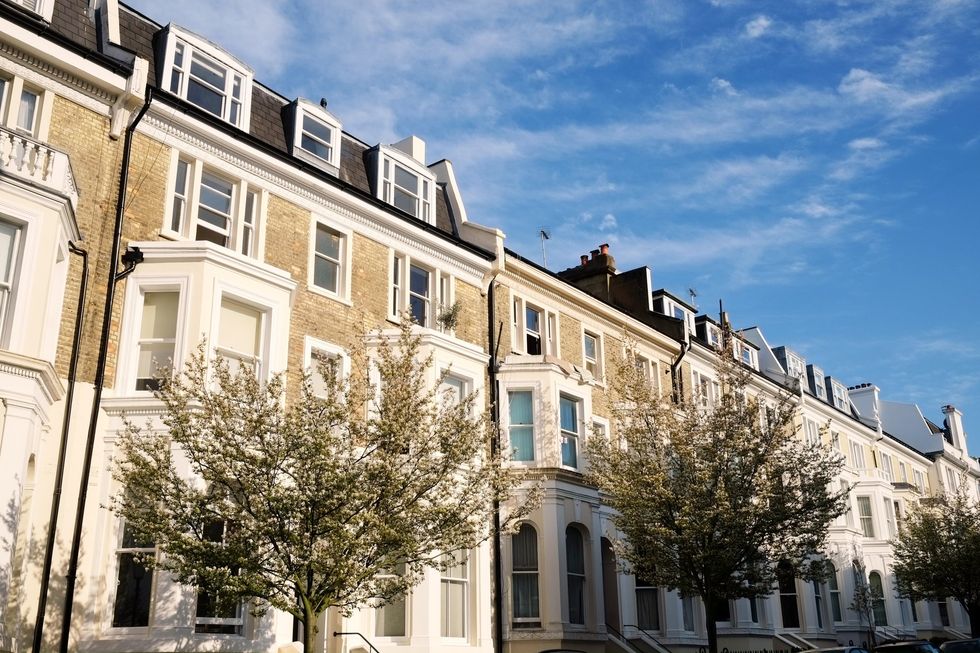
These steep losses have dragged average values back to levels not seen for over a decade
|GETTY
Beyond the M25, the housing market tells a completely different story. Yorkshire and the Humber topped the regional growth charts with prices rising 3.9 per cent annually, bringing the average home to £209,000.
The North East followed closely at 3.6 per cent, while the North West posted gains of 3.4 per cent.
Scotland and Wales also outperformed the capital, recording increases of 2.3 per cent and 2.5 per cent respectively. Northern Ireland delivered the strongest performance of any UK nation, with values jumping 7.5 per cent in the year to the fourth quarter of 2025.
Ian Futcher, financial planner at Quilter, said: "London stands out as the clear underperformer in the February data. Part of that reflects affordability pressures in a higher-priced market, but the composition of property types also plays a part."

Looking ahead, market observers see reasons for cautious optimism despite London's struggles
| GETTYLooking ahead, market observers see reasons for cautious optimism despite London's struggles.
Richard Donnell, Executive Director of Research at Zoopla, said: "The housing market is holding steady despite events in the Middle East - house price inflation is slower than earnings, which is helping with affordability."
Flats remain the weakest segment, with London apartment values dropping 6.1 per cent annually compared with a 2.6 per cent decline across the UK. Semi-detached properties fared better nationally, rising 2.9 per cent.
London faces additional headwinds beyond property type composition. The capital recorded the slowest population growth of any region between 2019 and 2024, at just 2.2 per cent. It also carries the nation's highest unemployment rate at 7.4 per cent, according to figures released this week.