








Accountants are sounding the alarm over the rise in businesses and self-employed individuals being hit with "unexpected" tax by HM Revenue and Customs (HMRC).
Fresh data reveals that 737,891 taxpayers completed their Self Assessment returns during April 2026, marking an all-time high for the month.
Easter Monday proved particularly busy, with 86,270 people filing their 2025/26 returns on April 6. Yet accountancy practice Ridgefield Consulting cautions that growing early submission rates mask a deeper problem: confusion about how Self Assessment payments actually function.
The growing prevalence of freelance work, online ventures, rental income and second jobs means this confusion is affecting an expanding pool of taxpayers.

Britons are receiving 'unexpected' tax bills from HMRC
|GETTY
HMRC's "payments on account" mechanism represents one of the most common sources of shock, requiring individuals to pay advance instalments towards next year's liability alongside their current tax bill.
Those entering self-employment for the first time often experience this as an apparent demand for double the expected amount when January arrives.
Simon Thomas, the managing director of Ridgefield Consulting, said: "We see many business owners and self-employed workers experiencing the stress of an unexpected HMRC bill arriving, particularly where payments on account increase what they are expecting to pay.
"The key issue is often cash flow rather than compliance; people aren't necessarily doing anything wrong, they just haven't planned for how the system works."
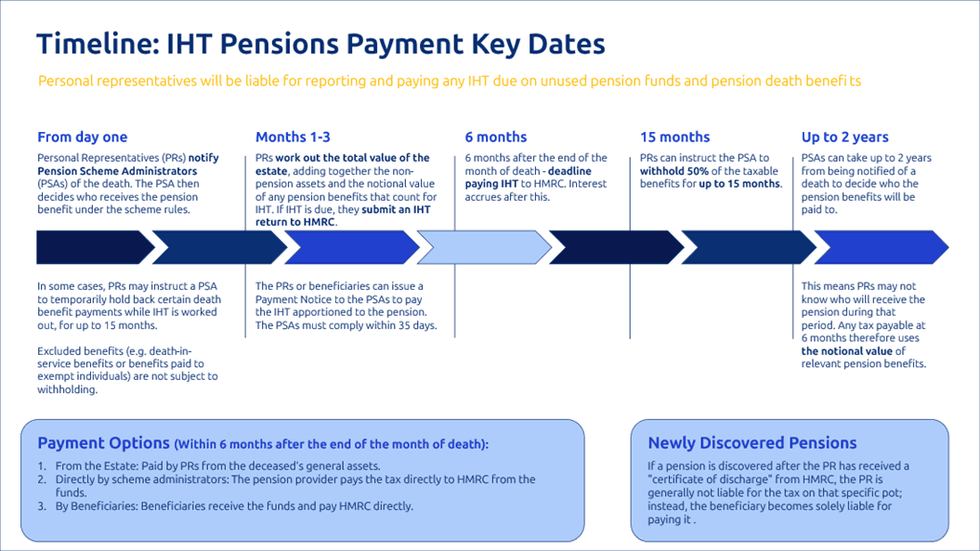 The inheritance tax payment deadline revealed | STANDARD LIFE
 LATEST DEVELOPMENTS
Ridgefield Consulting has outlined four legitimate approaches for easing the burden of substantial tax demands.
HMRC's Budget Payment Plan enables taxpayers to make voluntary contributions towards future liabilities on a weekly or monthly basis, spreading costs throughout the year rather than facing large lump sums at deadline points.
A common misconception holds that submitting returns ahead of schedule triggers earlier payment obligations, but the firm noted that this is incorrect.
Early filing simply provides additional time to assess one's tax position and prepare financially, rather than confronting an unexpected bill as the deadline looms, according to Ridgefield Consulting.
 Self-employed individuals need to file their tax returns | GETTY
It also offers clearer insight into whether payments on account will apply, which can substantially affect the total sum owed. Those who receive salary or pension income may be eligible to have their Self Assessment liability collected through their PAYE tax code instead.
This approach recovers outstanding amounts gradually through monthly deductions over the following tax year, offering a more automated alternative to lump sum payments.
For taxpayers unable to meet their obligations in full by the deadline, HMRC's Time to Pay arrangements allow liabilities to be settled through agreed instalments rather than a single payment.
Those owing less than £30,000 can apply for an online payment plan, provided their return is current, and no other issues remain outstanding.
Mr Thomas added: "The worst thing taxpayers can do is ignore the issue and wait for payment deadlines to pass."