








The Ftse 100 has collapsed by nearly 300 points today following the Bank of England's decision to keep the base rate at 3.75 per cent in response to the US-Iran war/
A dramatic surge in gas prices has resurrected inflationary concerns, leading the central bank's Monetary Policy Committee (MPC) to hold off a much-anticipated cut to interest rates.
This appears to have spooked the City and retail investors as London's benchmark index sat just above 10,000 points by 1:20 pm this afternoon.
Prior to President Donald Trump and Israel's decision to take military action against the Islamic Republic, the Ftse was flirting with crossing the 11,000 threshod.
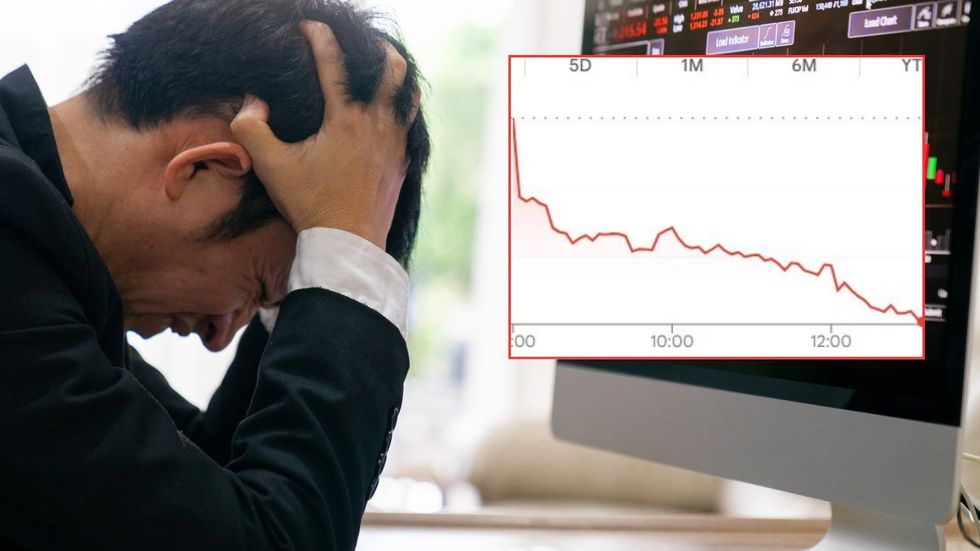
The Ftse 100 has dropped more than 300 points in one day
|GETTY / GOOGLE
Both the US Federal Reserve and European Central Bank (ECB) have also paused cuts to borrowing costs for the time being as the conflict in the Middle East rages on.
The price of gold has also plummeted over the past week, sitting at around £3,430.50 this afternoon, despite being widely perceived as a safe haven for investors.
Dan Coatsworth, head of markets at AJ Bell, said: "Financial markets were firmly in the red as investors reacted to the Middle East conflict intensifying, with stocks down across Asia and Europe.
"Gold also fell, which suggests investors are once again liquidating assets that have previously served them well, or they are reacting to a further strengthening in the US dollar. Gold often declines when the US dollar appreciates as the metal becomes more expensive for buyers of other currencies.
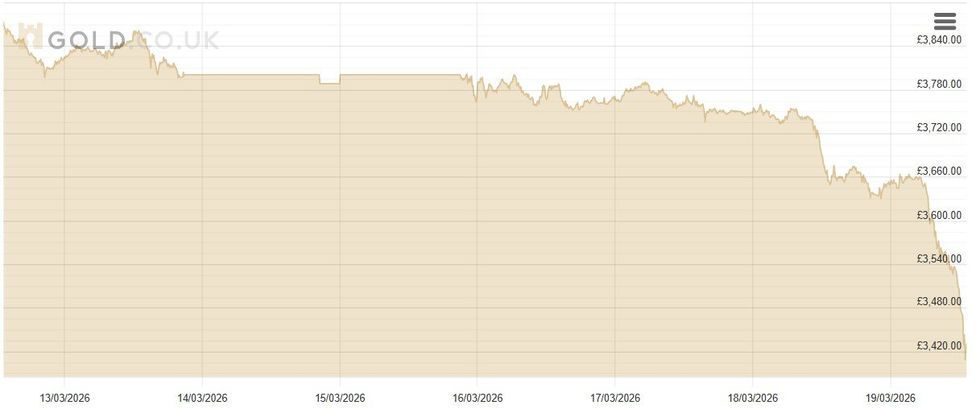
Gold's value has fallen despite being a safe asset for investors
|GOLD.CO.UK
LATEST DEVELOPMENTS
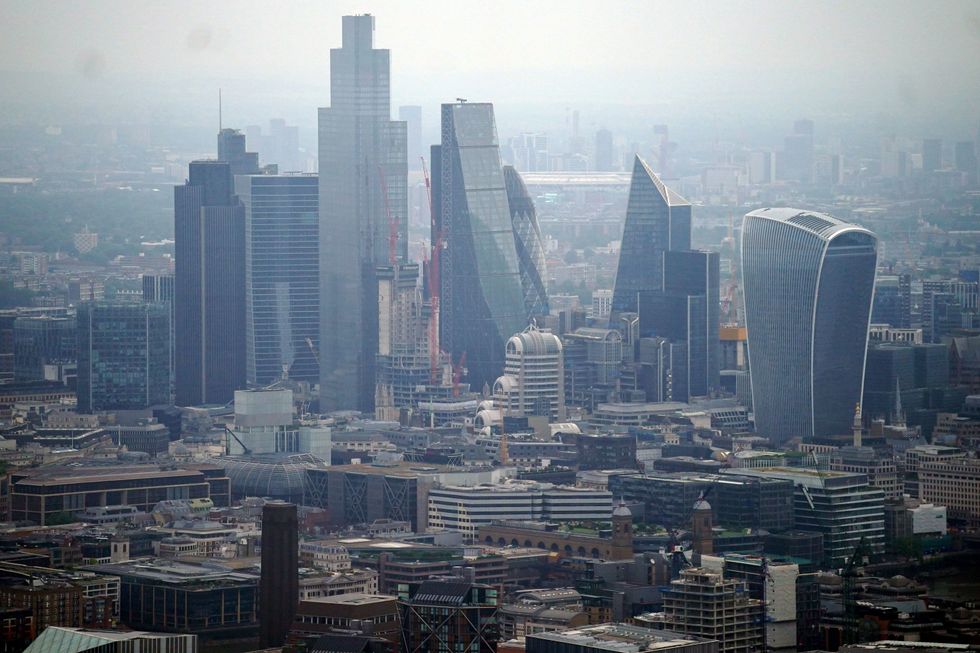
The City of London is anxious over the stock market's peformance
| PA"Economically sensitive stocks were among the biggest fallers on the UK stock market, including banks and miners. An inflation spike threatens to cause economic damage, and that clouds the earnings outlook for lenders and commodity producers.
"That’s a worst-case scenario, and it’s important to consider that a quick resolution to the conflict could lead to a small scratch rather than a deep cut for corporate earnings. What’s annoying investors is the ongoing uncertainty – it’s impossible to make a call on what will happen next, so markets are taking it one day at a time."
Across the pond, the US Dow Futures also slipped 300 points in response to growing investor anxiety, while President Trump signals the White House is looking for ways to de-escalate the situation.
When trading opened on Wall Street, both the Dow Jones and S&P 500 immediately slipped into the red.
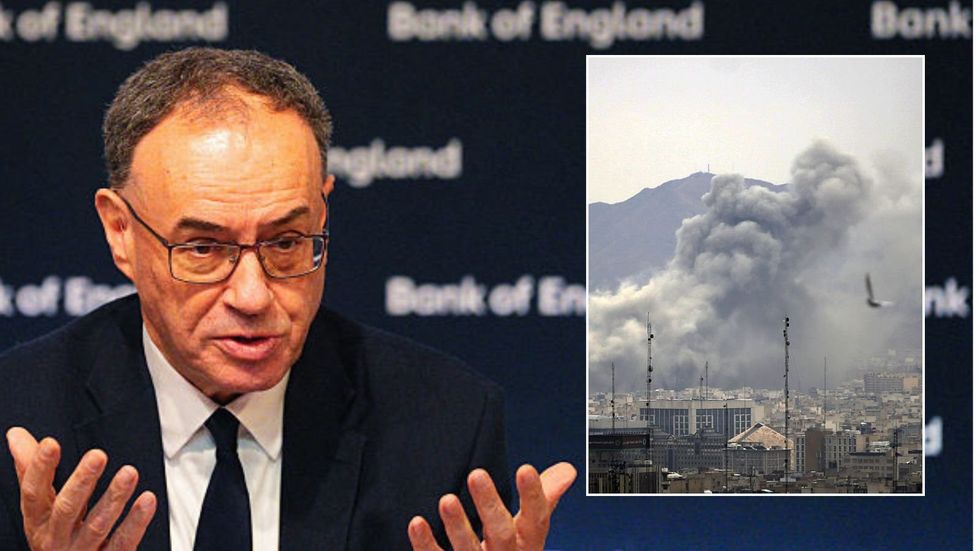 The Bank of England has opted to keep the base rate at its current level amid the 'backdrop' of the US-Iran war | GETTY
 Daniel Casali, a chief investment strategist at wealth management firm Evelyn Partners, added: "The geopolitical landscape has shifted sharply as the US–Israeli confrontation with Iran drags on. Iran continues to fire drones and missiles across the region, undeterred by US pressure, and the Middle East has now entered a tit‑for‑tat phase of energy‑infrastructure attacks.
"The latest escalation was Iran’s strike on Qatar’s Ras Laffan, the country’s main energy hub and the world’s largest liquefied natural gas (LNG) export complex, which processes gas from the shared North Field, and is central to global supply.
"Qatar reports 'extensive damage' to several facilities. Iran’s move followed Israel’s strike on Iran’s South Pars gas field, the world’s largest natural gas reserve and the source of roughly 70 per cent of Iran’s gas output.
"Meanwhile, the Strait of Hormuz (SoH), a key route for around one‑fifth of both global seaborne oil and LNG, is effectively closed to non‑Iranian traffic, while Iranian vessels move freely."
More From GB News