








The Ftse 100 continues to reach new heights, hitting 10,829 this morning as traders paused to assess a confluence of global pressures following the market's recent record-breaking run.
London's benchmark index remained close to its all-time peaks despite a subdued opening, with Rolls-Royce and the Stock Exchange Group providing the main upward momentum as two of the index's largest constituents.
Mining stocks weighed on the broader market, with Fresnillo retreating on a two per cent slide in silver prices, while copper's 0.45 per cent decline dragged down Antofagasta, Anglo American, Glencore and Rio Tinto. Consumer-facing names including Diageo, Sainsbury's, Tesco, M&S and Unilever also traded lower.
Worldwide government borrowing has surged to an unprecedented $348trillion (£256trillion), marking the steepest annual increase since the pandemic era. Nations have ramped up spending to bolster military capabilities and finance major infrastructure programmes, pushing debt levels to historic highs by the close of 2025.
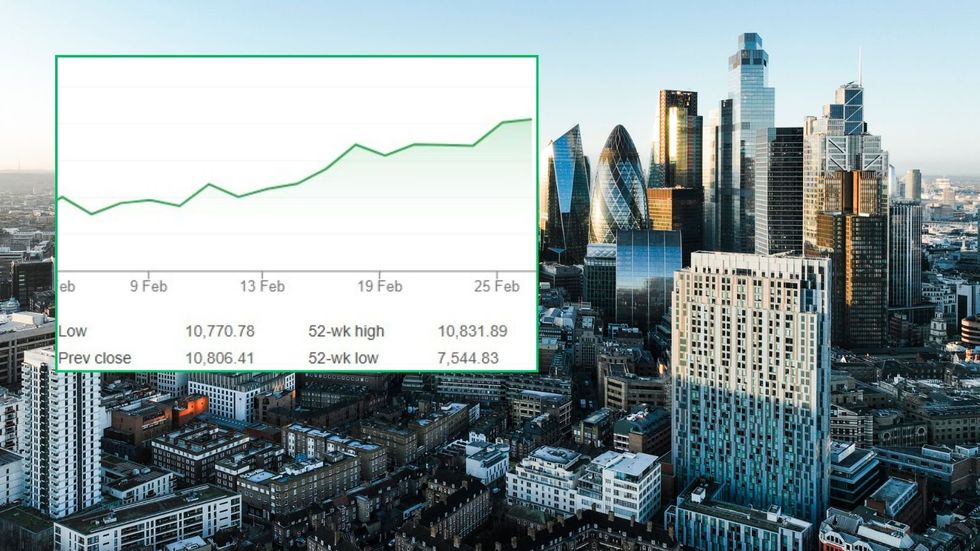
The Ftse continues to reach new highs
|GETTY / GOOGLE
This borrowing spree has lifted gold to four-week peaks as investors seek protection against potential inflation. Susannah Streeter, the chief investment strategist at Wealth Club, noted that precious metals are attracting buyers as "questions continue to be raised about US economic policy, putting pressure on the dollar".
She said: "Gold prices are hovering around four‑week highs amid renewed interest in safe havens. There’s been a government pile‑on into borrowing over the past year, with global debt climbing to a record $348trillion at the end of 2025.
"It’s the fastest yearly build‑up since the pandemic, as nations have gone back into emergency mode to build up war chests to fund military expansion and fund big infrastructure projects.
"With global growth moderating, concerns are growing about the affordability of such high debt loads, and worries persist about whether central banks will be able to be as tough as needed on inflation ahead, amid the tricky balancing act of ensuring debt payments are sustainable.
Stock market is on the rise
| ReutersLATEST DEVELOPMENTS
 Rachel Reeves has made economic growth central her her agenda | GETTY
"Precious metals are seen as useful hedges against inflation, and as questions continue to be raised about US economic policy, putting pressure on the dollar, it's making gold more attractive."
Concerns are mounting over whether central banks can maintain their inflation-fighting stance while ensuring sovereign debt remains serviceable.
Diplomatic negotiations between Washington and Tehran are resuming in Geneva, with the Trump administration issuing stark warnings that military action will follow should talks fail to curb Iran's nuclear ambitions.
The prospect of Middle Eastern conflict has kept metals prices elevated, yet crude oil has remained relatively stable, with Brent hovering around $71 per barrel. Ms Streeter observed that "worries about conflict collide with expectations of oversupply in the world market".
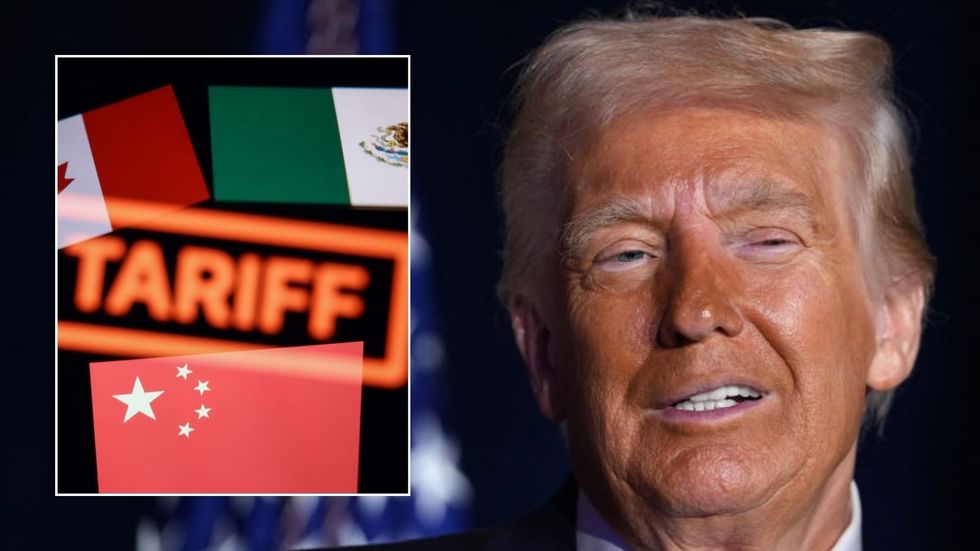 Trump's plan of new tariffs have sent shockwaves through the stock markets | GETTY
 American oil inventories have grown at their fastest weekly pace in three years, while Saudi Arabia has boosted exports to levels not witnessed since early 2023, helping to cap energy prices despite the geopolitical uncertainty.
Nvidia's latest quarterly figures exceeded market expectations, yet the chipmaker's shares rose just 0.2 per cent in after-hours trading, reflecting the lofty standards investors now demand from the AI sector's dominant player.
Salesforce fared worse despite posting 13 per cent revenue growth, with shares falling as weakness persisted in its marketing, commerce and Tableau analytics divisions. A significant portion of that growth stemmed from its Informatica acquisition rather than organic expansion.
Ms Streeter warned that AI efficiencies "risk eating away at growth in other parts of the business," raising broader questions about whether software-as-a-service companies can thrive amid technological disruption.
More From GB News