










The Federal Reserve has increased its inflation projections by 0.3 percentage points for the end of 2026, citing the ongoing conflict in Iran as a key driver of surging energy costs worldwide.
Brent crude climbed more than five per cent on Wednesday, reaching $109 per barrel at one point, while oil prices have risen 50 per cent since the beginning of March.
The American central bank’s revised economic outlook, released alongside its latest interest rate decision, pointed to mounting inflationary pressures linked to the Middle East crisis.
Iranian retaliation against Gulf states has significantly reduced regional oil and gas production, while the closure of the Strait of Hormuz to shipping has triggered a squeeze on global supplies.
TRENDING
Stories
Videos
Your Say
An Israeli attack on an Iranian gas facility prompted Tehran to threaten strikes on energy infrastructure throughout the region.
Despite these challenges to price stability, the Federal Reserve opted to keep interest rates unchanged.
Chair Jerome Powell said the economic outlook remains "uncertain" but acknowledged "there will be some effects" on inflation from the conflict.
He added that near-term price pressures could be partially offset later as certain trade tariff impacts begin to ease.
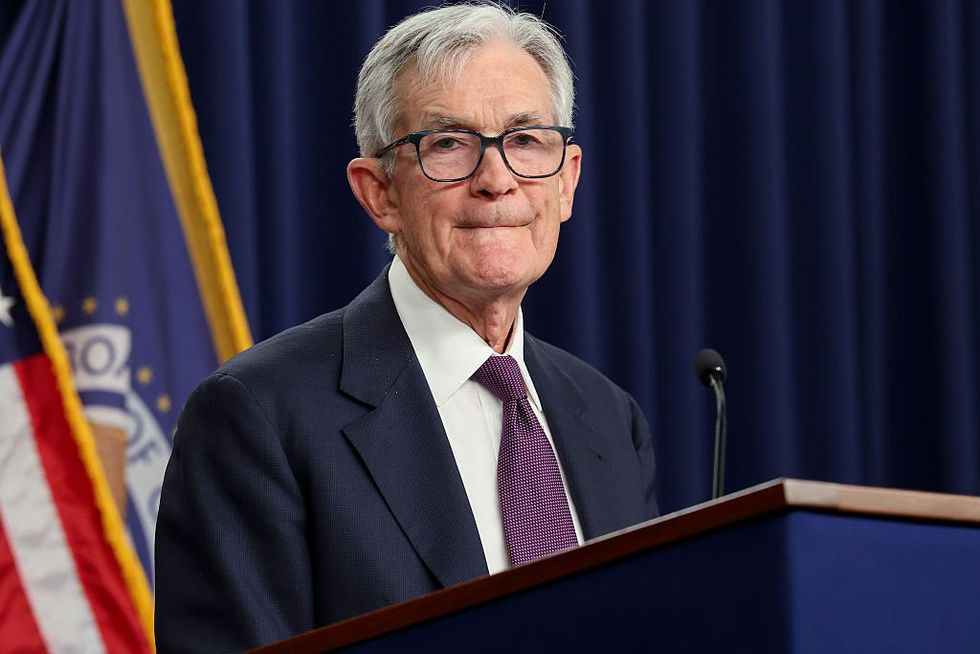
Federal Reserve lifts inflation outlook amid Iran conflict as oil prices surge and rates held
|GETTY
Analysts interpreted the central bank’s response as measured, with financial markets reacting cautiously.
The duration of the conflict remains a key uncertainty for monetary policymakers, with prolonged hostilities likely to increase pressure on central banks to raise borrowing costs.
Higher energy prices risk feeding through into sectors including fuel, transport and air travel, potentially widening inflationary pressures.
US factory gate prices had already reached their highest level in a year during February, before military action began on the final day of the month.
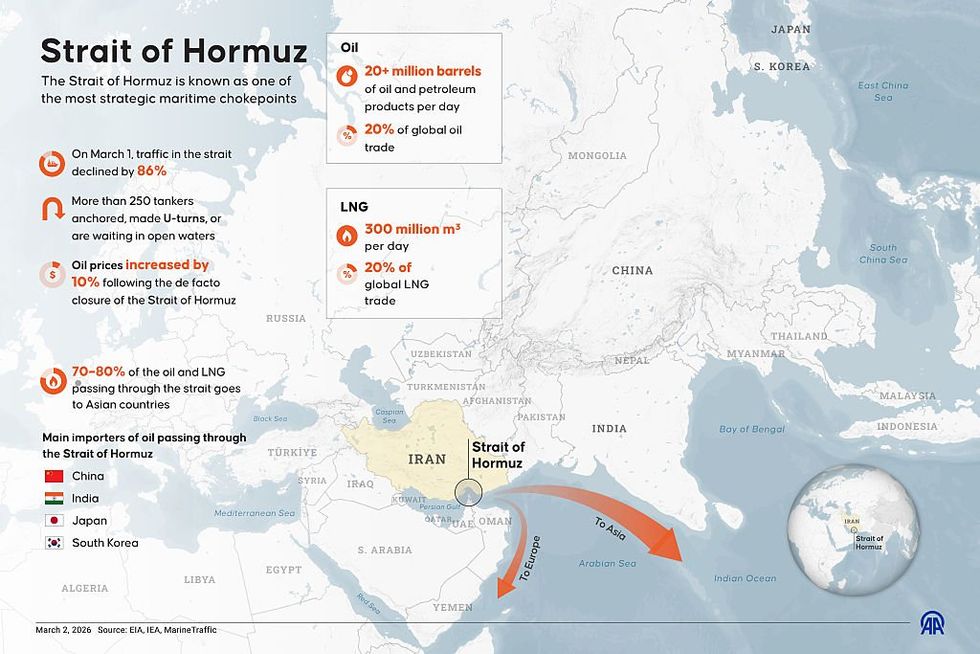 The Strait of Hormuz is one of the most important shipping routes in the world, especially for oil exports | GETTY
American motorists have felt the impact most directly, with petrol prices rising 28 per cent on average this month, according to AAA figures.
Although the United States produces more oil than any other nation, its refineries are designed to process heavier crude than domestic sources typically provide, requiring continued imports for road fuel production.
Natural gas markets have remained more stable, with wholesale prices largely flat throughout March as the US continues to rely on its own production.
The conflict began when President Donald Trump, alongside Israel, launched strikes against the Iranian government on the final day of February.
Tehran’s response has focused on neighbouring Gulf states, significantly disrupting energy production across the region.
The Bank of England is widely expected to mirror the Federal Reserve’s approach when its Monetary Policy Committee meets on Thursday, with the base rate anticipated to remain at 3.75 per cent.
The European Central Bank is also expected to hold rates in the near term, although it could become the first to respond to a prolonged price shock with an increase.
Britain and the rest of Europe remain particularly exposed to the energy shock as net importers of fuel.
Central banks are unable to directly influence oil prices and instead rely on borrowing costs to contain broader inflationary pressures across the economy.
More From GB News