









Energy bills for the average household could soar by 18 per cent later this year as a result of the US-Iran war, according to a concerning new Ofgem price cap prediction.
Cornwall Insight forecasts that costs could increase by £288 a year in July, with the price cap from July to September predicted to be at £1,929 for a typical dual fuel household.
Notbaly, this represents a slight drop from its forecast earlier this month, which had seen the cap rising to £1,973 in July.
According to Cornwall Insight, this was mainly due to "partial steadying in wholesale markets after a pause in energy infrastructure strikes and signals of a potential ceasefire in the Middle East conflict".

Energy bills could soar later this year
| GETTYGlobal markets have been hit by volatility in response to the US and Israel's decision to strike Iran, with the Islamic Republic closing off the Strait of Hormuz, which ships 20 per cent of the world's oil exports.
This has resulted in oil prices spiking, with analysts sounding the alarm over a potential global recession if hostilities do not come to an end soon.
Dr Craig Lowrey, a principal consultant at Cornwall Insight, said: "Over a month into the Middle East conflict, energy markets are experiencing the kind of volatility not seen since 2022.
"While prices may have calmed a little over the past week, prior to the conflict, our forecasts pointed to a relatively stable price cap through the summer, now we are forecasting rises of 18 per cent
 Ofgem regularly changes the energy price cap every quarter | GETTY
LATEST DEVELOPMENTS
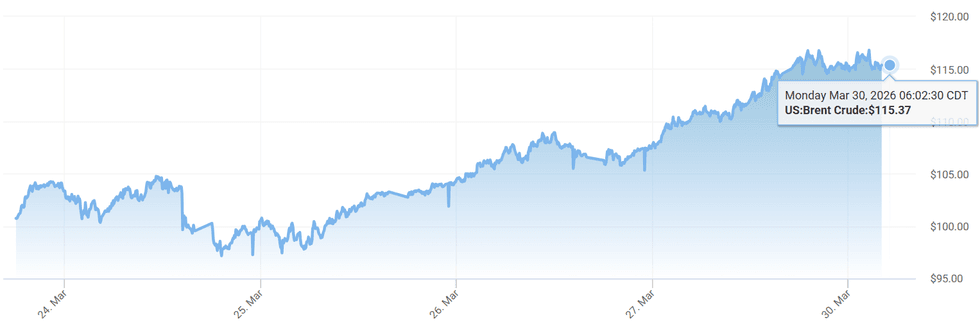 Oil prices have surged once again to above $115 (£87) | OILPRICE.COM
"With Ofgem’s price cap announcement just weeks away, infrastructure damage and continued disruption to marine traffic through the Strait of Hormuz are limiting the potential for any meaningful wholesale price fall.
"As a result, some of the increase is already effectively baked in. A rise in July is pretty much unavoidable, but how high prices go remains to be seen. There is some relief in the timing, summer is when energy demand is at its lowest, which should soften the impact on household expenditure on energy.
"If higher wholesale prices continue, it will be the effects on the October cap that have the most impact, and that is when the question of government support for households is likely to be revisited.
"Richard Neudegg, the diirector of regulation at Uswitch.com, said: "The odds on household energy costs soaring this summer are shortening. Talk of a predicted 18 per cent rise in the July price cap will be a concern for households, but the real worry is what this means for October’s cap, which dictates how much our heating bills will be at the start of winter.
 Smoke rises from a fire, as the Israel-Iran air war continues, in Tehran, Iran | REUTERS
"While the cap will thankfully hold off rocketing bills for the next three months, it cannot protect you from global events beyond that.
"With eight in 10 households worried about their energy bills rising, households have a real opportunity to protect themselves for the winter by locking in a fixed deal for 12 months or more that gives them certainty on the price they’ll pay, especially over the coldest months.
"It’s still too early to tell exactly what the rates will be, but the risk of doing nothing could mean facing a much larger bill for winter."
Simon Francis, coordinator of the End Fuel Poverty Coalition, added: "Households are staring at another energy bill shock. While bills are set to fall briefly from April, this is only short-term relief before prices rise again in July. This represents a ‘Trump Tax’ onto energy bills because of the impact of the conflict in the Middle East.
"For the millions of households already in energy debt, this will be a real worry and risks pushing more people into crisis.
"Ministers must prepare to use increased Windfall Tax receipts to act. That means targeted support for households hit first and hardest, including those off the gas grid and on heat networks, alongside faster action on energy debt and preparations to bring down costs if prices spike further."