









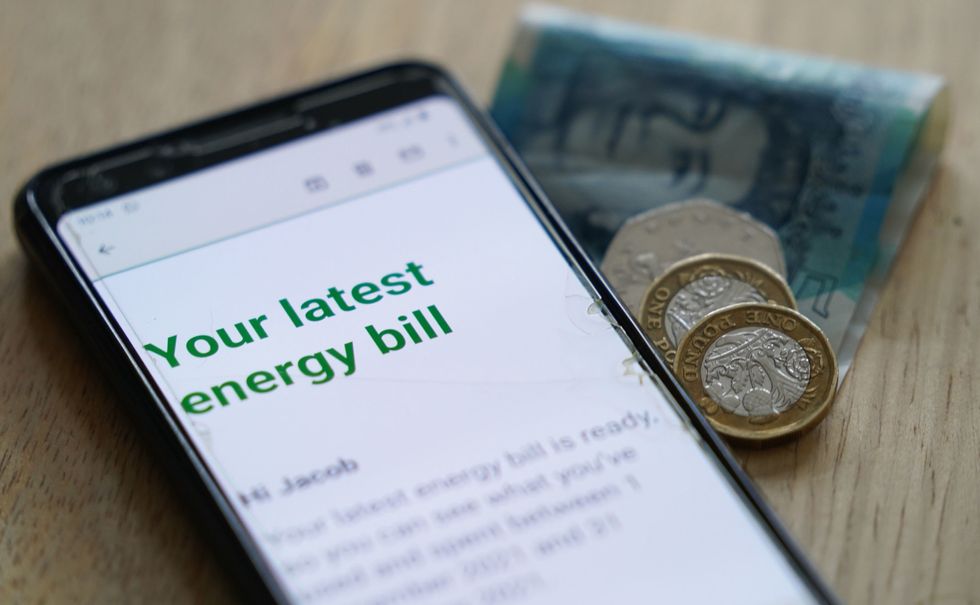
Green levies, taxes and subsidies add 30 per cent to our energy bills, researchers say, as it emerged the race to net zero will cost more than £125billion this decade.
The Climate Change Committee, which advises the government, revealed that the cost of the green transition would rise from £15b in 2025 to more than £30b by 2029.
This would lead to spending of more than £125billion this decade, and it will be 2040 before we started to see savings, the CCC report revealed.
Part of the transition is funded by our energy bills, which critics say has contributed to the country facing some of the highest electricity prices in Europe.
Net zero plans require a large-scale switch from fossil fuels to electricity.
But with electricity so expensive this has puts huge pressure on households. For industry, the matter is more acute. They are unprotected by Ofgem’s price cap and more vulnerable to changes in wholesale price.
It means that at the same time industry is being pushed to decarbonise, British businesses are paying more to operate than their rivals in the developed world.
The CCC said that the move to net zero would benefit the UK when measured over decades and said its research showed it was a cheaper course than sticking with fossil fuels.
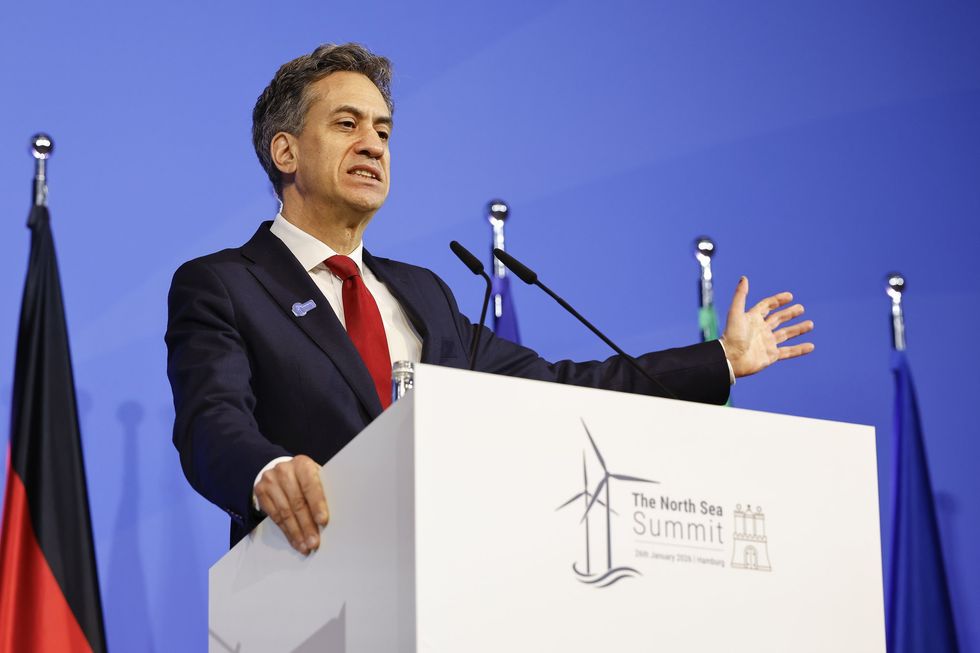
Ed Miliband's push for net zero is spiking energy bills
| GETTYIt said that “in all scenarios, achieving net zero was found to be a more cost-effective path for the UK economy than continued reliance on fossil fuels”.
But analysts said the pain is being felt now. They pointed out that because energy is fundamental to the economy, price rises feed through to food and services, Think tank Onward has found that 30 per cent of household bills were added by the state “through carbon taxes, VAT, generation subsidies and levies to fund renewables”.
Bills could also be cut by 15 per cent immediately if the government scrapped taxes on providers of gas-generated electricity, it says. But wholesale costs only represent 34 per cent of a typical bill, and Onward says many other charges related to renewables lurk on our bills. These include:
- The Renewables Obligation (ROs)
LATEST DEVELOPMENTS
 Britain and the EU are in talks to relink their carbon markets, signalling Sir Keir Starmer’s push for a deeper post-Brexit reset beyond trade | Getty
ROs are older subsidies for large-scale renewable energy projects. They required electricity suppliers to purchase a certain share of supply from renewable technologies.
Onward estimate that the RO added £102 to the average 2025 domestic bill, some eleven per cent of the total.
The RO are older subsidies for large-scale renewable energy projects.
They required electricity suppliers to purchase a certain share of supply from renewable technologies Although ROs were phased out in 2017, existing contracts are valid for 20 years. The cost is set to drop, with ROs predicted to add £17 to bills by 2030.
- Feed-in-Tariffs (FiTs)
These are a legacy subsidy for small-scale renewables and are paid to those who generate their own energy, for example through solar panels and wind turbines.
They are paid for each unit generated and also for surplus exported to the grid, with the cost to suppliers recovered through bills.
They were closed to new applicants in 2019 but contracts can run for up to 25 years. Onward estimates that FiTs added £23 to the average 2025 bill. This is expected to rise to £26 by 2030.
- The Supplier Obligation and Contracts for Difference (CfDs)
CfDs are the current subisdy mechanism for large-scale renewable energy projects, and the cost of financing them – the Supplier Obligation – is applied to energy suppliers.
They set a strike price, that guarantees the cost of an energy unit for 15 years. If the market price is higher, the generator pays the difference, but if it is lower, the generator is paid.
These costs are funded by a levy on electricity supplies which are passed onto the consumer. This means when wholesale prices are high, as they are now, costs are lowered. But when prices fall, consumers are locked into the higher stirke price. For 2025 bills, Onward estimates CfDs cost £33 per household. This is expected to rise to £70 by 2030.
- The UK Capacity Market (CM)
The CM pays generators to guarantee they can supply power at times of high demand. The generators are mainly gas and nuclear, which can provide power regardless of weather conditions.
Onward believes these prices “look set to increase dramatically over the next few years”. They are estimated to have made up £28 of the average 2025 household bill. This is predicted to rise to £45 by 2030.
- Balancing Costs
These charges are levied by the Energy Systems Operator (ESO) for balancing supply and demand on a second- by -second basis. They are used to ensure that the grid has enough power at all times and does not get overloaded.
This is because electricity cannot yet be stored economically and at sufficient scale. Onward says that these costs “are essentially the cost of energy intermittency”. It says they added £41 to the average 2025 household bill. By 2030, they are expected to cost £91.
In the report, Cooking on Gas, Onward highlights a number of other charges, including the warm home discount and the smart meter charge.
Report author Gavin Rice says: “The UK has constructed an energy policy framework centred on reducing domestic emissions, suppressing energy use, and increasing prices to change behaviour, while assuming other countries will follow a similar path.
“The outcome has been a system in which abundance has been replaced by scarcity, firm capacity by intermittency, and stable investment by accelerating decline.
“Prices have risen while capital investment has collapsed. Consumers bear higher costs, energy security has weakened, and domestic producers face growing disincentives to invest or remain in the UK market.
“The result is not a smooth transition, but a more fragile, more expensive, and more import-dependent energy system.”
Responding to the Onward findings, a spokesman for the Department of Energy Security and Net Zero said: “Tackling the affordability crisis is the Government’s number one priority. That is why we are acting to bring bills down now and for the long term.
“We’ve taken an average of £150 of costs off energy bills from April and our mission for clean power by 2030 will get us off the rollercoaster of fossil fuel prices, to cut bills for businesses and households for good.”
But energy experts said that bills needed to fall now to allow the economy to flourish. Analyst David Turver said: “The CCC are using unrealistic assumptions to sell the energy transition on the promise of cheaper bills tomorrow, while ignoring the huge cost of energy today.
'It's a slap in the face for families', said Shadow Energy Secretary Claire Coutinho
| PA“We already have the highest industrial electricity prices in the developed world and among the highest domestic prices so we are paying a high cost for energy today on the false promise of lower bills to come.
“Without cheap energy the economy will not grow."
Andy Mayer, of thinktank the Institute of Economic Affairs, said: “There is no upside to making the fundamental unit of the economy expensive. Steel becomes more expensive, ceramics become more expensive, food becomes more expensive to grow, services are hit, and so it goes on.
“You end up being one of the most strangled economies in the world. There’s no win here.”
Responding to the CCC’s net zero costings, shadow energy minister, Claire Coutinho, said: “It’s a slap in the face for families still struggling with the cost of living that Ed Miliband is asking them to spend tens of billions of pounds rushing towards net zero targets that are just going to make life harder for people.”
But Secretary of State Ed Miliband insisted the net zero path was the right one. He said soaring oil costs caused by the war in Iran provided a timely reminder as to why the country needed to switch to renewables.
He said: “As global fossil fuel markets once again show their volatility, the only way to make Britain energy secure is with clean homegrown power.
“It is highly significant that the CCC has found that the transition to net zero is cheaper for our national economy than the entire cost of the last gas price crisis, and can protect families from future fossil‑fuel price shocks.
“This is further proof that those who oppose our mission for clean energy would abandon the pursuit of national energy security, lower bills, and protecting our children and grandchildren.”