








Public sector borrowing came in at £14.3billion in February 2026, up £2.2billion from the same time the year before, according to the latest figures from the Office for National Statistics (ONS).
This is also the second-highest February borrowing figure on record, just below the 2021 pandemic-era figure, in a blow to Chancellor Rachel Reeves's plans for the economy.
Notably, central Government debt interest costs primarily fueled February 2026's figures, alongside the increased costs of providing public services and benefit spending.
As a result of this jump, the public sector spent £10.8billion more than a year ago over the same period of time.
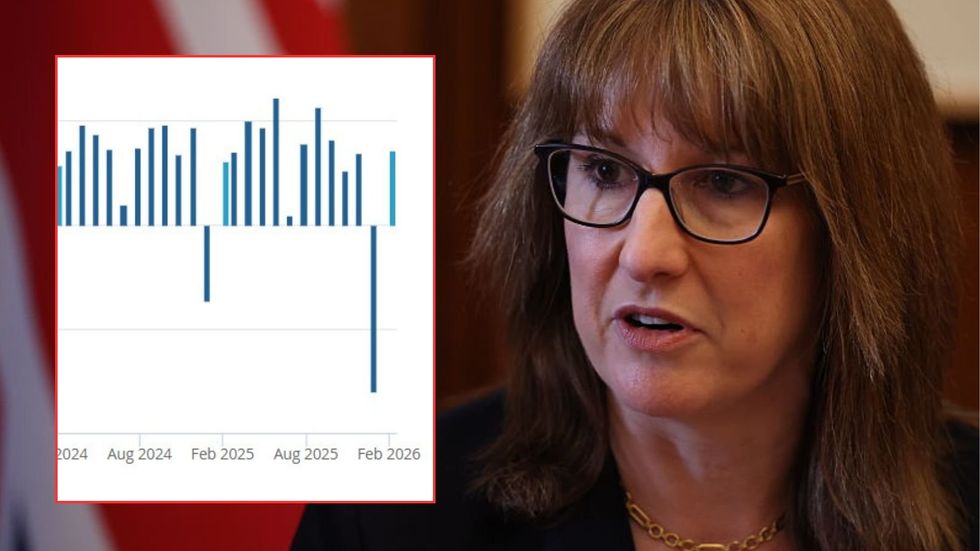
Borrowing figures have jumped to 'second highest on record'
|GETTY / ONS
Public sector receipts grew by £8.6billion compared to February 2025, with economists noting the month’s tax receipts boosted by delayed payments of self-assessed taxes due in January.
Tom Davies, a senior statistician at the ONS, shared: "Borrowing was higher than the same month last year and was the second-highest February figure on record.
"While receipts were up on last year, that was outweighed by a rise in spending, including the later timing of some debt interest payments. However, across the first 11 months of this financial year as a whole, borrowing was down, as receipts increased by more than spending."
Professor Joe Nellis, an economic adviser at MHA, said: "Public sector net borrowing reached £14.3 billion in February, marking a sharp turnaround from the exceptional £30billion surplus recorded in January.
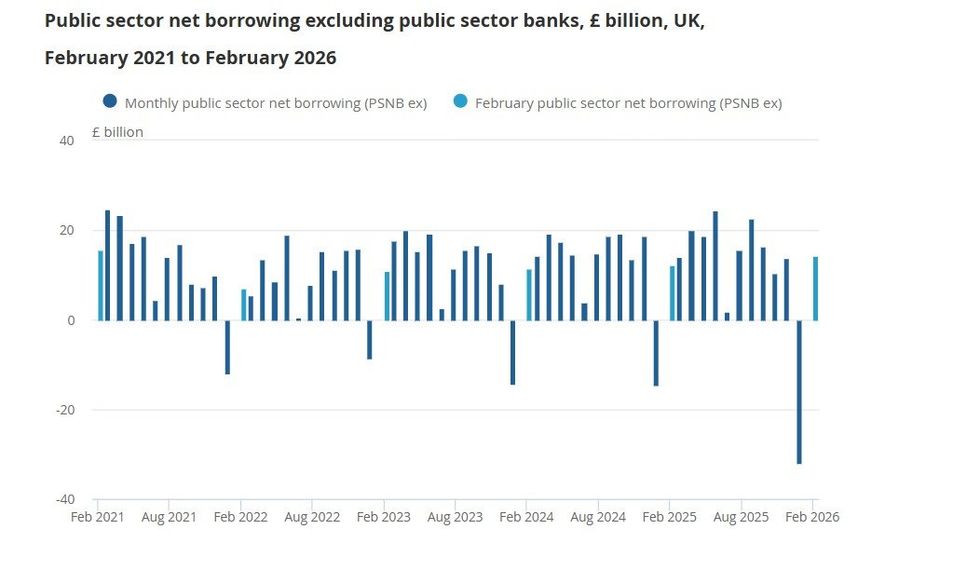
How have borrowing figures changed in recent months?
|ONS
LATEST DEVELOPMENTS
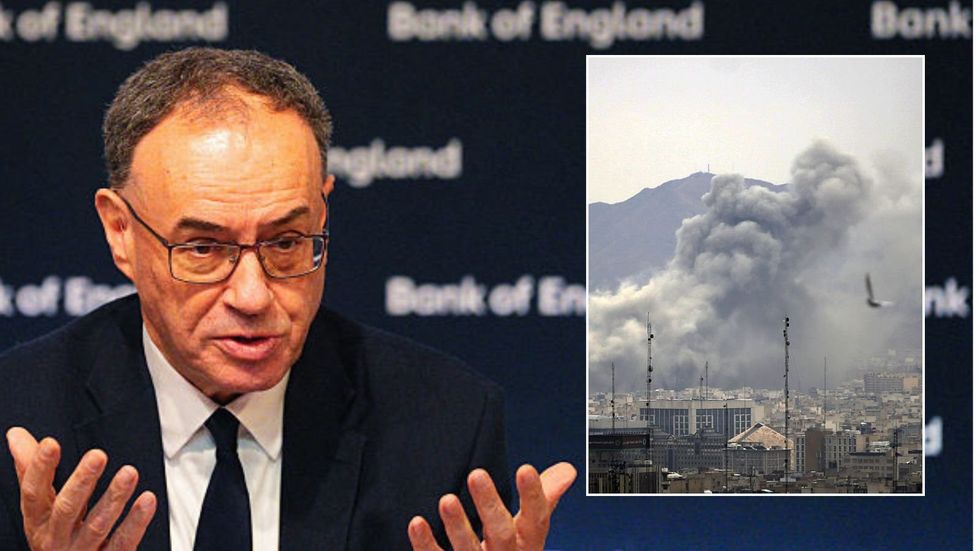 The Bank of England has opted to keep the base rate at its current level amid the 'backdrop' of the US-Iran war | GETTY
 "February’s return to borrowing underlines the more challenging reality facing the UK’s public finances. The January surplus was largely seasonal and driven by the annual spike in tax revenues.
"When those temporary factors fade, the structural pressures on Government finances quickly re-emerge. Borrowing is expected to be substantial across 2026.
"Weak economic growth has limited the expansion of the tax base, while spending pressures remain significant across areas such as healthcare, social support, and debt interest payments."
According to WPI Strategy's chief economist Martin Beck, these figures put the UK Government on track to slightly undershoot the Office for Budget Responsibility's (OBR) £138.3billion full-year borrowing forecast.
 Chancellor Rachel Reeves says the new OBR forecasts show that Labour's plan for the economy is the right one | GB NEWS
 However, Mr Beck sounded the alarm that there will be significant blowback to the public finances if the US and Israel's war with Iran is prolonged.
He said: "That the deficit numbers are broadly on track will be a welcome development for a government keen to preserve fiscal credibility at a time of unwelcome geopolitical and economic turbulence.
"But that turbulence means the recent fiscal numbers may prove a poor guide to what comes next. The shock to energy prices creates a double squeeze for the public finances if it persists.
"Higher oil and gas prices would lift North Sea revenues, and stronger inflation could boost receipts from VAT and frozen tax allowances, but those gains would likely be outweighed by the damage to tax revenues from weaker growth and higher public spending on welfare, debt interest costs, and pressure for fiscal support for households and energy-intensive businesses."
More From GB News