








The UK economy is showing fresh signs of stagnation as growth remains weak and pressure on household budgets persists.
Official data due later this week is expected to underline how little momentum the economy carried into the end of 2025.
Official figures due on Thursday are expected to show the UK economy grew by just 0.2 per cent in November, according to forecasts ahead of the Office for National Statistics’ Gross Domestic Product (GDP) release.
While this would be an improvement on October, when the economy shrank by 0.1 per cent, growth remains weak by historical standards.
Analysts say continued struggles in manufacturing and construction are holding the economy back, with the services sector expected to post only modest gains.
The picture was already fragile heading into the final months of the year, after the economy expanded by just 0.1 per cent in the third quarter of 2025, raising concerns that the UK is drifting towards stagnation as inflation pressures persist.
Economists now anticipate the final quarter of 2025 will produce zero growth overall, a projection that aligns with the Bank of England's latest forecast.
The stagnant finish to the year stands in stark contrast to the first six months, when the Labour government frequently highlighted Britain's superior economic performance compared to fellow G7 nations.
Prime Minister Keir Starmer has repeatedly emphasised that boosting growth remains his administration's primary objective.
Robert Wood at Pantheon Macroeconomics expects November's 0.2 per cent expansion, partly supported by a rebound in hospitality sector spending.

Prime Minister Keir Starmer has repeatedly emphasised that boosting growth remains his administration's primary objective
| X/KEIR STARMERHowever, he confirmed this would still leave quarterly growth at zero, underscoring the economy's loss of momentum since the summer.
Investec economist Philip Shaw pointed to the manufacturing sector's recovery as a potential bright spot, noting that production has been picking up since Jaguar Land Rover resumed operations following a cyber attack on Britain's largest carmaker.
LATEST DEVELOPMENTS:
- Rachel Reeves braces for economy update from 'hamstrung' housebuilders amid property crisis
- How an 85-year-old farmer became Scotland's top choice for dairy - and an unlikely TikTok star
- Keir Starmer to block UK financial services from post-Brexit EU talks amid 'alignment' push
Barclays UK economist Jack Meaning similarly highlighted the automotive industry's rebound as a factor that could deliver moderate growth.
He also identified a late-November uptick in consumer spending as potentially supportive.
Barclays UK economist similarly highlighted the automotive industry's rebound as a factor that could deliver moderate growth
| GETTY"Although a nominal measure, our own Barclaycard spendtrends data series showed a bounce in activity at the very end of November, coinciding with the aftermath of the budget on 26 November and Black Friday," Meaning said.
Mr Shaw additionally observed that retail sales, while weak in November, performed somewhat better than the previous month.
The prolonged uncertainty surrounding the Budget dampened business activity throughout November, according to analysts at Daiwa Capital Markets, with speculation about tax changes running rampant for weeks beforehand.
Chancellor Rachel Reeves faced criticism from business leaders for scheduling the fiscal statement so late in the autumn.
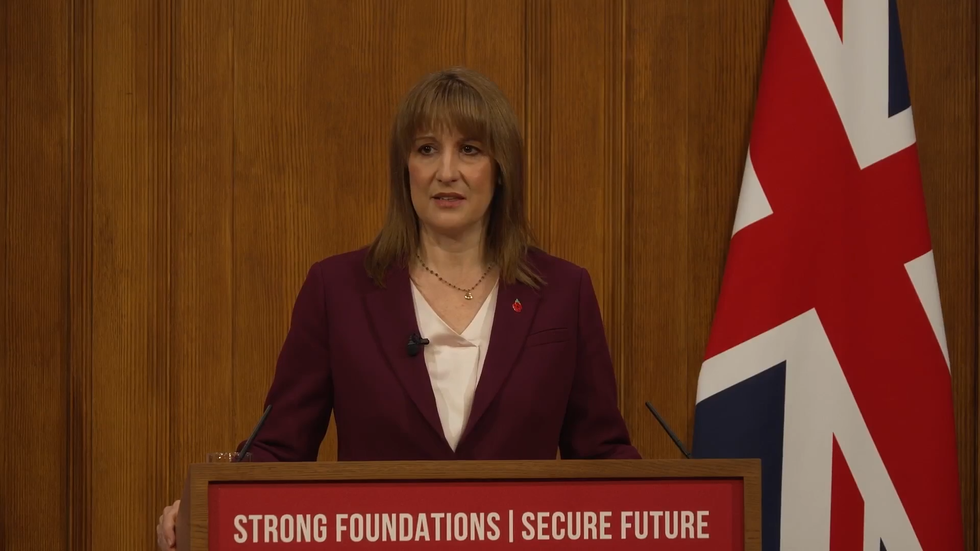
Chancellor Rachel Reeves faced criticism from business leaders for scheduling the fiscal statement so late in the autumn
| POOLMr Shaw noted that a five-day doctors' strike may have exerted additional downward pressure on economic output during the month.
Meaning cautioned that the consumer spending boost proved fleeting, with activity fading rapidly through December.
"The subsequent data suggests this was short-lived and waned quickly through December, again supporting our view of a muted end to 2026 for UK activity," he said.
More From GB News