







President Donald Trump has delivered a primetime address on April 1 pledging to strike Iran "extremely hard" over the coming weeks — but did not outline a strategy for reopening the Strait of Hormuz to global shipping.
The US President said American military objectives were nearing completion after more than a month of conflict, claiming Iran’s offensive capabilities had been "essentially decimated".
Mr Trump said: "We are going to hit them extremely hard over the next two to three weeks. We're going to bring them back to the stone ages, where they belong."
He did not provide further detail on US war aims or how access to the critical shipping route would be restored.
Markets reacted sharply, with analysts noting the absence of a clear path towards de-escalation.
Brent crude closed 7.8 per cent higher at $109.03 per barrel, while West Texas Intermediate rose 11.4 per cent to $111.54, its highest level since June 2022.
The US benchmark recorded its largest single-day increase since early March.
Physical oil markets showed further strain, with Dated Brent, which reflects immediate supply, reaching $141.36 per barrel, its highest level since July 2008, according to S&P Global.
Traders said the moves reflected growing concern about supply disruption if the conflict continues.
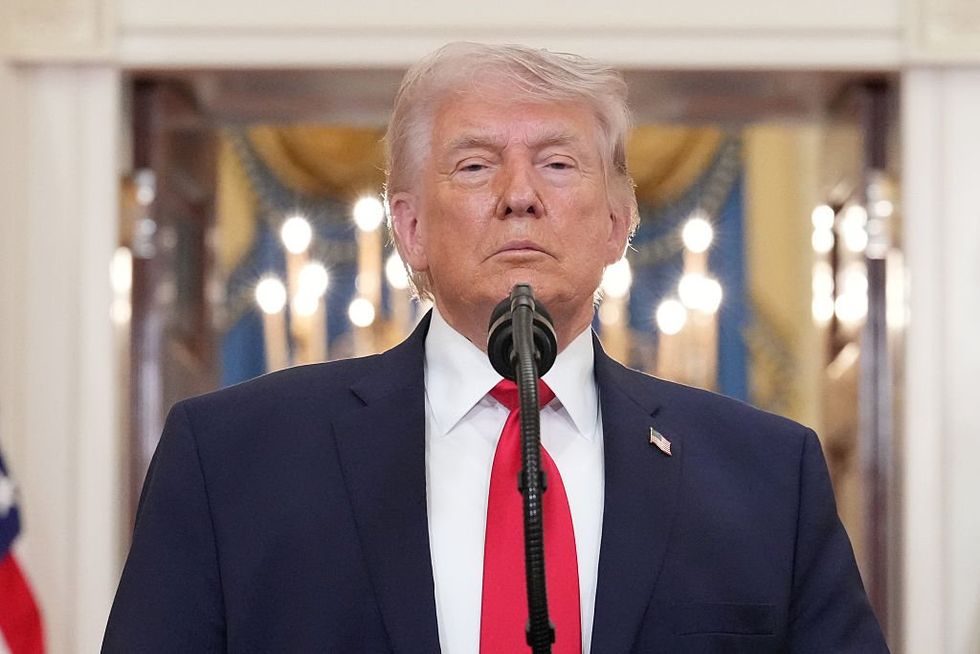
Mr Trump issues Iran warning as oil prices soar amid Strait of Hormuz turmoil
|GETTY
Earlier optimism about a possible de-escalation had briefly lifted markets before Mr Trump’s remarks.
Iran’s foreign minister Abbas Araghchi responded to the comments, stating that strikes on civilian infrastructure would not force Iran to change course.
Mr Araghchi said: "Every bridge and building will be built back stronger. What will never recover: damage to America's standing."
Responding to Mr Trump’s remarks about returning Iran to the "stone ages", he added: "There's one striking difference between the present and the Stone Age: there was no oil or gas being pumped in the Middle East back then."
LATEST DEVELOPMENTS
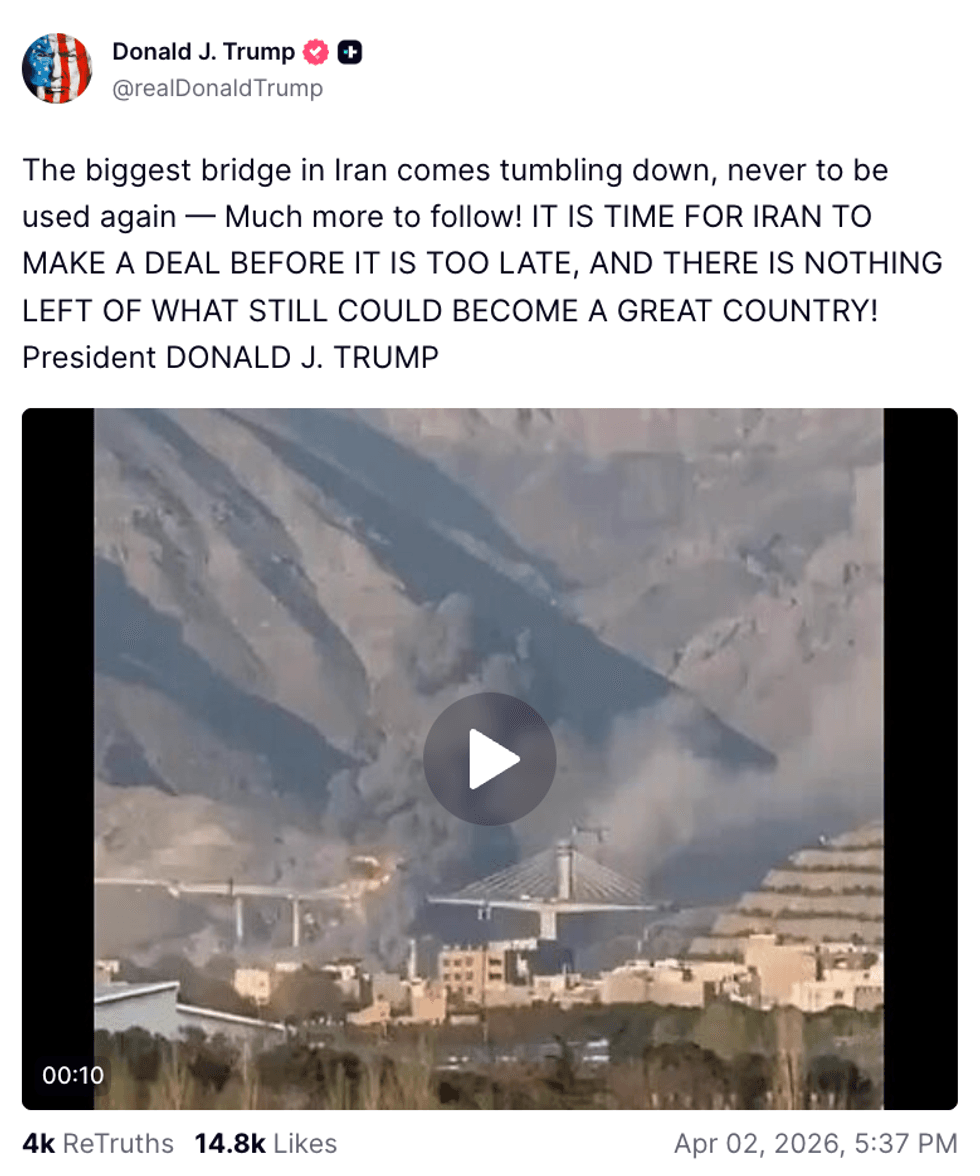
The President shared this Truth Social post on Thursday
|Donald Trump
Iran’s military also said it would continue operations, describing US claims about damage to key sites as exaggerated.
Foreign Secretary Yvette Cooper convened representatives from more than 40 countries on April 2 to coordinate efforts to restore freedom of navigation through the Strait of Hormuz.
The United States did not take part in the meeting after Mr Trump said other nations should "take the lead in protecting the oil that they so desperately depend on".
Ms Cooper said Iran was attempting "to hold the global economy hostage" and noted that only five vessels had passed through the strait in the previous 24 hours, compared with a typical figure of around 150.
French President Emmanuel Macron said military intervention to reopen the route was not a viable option.
Mr Macron said: "This was never the option we have supported because it is unrealistic. It would take forever, and would expose all those who go through the strait to risks from the Revolutionary Guards and also from ballistic missiles."
Fuel costs have already begun to rise in response to the disruption.
Petrol prices in the US moved above four dollars per gallon by the end of March, with higher prices reported in some states.
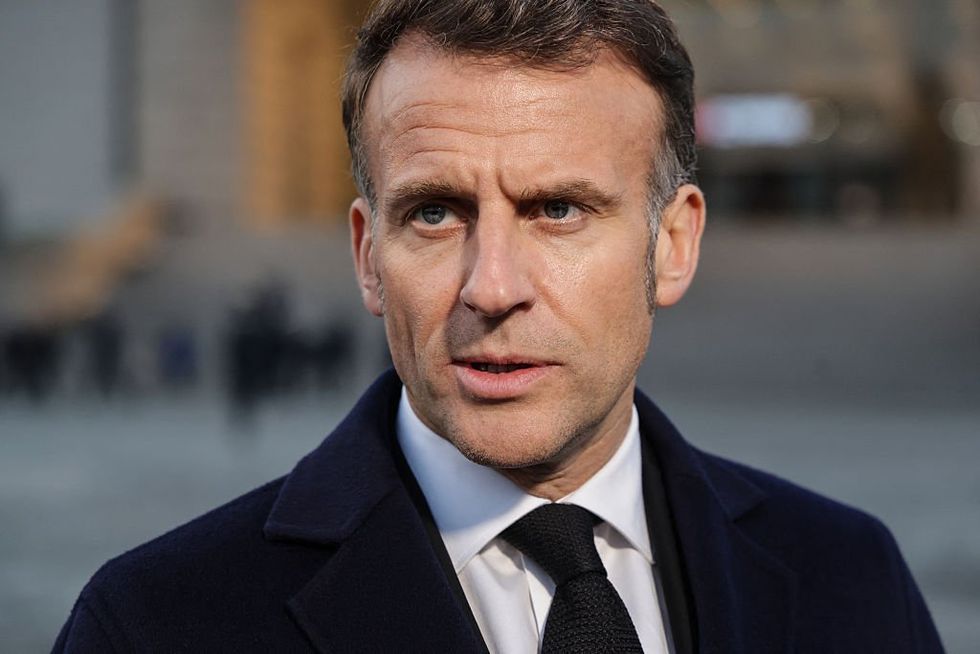
President Macron said has ruled out military intervention in the Strait
|GETTY
Analysts said increased energy costs are likely to feed through into wider prices, including food and transport.
In Europe, diesel prices in the north-west region have risen above $200 per barrel, roughly double the levels seen before the conflict.
Jet fuel prices have also climbed sharply, with the regional benchmark closing at $1,904 per tonne, up 18 per cent on the day and more than double pre-conflict levels.
Europe remains exposed to supply disruption due to its reliance on Middle Eastern fuel imports following Russia’s invasion of Ukraine and reduced domestic refining capacity.