








BBC executives are looking at ways to reduce the cost of the TV licence amid fears for the future survival of the funding model.
Bosses at the broadcaster are exploring a significant expansion of the licence fee that would require payment from anyone listening to the corporation's radio stations, accessing its news website, or streaming programmes exclusively through external platforms such as Netflix or ITV.
The proposals, currently being developed for submission to government, aim to reduce or hold steady the annual charge, which has risen by a fifth over the past 10 years to reach £174.50, and will rise to £180 in April.
Corporation leaders are said to have discussed the potential changes at a board meeting held in Salford on Wednesday, with the central strategy focused on broadening the pool of fee-paying households rather than increasing costs for existing payers.
TRENDING
Stories
Videos
Your Say
The move comes as senior figures at the broadcaster push for a revised funding arrangement ahead of the royal charter renewal in 2027, arguing that below-inflation increases have constrained their operations.
Under the existing rules, households must pay the licence fee to watch live television broadcasts or access content through iPlayer. However, no payment is currently required for those who solely tune into BBC radio services like Radio 4 or Radio 6 Music, browse the corporation's website, listen to podcasts via BBC Sounds, or watch on-demand content through rival streaming services.
The broadcaster, established in 1922, has operated under the current licence fee funding model since 1946, when the charge stood at just £2. Radio receivers, including those in vehicles, were removed from the fee requirement in 1971.
Among other options examined at the Salford gathering was a tiered pricing structure under which wealthier households would face higher charges, according to The Sunday Times.
The cost of a standard TV licence could decrease under the plans
| GETTYThe strategy centres on expanding the number of households contributing to the licence fee, which would generate additional revenue while potentially lowering the average cost per household.
Approximately 23 million households paid the fee last year, bringing in £3.8billion for the corporation. Yet BBC estimates suggest as much as £550million may have been lost through non-payment.
Reports emerged last week that the broadcaster has been developing tracking technology for iPlayer designed to identify those avoiding payment.
Corporation leaders remain acutely aware that the cost of living crisis has made the licence fee increasingly difficult for many households to afford, with income from the charge declining annually since 2020 even as broadcasting costs have climbed.
MORE ON THE BBC:
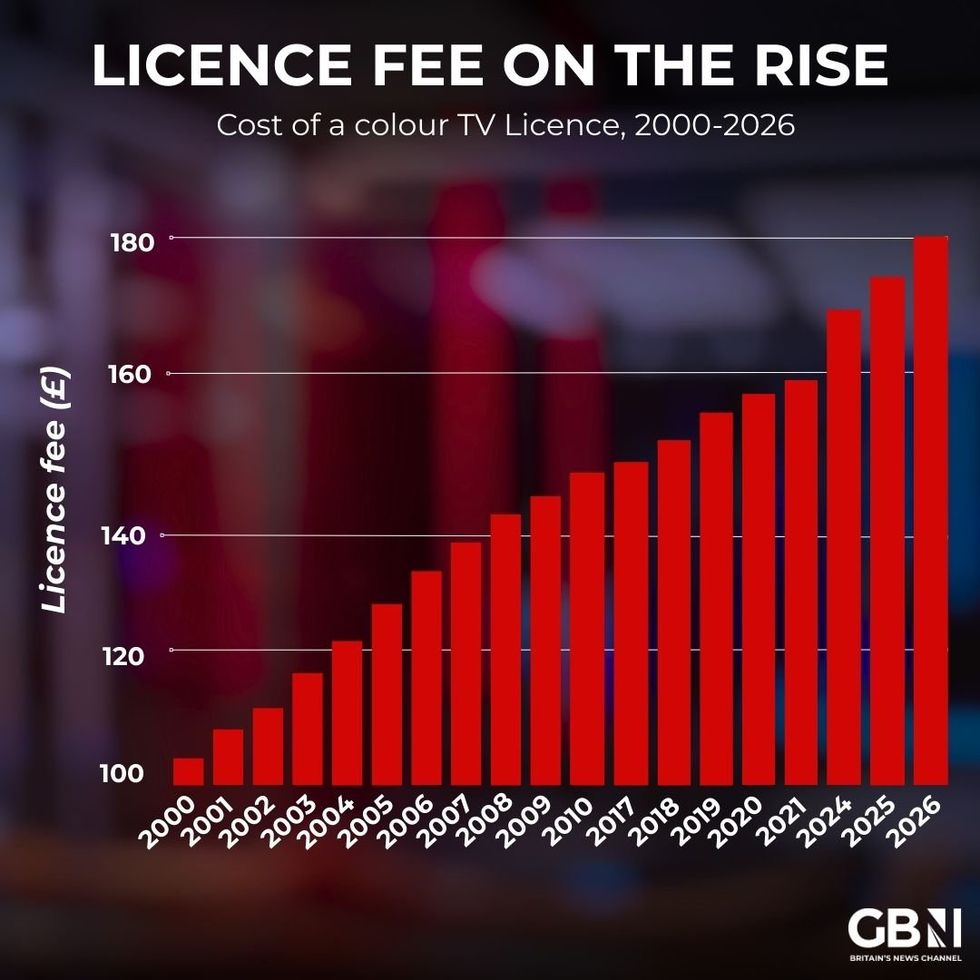
Licence fee on the rise - Cost of a colour TV Licence, 2000-2026
|GB NEWS
The corporation's financial pressures extend beyond domestic challenges. The World Service cost approximately £220million last year, and executives are exploring whether alternative public funding sources might cover this expense.
BBC Studios, the commercial production division responsible for creating content for both the corporation and international broadcasters, represents another potential revenue stream. Bosses may propose that the arm be permitted to take on additional debt for expansion, allowing it to contribute more funding to the wider organisation.
Despite Government suggestions of alternative funding models, corporation leaders have shown little enthusiasm for either a Netflix-style subscription service or introducing advertising to boost commercial income domestically. The latter option would likely displease viewers accustomed to the BBC's advertisement-free programming.
A household levy collected similarly to utility bills had been considered a possibility, but ministers have already dismissed this approach.
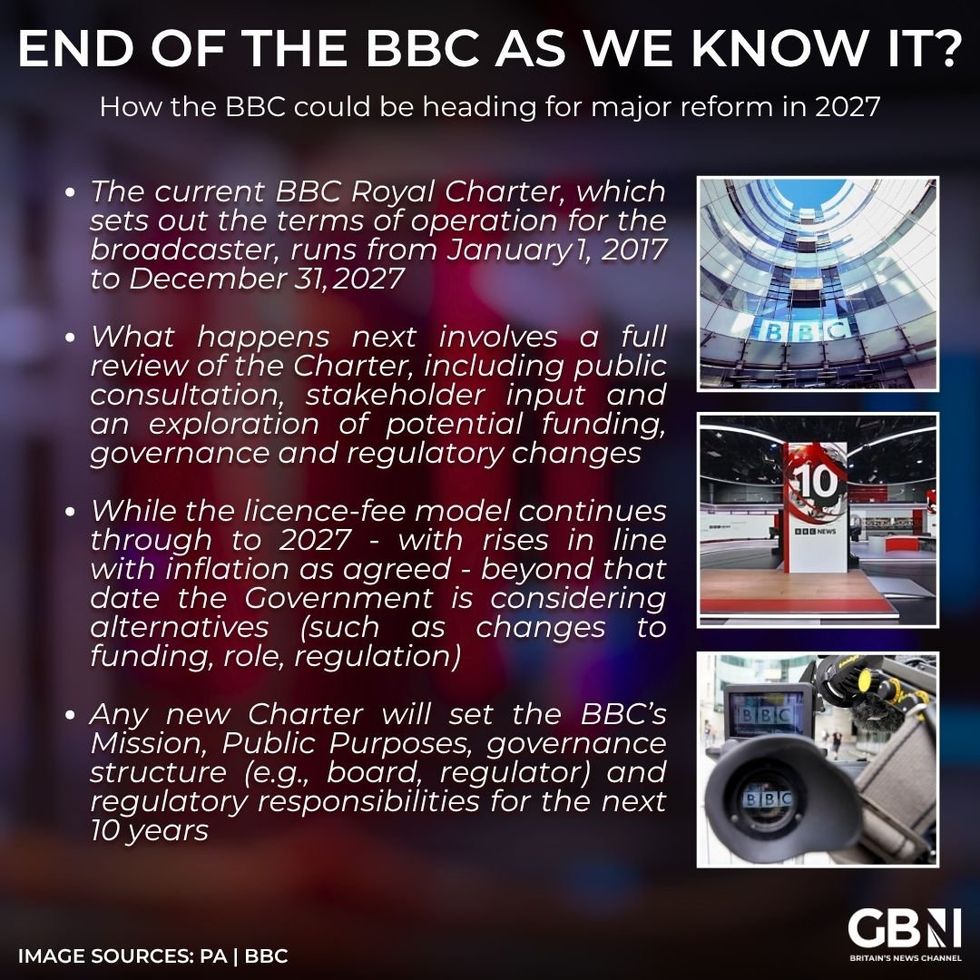
End of the BBC as we know it? How the BBC could be heading for major reform in 2027
|GB NEWS
The Government's green paper, released in December by Culture Secretary Lisa Nandy, signals that licence fee reform remains firmly under consideration. The document acknowledges the BBC's "sustainability challenges" and confirms ministers are examining both the range of services requiring a licence and the possibility of differential rates for various user categories.
A BBC insider told The Sunday Times: "Our priority is ensuring the BBC is sustainable as a universal public service beyond just the next few years.
"That shouldn't mean the price for ordinary households goes up. We're very sensitive to that pressure."
The source added that the corporation is "open to all ideas" that ensure it "not just survives, but thrives" in the current competitive media environment.
Specific proposals for the Government consultation remain under development, and significant questions persist about whether ministers would back the plans or how any expanded licence fee requirements might be enforced in practice.
More From GB News