









Monstera plants remain among the most sought-after houseplants in Britain, but their tropical nature can pose challenges for even dedicated owners.
Taking to TikTok, green-thumbed enthusiast Ana Perez recently offered four essential repotting techniques to help these beloved specimens thrive.
"[They will] help you grow a huge, healthy monstera," she declared, insisting that her hacks will set any monstera on the path to success.
The first recommendation concerns the growing medium, as tropical specimens require excellent drainage and root aeration.
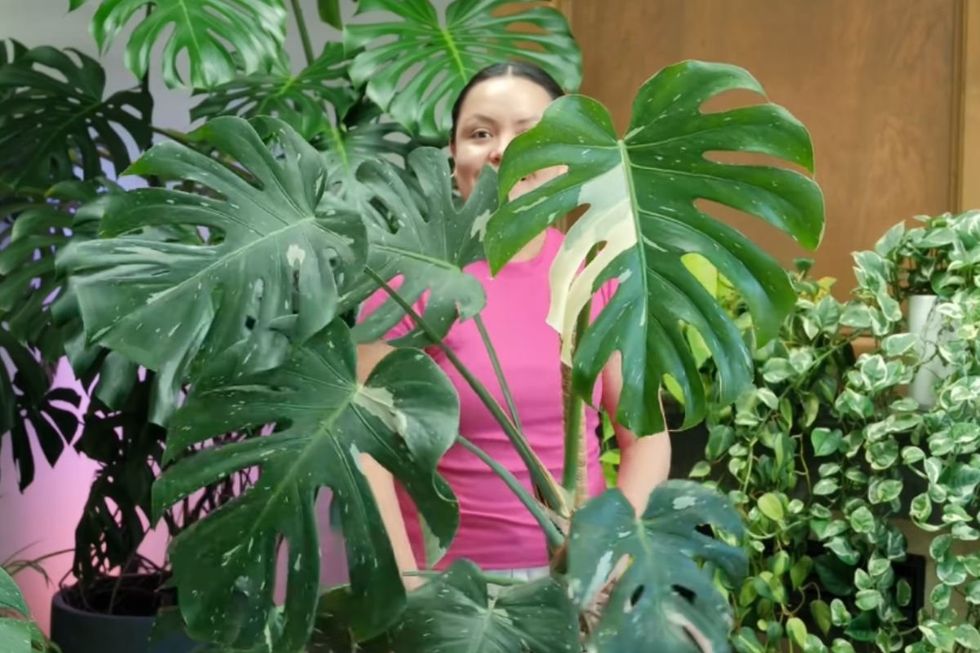
Monstera are tropical plants that love a chunky soil mix
|TIKTOK
"Monstera are tropical plants that love a chunky soil mix because it gives the roots air flow and good drainage," she stated.
Her preferred recipe combines two parts standard potting soil with one part perlite and one part orchid bark.
"It's easy to make, it's very chunky, and your monstera will love it," Ms Perez added.
Whilst numerous alternative formulations exist online, this particular blend offers simplicity alongside the coarse texture these plants favour.
Selecting an appropriately sized container forms the second crucial element of Ms Perez's methodology.
"I always recommend people to use a pot size that is two to three inches bigger than before," she advised, noting this provides adequate space for root development without complications.
LATEST DEVELOPMENTS
Containers that are too small cause rapid soil drying, whilst oversized pots retain excessive moisture, potentially leading to root rot.
For novice gardeners, she suggests plastic pots, which allow owners to gauge watering needs simply by lifting them.
Regarding root-bound specimens, Ms Perez recommends gently loosening the lower roots to encourage growth into fresh soil.
"Don't panic if some of the roots snap, they will grow back," she reassured.
The final and frequently overlooked step involves providing structural support for the climbing plant.
"This is the step most people skip, but it's what helps monsteras get those huge fenestrated leaves," Ms Perez explained.
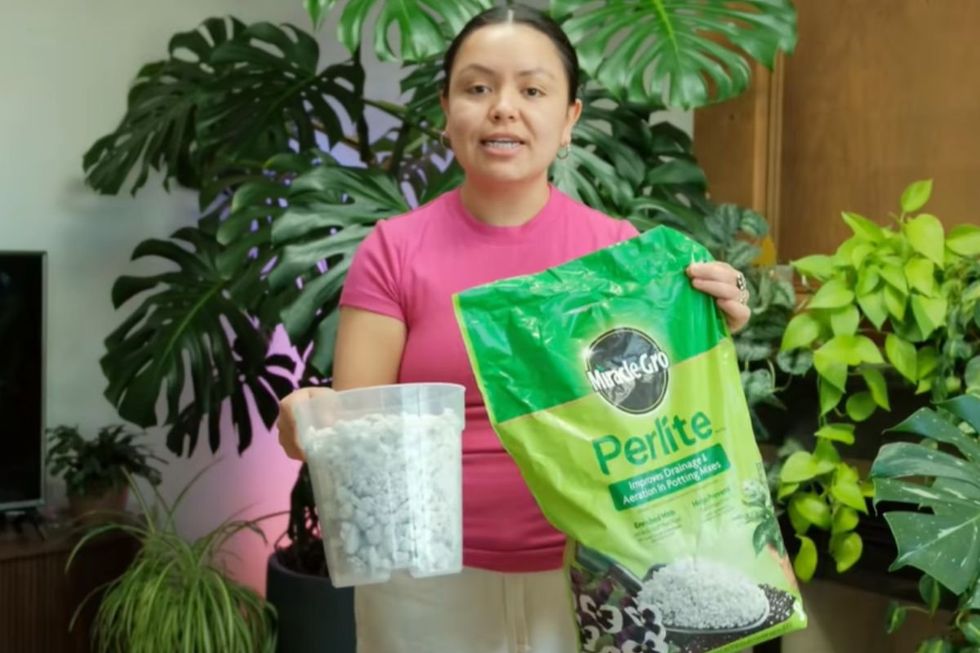
Ana mixes perlite and orchid bark
|TIKTOK
In their natural habitat, these specimens ascend tree trunks, with increased climbing height producing more impressive foliage.
She uses a coco coir pole to replicate this behaviour, though plants with multiple stems benefit from a metal grid trellis as they mature.
"Whatever support you use, make sure that it is placed on the backside of the stem of the plant so that it can actually climb," she concluded.
Our Standards: The GB News Editorial Charter