







When it comes to weight loss, getting started can be the trickiest part. But you don't need to make lots of drastic changes to achieve your goals.
Speaking to GB News, a fitness expert shared three tweaks you can make to lose weight, particularly for those over the age of 50, including why swapping long walks for strength training could be the secret to long-term weight loss success.
Walking can help improve fitness and overall health while burning calories. But relying on this too heavily for weight loss might get in the way of real weight loss progress.
Instead, adults should "train muscles like an asset, not a punishment". This is according to founder of science-based nootropic supplement, Mind Lab Pro, Dave Wright.

Walking might not be the most effective way to lose weight
| GETTYHe said: "Muscle mass drops roughly one per year after 50. Less muscle means a slower resting metabolism, and slower metabolism means fat accumulates faster."
The best way to build and maintain muscle is to pair a high-protein diet with regular strength training. Not sure where to start? Experts have shared how protein can make fat loss easier.
Not only will more muscle mass contribute to a more toned appearance, but muscle burns more calories than fat when at rest.
The difference is small, but it all adds up. Wright said: "Resistance training three times per week reverses that trend. It does not need to be heavy.
"Consistent tension over time is what counts. Most people in this age group skip weights and walk instead. Walking is fine. Walking alone will not protect your metabolic rate." The higher your metabolism, the more easily you will burn fat.
Of course, all exercise is great, and there are many benefits of walking, but adding strength training to the mix could supercharge results. Think dumbbell workouts, reformer Pilates or functional workout classes.
A randomised trial published in the International Journal of Obesity compared walking and resistance training in obese middle-aged men after dieting.
Researchers found that neither exercise caused dramatic differences in weight loss, but resistance training reduced the regain of body fat more effectively than walking when it came to maintaining their results.
It was concluded that resistance training may be better for preserving lean muscle and limiting fat regain after weight loss.
DIET ADVICE
What you eat will also make a difference to how quickly you lose weight and build muscle. While it can be tempting to drastically reduce calories or cut out entire food groups, this is often unsustainable and can make any weight loss success short-lived.
Instead, slimmers can manage their calorie intake by changing when they eat instead of focusing on what they eat.
Practices like time-restricted eating or intermittent fasting (eating at certain times of the day and fasting for the remaining hours) can naturally reduce overall calorie intake. Wright said: "People over 50 lose metabolic flexibility faster than younger adults. The fix is not eating less.
"It is eating in a tighter window. Our customers who reported the most fat-loss progress were eating within an eight-hour period daily and fasting for 16 hours (the 16:8 method). That single habit did more for their body composition than any calorie-counting app they had tried."
While it might not be the best method for everyone, intermittent fasting has been well researched. Indeed, a study aptly named 'Intermittent Fasting and Healthy Ageing in Older Adults' looked at just that.
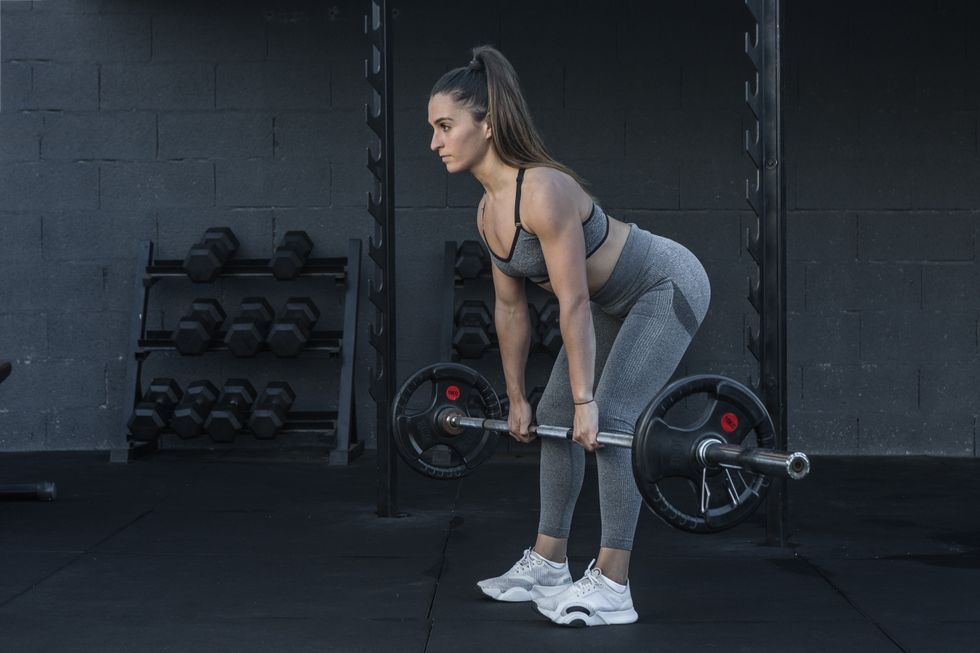
Building muscle will make it easier to burn fat overall
| GETTY
Diet, exercise and sleep are all important when trying to lose weight
|GETTY
The meta-analysis examined intermittent fasting in adults over the age of 60 and found 16:8 time-restricted eating produced modest but meaningful weight and BMI reduction. Notably, most studies reported preservation of lean muscle mass, which is especially relevant for older adults.
A third thing to consider is lifestyle. Sticking to an optimal diet and consistent exercise regimen can become more difficult if things like sleep are off.
Wright said: "Poor sleep raises cortisol. High cortisol blocks fat-burning and drives cravings for processed food. We tracked this pattern across our over-50 user base repeatedly.
"Getting seven hours of quality sleep consistently outperformed every dietary intervention we observed. Sort the sleep first. The diet changes become far easier when your hormones are not working against you."
Our Standards: The GB News Editorial Charter