










A new conference will examine how elderly drivers can be supported to continue behind the wheel as calls grow for new restrictions.
Elderly motorists over the age of 70 are required to renew their driving licence every three years, rather than every 10 years for younger age groups.
There have been renewed calls for older motorists to face additional restrictions amid a rise in road traffic accidents involving elderly people across the UK.
Data from the Department for Transport shows that there are now 6.2 million licence holders across Great Britain who are aged 70 and over.
TRENDING
Stories
Videos
Your Say
The number of elderly drivers killed or seriously injured has risen from 1,144 in 2014 to 1,224 in 2024, while the percentage of car driver deaths has jumped from 22 per cent to 24 per cent.
Experts have acknowledged that driving supports independence and wellbeing, but can pose road safety issues as people get older, especially if they have age-related ailments.
Road safety organisation GEM Motoring Assist is sponsoring an event later this month that will include a keynote address from Professor Charles Musselwhite on the social aspects of giving up driving.
The conference, which has been organised by Road Safety GB, will explore how to ensure mature drivers feel supported and can stay safe for as long as possible.
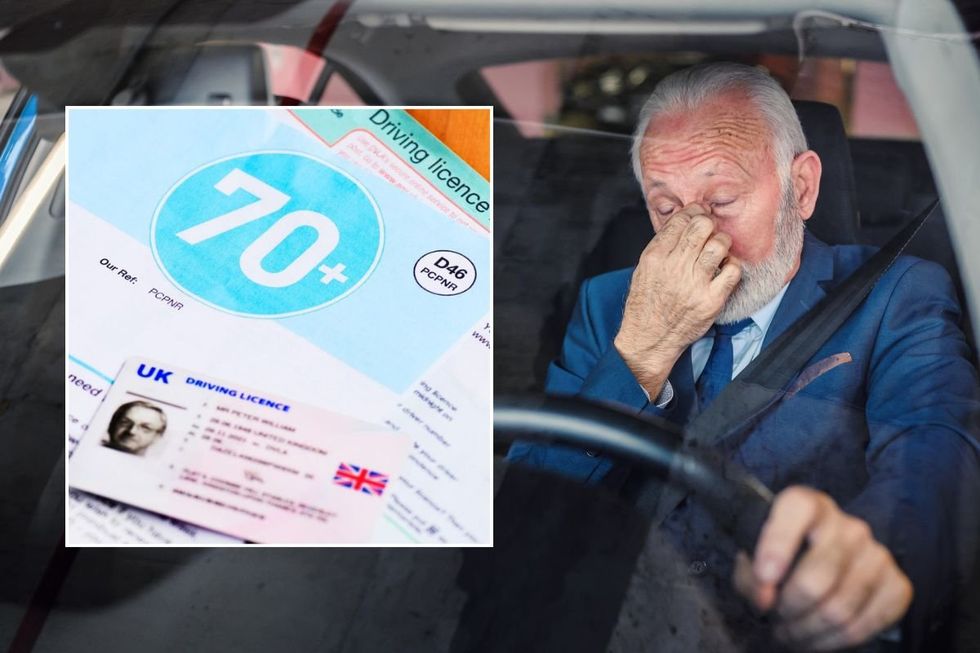
A new conference will discuss how elderly drivers can be supported later in life
|GETTY
Professor Charles Musselwhite, Head of Psychology at Aberystwyth University, will highlight how deciding to give up driving is rarely a simple, one-off decision.
GEM Motoring Assist has supported older drivers with practical advice and research into the safety aspects around elderly drivers remaining on the road for a number of years.
James Luckhurst, head of road safety at GEM, said: "Older drivers make a huge contribution to safer, calmer roads, but we know that the point at which driving has to change - or stop altogether - can be daunting and deeply personal.
"This conference is about listening, learning and making sure every older road user feels supported, respected and safe."
LATEST DEVELOPMENTS
 Under the new proposals, older drivers will need to take eyesight tests every three years to keep driving on UK roads | GETTY
It comes as the Road Safety Strategy has reignited the debate around elderly drivers staying on the road without many mandated checks into their health and wellbeing.
The Government has launched a consultation on the introduction of mandatory eyesight testing for drivers over the age of 70.
All motorists must be able to read a standard number plate from 20 metres away, or roughly the length of five parked cars.
They must also meet the minimum eyesight standard for driving by having a visual acuity of at least decimal 0.5 (6/12) measured on the Snellen scale. Glasses and contact lenses can be used for these tests.

Drivers must be able to read a standard number plate from 20 metres away
| GETTYLabour outlined that feedback collected from the consultation will also help inform and develop options for cognitive testing for older drivers.
It explained that these measures aim to reduce deaths and injuries involving older drivers without impeding on their personal freedoms and mobility.
The Road Safety Strategy emphasised the partnership between the Government and the National Police Chiefs' Council, and the importance of regular roadside eye tests.
It added: "The Government will also continue to engage with the relevant regulatory bodies to highlight the importance of healthcare professionals notifying DVLA if their patient is unwilling or unable to notify."