










Drivers have been warned of new traffic rules being introduced today across a popular region, which will see thousands banned from pavement parking for the first time.
East Renfrewshire Council has started enforcing its pavement parking ban today (Monday, January 5) as part of ambitious plans to make streets safer for pedestrians.
The ban follows new legislation introduced by the Scottish Government in 2023, which made it illegal to park on the pavement in Scotland, as well as double parking and parking at dropped kerbs.
Under the rules, drivers can be fined £100 if caught pavement parking, although this can be reduced to £50 if paid within two weeks.
TRENDING
Stories
Videos
Your Say
While the new measures come into effect today, to help drivers adjust, the council revealed it will only issue warning notices instead of penalties until March 31, 2026, before formal enforcement begins on April 1.
The council said warning notices would be placed on the windscreen advising of non-compliance and that further offences would be subject to a penalty charge notice.
Before the new rules came into effect, the council launched a consultation to examine the impact of introducing the ban, including a full survey of all streets in East Renfrewshire.
The council also considered speed limits, availability of off-street parking and driveways, parking restrictions, as well as the type of street, width of road/pavement, current parking arrangements and distance to nearby facilities.
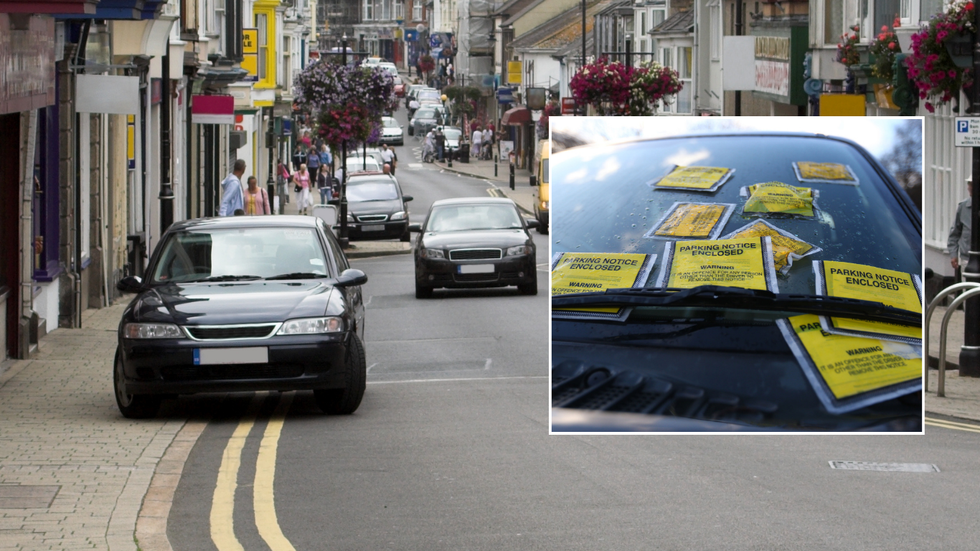
Drivers can be fined for parking on the pavement under the new rules
| GETTYThe survey also identified the need for any local exemptions with the council's approach to enforcement, approved by elected members.
Councillor Danny Devlin said: "The new rules aim to reduce danger and inconvenience to people walking, wheeling, and cycling because of pavement parking. By introducing enforcement, the council hopes to make pavements and roads safer for everyone to use.
"This will prioritise the safety of people in wheelchairs, those with mobility issues, and people with buggies and prams, who will be able to walk or wheel without having to go onto the road to pass a vehicle parked on a pavement, which many have to do currently."
Mr Devlin explained that the pavement parking ban urges drivers to adopt the new changes early to avoid being issued a penalty.
LATEST DEVELOPMENTS

The crackdown on pavement parking was hoped to make pavements safer for pedestrians
| EAST DUNBARTONSHIRE COUNCILThe authority added that once the statutory process of raising exemption orders is completed and approved, all exempt streets will have signs in place to help avoid confusion.
According to Transport Scotland guidance, it allows councils to grant exemptions to certain streets if 1.5 metres of the pavement remains unobstructed for pedestrians when a vehicle is parked on the pavement.
The council shared: "Parking on pavement is now illegal in line with Scottish Government legislation. The enforcement of pavement parking prohibition is intended to improve accessibility and safety for everyone who uses pavements, and to help support and encourage active travel.
"Proposed exemptions are recommended according to the fixed criteria set by Transport Scotland. It is acknowledged that there may be challenges with a significant increase in vehicles moving from parking on pavements to parking on the road.

Drivers can be fined £100 for pavement parking once the initial warning period has finished
| GETTYBut not everyone has supported the new ban, with drivers taking to social media to share their frustration over the enforcement.
One person shared: "If you're going down that route of 'irresponsibly', then surely you can't touch those that have two wheels up on the pavement that have left enough space for pedestrians, wheelchairs and buggies to get past while also aiding in the flow of traffic through narrow roads."
Meanwhile, another person questioned whether the money raised from the fines would be put back into upkeep of the roads.