










New testing has uncovered how electric vehicles fare in freezing temperatures and how the ocl can impact the battery range of an EV.
The El Prix winter test saw 24 of the latest electric vehicle models tested in Folldal, Norway, to see how extreme temperatures as low as -32C affect performance.
The trial, which was led by Fédération Internationale de l'Automobile (FIA) member club, Norges Automobil-Forbund (NAF), tested some of the most popular vehicles, including the Audi A6 Avant, Ford Capri, Mercedes-Benz CLA, and Tesla Model Y.
It found that the low temperatures caused range reductions averaging 38 per cent when compared to benchmarks set by the standard Worldwide Harmonised Light Vehicle Test Procedure (WLTP).
TRENDING
Stories
Videos
Your Say
Testers reported that while the vehicles lost some range, they remained "reliable and comfortable" by keeping drivers warm despite the harsh conditions outside.
Motorists who used battery preconditioning before charging saw the batteries come close to their stated charging times between 10 and 80 per cent capacity.
Test runs were completed in temperatures between -8C and -32C as the vehicles travelled north through Norway.
The Lucid Air, a premium American electric vehicle, saw the largest gap in the car's stated WLTP range and real-world testing in extreme temperatures.

In total, 24 of the newest electric vehicles were tested in extreme temperatures in Norway
|LARS EIVING BONES/MOTOR.NO
While it has an impressive 960km WLTP range, it registered a real-life range of 520km, a decrease of 45.8 per cent.
The NAF noted that the first low battery warning came at eight per cent battery capacity, while the air conditioning also switched off, making it difficult to see out of the windows.
The Hyundai Inster saw the lowest deviation in testing, with a WLTP battery range of 360km and a real-world distance of 256km, losing just 104km.
Tor Arne Litlere, President of the NAF, said: "El Prix provides motorists with invaluable data and insight into how EVs truly perform when tested to their limit in the harshest Nordic conditions.
LATEST DEVELOPMENTS
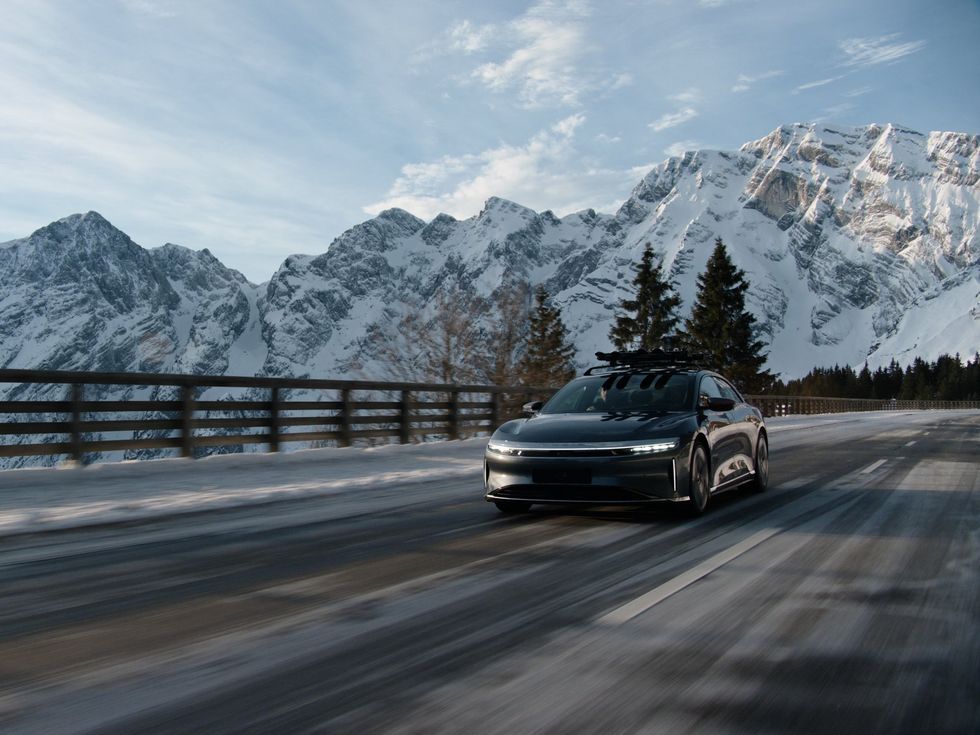
The Lucid Air Grand Touring delivered the longest range of any electric vehicle this year
|LUCID
"Situation-based knowledge about the deviations from WLTP range is a true value for members and road users from these tests."
Experts noted that while the extreme temperatures had a notable impact on the range of the electric cars, there was reason to be optimistic.
They suggested that, with proper preparation and a robust charging infrastructure, electric vehicles could remain a "viable mobility solution" in colder climates.
It added that the testing could become more useful for motorists across the world as the World Meteorological Organisation (WMO) states this season could be "the longest duration of cold in several decades".
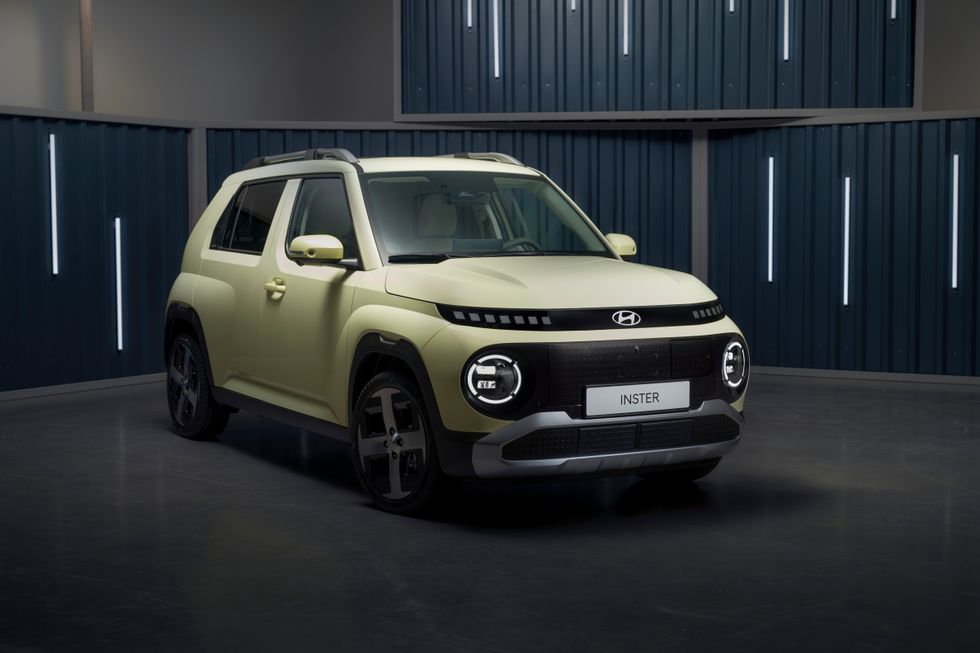
The Hyundai Inster recorded the lowest deviation between WLTP and real-world figures
| HYUNDAIWillem Groenewald, FIA Secretary General for Automobile Mobility and Sustainability, noted that mobility was constantly changing.
He continued, saying: "Providing consumers with essential data on new technologies, such as improved performance of EVs, is key for shaping selection and choice for road users.
"It is also testament to the adaptability of manufacturers to drive innovation forward to the ultimate benefit of consumers, not only in battery improvements but also in terms of safety standards."
The NAF also tests vehicles in the summer, with many vehicles seeing an improvement in battery range compared to WLTP totals.