










Experts are warning that the switch to electric cars could face a stumbling block as new data shows just one in four technicians across the UK are adequately trained to work on EVs.
Fresh research shows that only 26 per cent of technicians are qualified to work on electric vehicles, with experts noting that it "presents a worrying picture of slowing investment".
The number of technicians gaining an electric vehicle qualification dropped almost 13 per cent in the third quarter of 2025 compared to Q1.
Current estimates from the Institute of the Motor Industry (IMI) suggest that the number of EV-qualified technicians will reach around 137,000 by 2032 and 193,000 by 2035.
TRENDING
Stories
Videos
Your Say
However, the IMI predicts a gap between supply and demand in the 2030s as more drivers adopt electric vehicles and ditch older, more polluting petrol and diesel models.
Shortfalls are estimated to occur from 2033 onwards and increase every year. The gap could reach more than 44,000 technicians in nine years time.
The IMI suggested that the Government was putting out "mixed messages" on electric motoring, while economic factors have also played a role.
Emma Carrigy, head of research, policy and inclusion at the IMI, described the pace of training as "misaligned" and "is likely to fall short of what is needed" to support the UK’s zero emission vehicle targets.
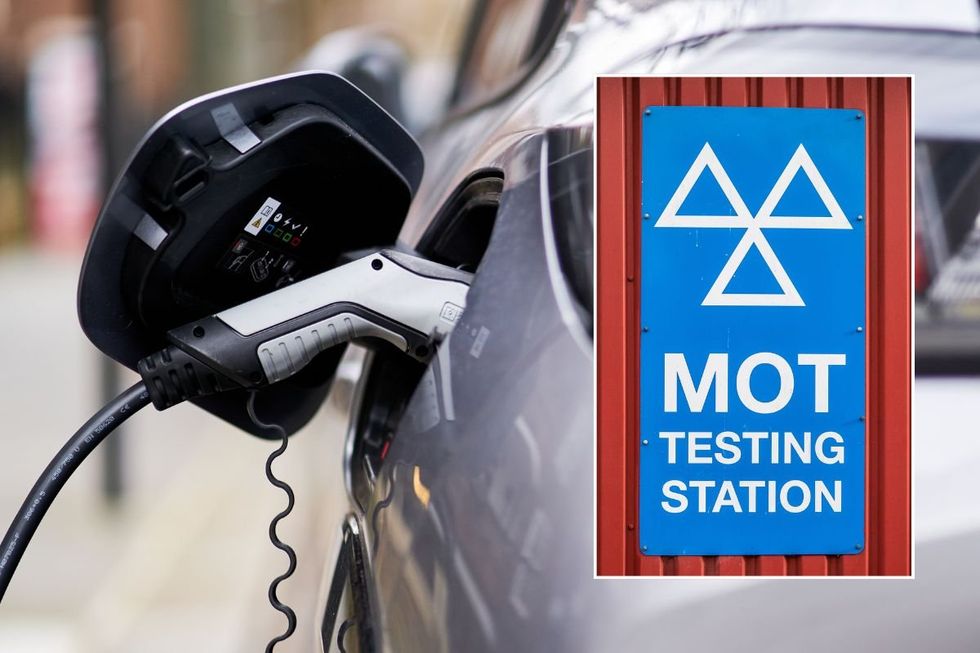
Experts are warning that the electric car revolution could face a setback with a huge discrepancy in the number of EV-qualified technicians
|GETTY
She continued, saying: "With our analysis expecting even lower EV certifications for Q4, unless there is a significant acceleration in training, the gap between the number of EV-trained technicians and those required will widen dangerously in the next five to 10 years.
"And with training levels varying significantly between employers and regions, with independent workshops often less able to invest ahead of demand, there is a strong risk of a postcode lottery as the second-hand EV market grows."
The expert noted that it was crucial that drivers had confidence in their vehicles, which would grow substantially if there was a guarantee that vehicles could be maintained properly.
The threat of a "postcode lottery" could further hinder uptake of zero emission vehicles, especially for those in rural areas, who are already lacking services.
LATEST DEVELOPMENTS
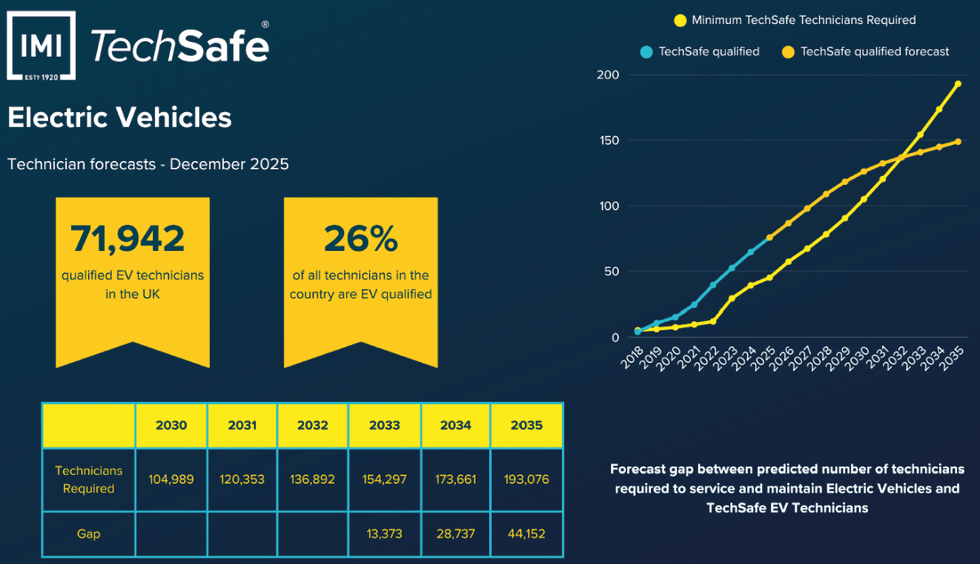
The IMI warns that the UK could face a huge shortfall in EV-qualified technicians over the next decade
|IMI
One of the key complaints from drivers in rural areas is a lack of public charging provisions, especially given the distance between them and places where they could recharge, including supermarkets and town centres.
Ms Carrigy added that a "visible, qualified and geographically distributed service and repair workforce" was critical to support motorists who want to buy an electric car.
Of the nearly 72,000 technicians across the UK, 26 per cent are EV qualified, while 2,580 certifications are expected in the last three months of 2025.
The IMI has called for the Government to provide urgent support for garages to minimise the risk of a postcode lottery, not only for servicing, but also for repairs.
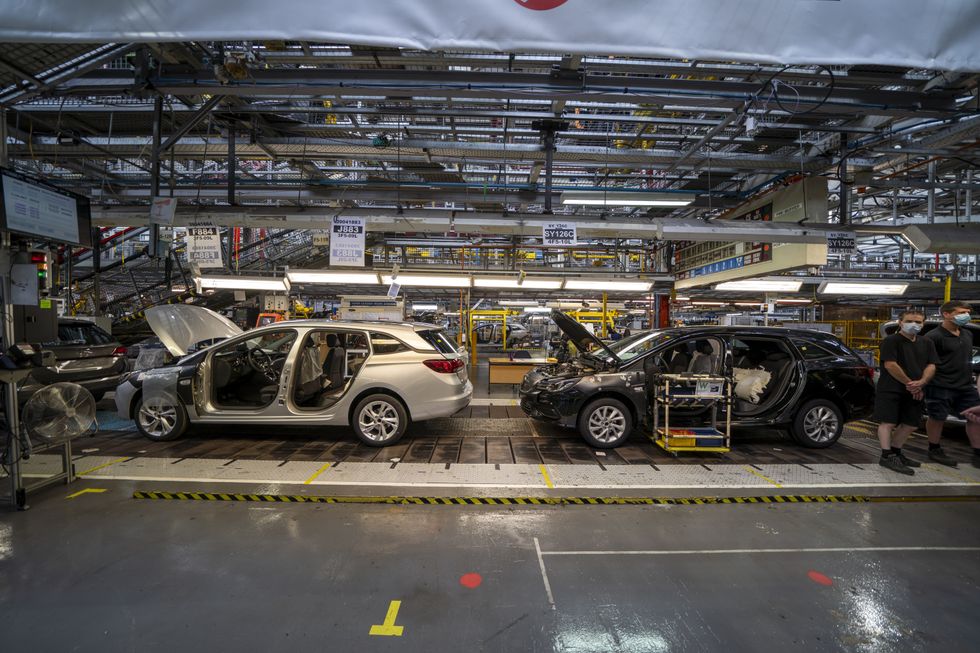
The IMI has warned that the UK could have a massive backlog in the automotive workforce over the next decade
| PAIt claims that the Government is ignoring the automotive aftermarket's impact on net zero and employment is being overlooked across several different policies.
Ms Carrigy said it was "too late for even sustained growth" in certification to fully close the gap, especially ahead of the approaching petrol and diesel ban from 2030.
She added: "The most acute pressure on technician capacity falls in the years leading up to 2030, when the ZEV mandate needs a rapid increase in electric vehicle sales.
"This creates a narrow window for employers to scale training and bring more technicians into EV repair roles. Delays during this period will be difficult to recover later, as the skills gap compounds alongside rising vehicle volumes.”